Inflation Surges to 3.3% on Energy Costs Amid Global Tensions
Inflation surged to 3.3% in March, its highest level in two years, largely driven by a spike in energy prices. This economic data arrives amidst global tensions involving Iran and contrasts with a surprisingly optimistic stock market. The rising inflation complicates the Federal Reserve's ability to lower interest rates, while overall economic growth also shows signs of slowing.


Inflation Reaches 3.3% in March, Driven by Energy Price Hikes
The latest inflation report for March reveals a significant jump to 3.3 percent, marking the highest reading in two years. This surge is primarily fueled by a sharp increase in energy prices, a trend that has left many economists and market watchers surprised.
The data comes at a critical time, as it is the first major inflation report released since global tensions involving Iran escalated. This geopolitical backdrop adds a layer of complexity to understanding the economic forces at play.
Market Reaction Contrasts with Economic Data
Despite the rising inflation figures and concerns over energy costs, the stock market, or equities, has shown surprising optimism. Investors in the stock market appear to be more hopeful about the economic situation, even as gas prices, like WTI crude oil, are rising. This disconnect between market sentiment and economic indicators like rising energy prices is puzzling to many observers.
This optimism in the stock market may stem from hopes for diplomatic solutions to international conflicts. However, the market has experienced significant swings recently, with periods of excitement about potential resolutions followed by sharp reversals. This volatility suggests a market reacting to headlines rather than concrete economic fundamentals.
Economic Growth Slows in Fourth Quarter
Adding to the economic concerns, the Gross Domestic Product (GDP) for the fourth quarter of last year was revised downward to 0.5 percent. This revision indicates that U.S. economic growth slowed more than initially estimated. The downgrade was attributed to lower business investments and changes in inventory accumulation.
Despite the overall slowdown in economic growth, corporate profits saw a notable increase during the same period, according to government data. This divergence between overall economic expansion and corporate profitability presents another complex picture of the current economic climate.
Inflation Challenges Presidential Promises and Federal Reserve Plans
The current inflation situation directly challenges the President’s promise to lower inflation in the United States. The ongoing conflict involving Iran, along with other trade-related issues, has prevented inflation from decreasing as hoped. This reality means the administration has not met its economic goals.
The persistent rise in inflation also complicates the Federal Reserve’s ability to lower interest rates. The President has publicly called for lower interest rates, a move also desired by many in the financial markets. However, with inflation remaining high, the Federal Reserve faces significant pressure to keep rates elevated to control price increases.
Confirmation of Nominee Faces Delays Amidst Investigations
The process for confirming a key nominee, Kevin Warsh, to a significant role appears to be facing delays. This situation is further complicated by ongoing investigations, including one led by U.S. Attorney Janine Piro, which has not shown signs of concluding. The uncertainty surrounding Warsh’s confirmation adds another layer of complexity to the economic policy outlook.
Even if Warsh’s nomination is eventually confirmed, the economic environment presents substantial challenges. Lowering interest rates in the current climate of elevated inflation would be extremely difficult. This makes the Federal Reserve’s task of balancing economic growth with price stability exceptionally demanding.
Looking Ahead: The Fed’s Tightrope Walk
The coming months will be crucial for understanding how the Federal Reserve will navigate the conflicting pressures of slowing economic growth and persistent inflation. Market reactions to geopolitical events and energy price fluctuations will continue to be closely watched. The confirmation process for key economic advisors will also play a role in shaping future policy decisions.
Source: inflation rose to 3.3 percent in March as energy prices spiked due to Iran (YouTube)

Related Articles

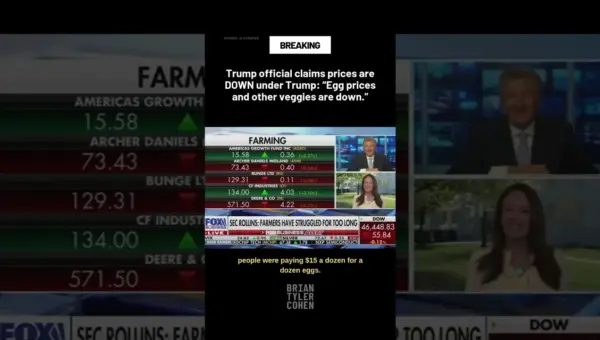
Trump Claims Grocery Bills Dropped Dramatically
A former Trump official claims significant drops in grocery prices, notably an 80% decrease in egg costs. The administration reportedly prioritizes affordability while also supporting farmers, aiming for a dual benefit. This focus on food costs impacts household budgets and public economic perception.


Iran War Sparks U.S. Price Hikes: Gas, Shipping, and Flights Soar
The conflict involving Iran is driving up prices across the U.S., impacting everything from gas and shipping to air travel and groceries. Major companies like Amazon are adding surcharges, while airlines are increasing ticket and baggage fees. Experts warn these price hikes could have long-lasting effects on consumer costs.


German Factories Hit Hard by Iran War’s Economic Shockwaves
German manufacturers are bracing for significant economic fallout from the Iran war, with 90% expressing concern. Rising energy costs, disrupted supply chains, and shrinking export demand are already impacting businesses. Economic forecasts for Germany have been cut, and inflation is at a two-year high, highlighting the global reach of the conflict's economic consequences.