Farmers Fight Data Centers For Land, Power
The rapid expansion of data centers in rural America is creating significant challenges for farmers. These facilities consume vast amounts of land and electricity, driving up costs and threatening food production. Texas officials are proposing solutions to guide development towards less productive areas.

Farmers Fight Data Centers For Land, Power
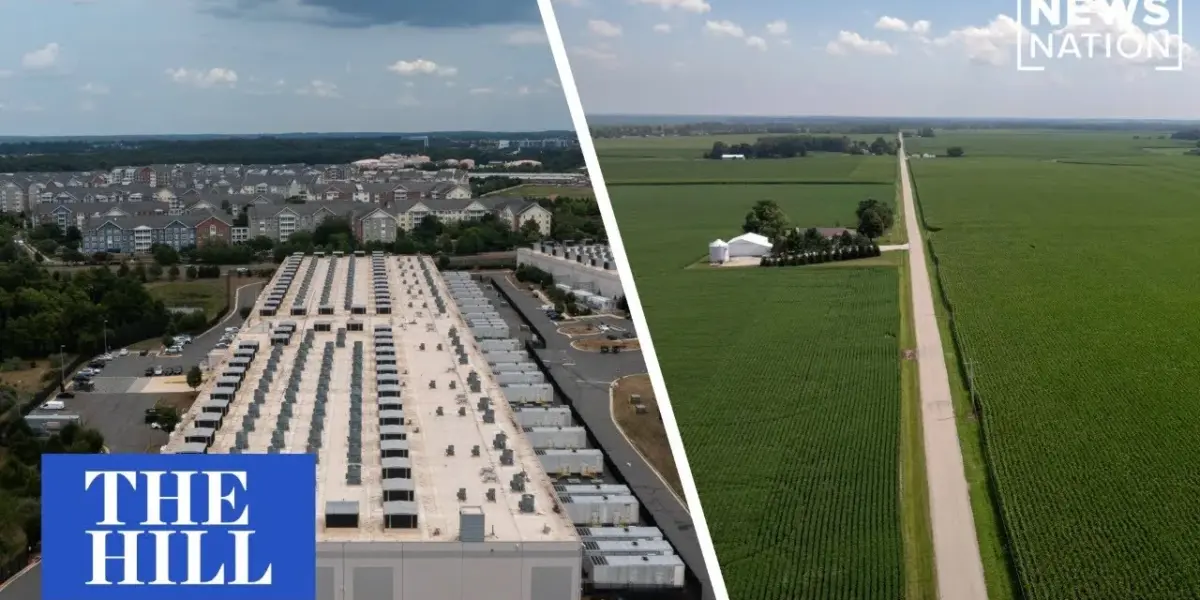
America’s farmers are facing a new challenge. Data centers, the buildings that store and process vast amounts of digital information, are spreading rapidly. They are not just taking up land; they are also increasing electricity costs. This is putting a strain on the nation’s ability to produce food. Many farmers feel their voices are not being heard.
There are already more than 3,000 data centers in the United States. Another 1,500 are planned. Two-thirds of these new centers are set to be built in rural areas. This often means they are being built on valuable farmland. In Festus, Missouri, residents voted out city council members after a $6 billion data center was approved. People felt the city was not listening to voters.
Texas Official Proposes Solutions
Sid Miller, the Agricultural Commissioner for Texas, is working to address these concerns. He is heading to Washington D.C. to discuss the issue. Miller believes there need to be some rules, or “guardrails,” for data center development. Currently, there are few regulations, especially in Texas. Counties cannot easily stop these projects, leading some to call it a “Wild West” situation.
Miller’s plan involves using tax incentives to guide where new data centers are built. He wants them located in areas that are not prime farmland. He calls these “Ag Culture Freedom Zones.” The goal is to encourage data centers to be built on less productive land, like “brownfields” or marginal areas. This would help protect the most fertile land needed for growing food.
Rising Land and Electricity Costs
The expansion of data centers is also driving up the price of farmland. This makes it harder for farmers to buy land. It becomes difficult for them to afford to expand their operations. Some farmers are forced to sell their land because they can get a much higher price from data center developers. While Miller understands this is a personal property choice, he emphasizes the nation’s need to feed its people and the world.
Beyond land, data centers use a huge amount of electricity. This high demand can increase electricity rates for everyone. Farmers rely on electricity for irrigation, which is essential for watering crops. If data centers use too much power, it could limit the electricity available for farming. This could make it impossible to irrigate crops and grow food.
Potential Solutions for Power and Water
To address the energy needs, there are a couple of possibilities. Small modular nuclear reactors are expected to come online soon. These could provide more power and potentially add electricity back to the grid. Additionally, some data centers are exploring closed-loop water systems. These systems would reduce their water usage, lessening the strain on local water resources.
The United States has about 1.9 million farms covering 874 million acres. Miller believes that using less productive farmland for data centers is acceptable. The focus should be on growing food on the best land. Rocky ground or less fertile areas would be better suited for data centers. He wants to ensure that valuable farmland remains available for agriculture.
Looking to Congress and Future Collaborations
Miller is hopeful that Congress can take action. He is meeting with Texas Congressman Pete Sessions, who has introduced legislation for “Ag Culture Freedom Zones.” The discussions might also include other industries that use significant energy, such as solar farms and cryptocurrency mining. Miller is working to find common ground to ensure that the growth of technology does not harm the agricultural sector.
The situation highlights a growing tension between the digital economy and traditional industries like farming. As more data centers are built, finding a balance that supports both technological advancement and food security will be crucial. The decisions made now will shape rural communities and America’s role in global food supply for years to come.
Source: Data centers affecting US farmers beyond land, electrical rates: Commissioner | The Hill (YouTube)

Related Articles


AI Backlash Sparks Violence, Threatens Tech Leaders
An Indianapolis shooting targeting a politician who supported a data center highlights a dangerous escalation in the AI backlash. Online reactions reveal disturbing support for violence, raising fears for tech leaders and the future of AI adoption.


AI’s Tech Surge: Are We Embracing It Too Fast?
The rapid advancement of AI and technology is raising concerns about whether we're adapting quickly enough. Looking back at slower tech evolution, the current pace risks disconnecting us from tangible experiences and increasing costs for consumers.


AI Data Centers Spark Local Uprisings Amid Global Tensions
Residents in Wisconsin are protesting the construction of AI data centers, citing environmental concerns and a lack of community input. This local resistance highlights a growing conflict between technological expansion and the well-being of communities, set against a backdrop of broader geopolitical events.