Congress Faces Reckoning Over Sex, Power Abuses
Two congressional resignations have reignited debates about sex and power abuses in Washington. Former Senator Claire McCaskill believes these events could be a turning point, but emphasizes the long history of such issues. She advocates for systemic changes to protect victims and ensure accountability.


Congress Faces Reckoning Over Sex, Power Abuses
The recent resignations of two U.S. Congress members, Eric Swalwell and Tony Gonzales, have sparked debate about the ongoing issues of sex and power within Washington D.C. Former Democratic Senator Claire McCaskill believes these departures could signal a turning point, but warns that such problems have plagued the institution for decades. “Hope springs eternal,” McCaskill stated, “but I remind everyone that this is something that’s been going on in this institution for a long, long time.” The issues are not new, with a similar situation involving Senator Bob Packwood in 1995, who was pushed out under similar circumstances.
Ironically, Mitch McConnell, still a prominent figure in the Senate, was instrumental in Packwood’s resignation. At the time, McConnell said, “retaining the honor of the Senate is more important.” McCaskill expressed disappointment that “it is depressing that that was 1995 and we’re looking at this situation today.” She described the combination of sex and power as toxic, noting that men in Congress have too often abused their power in connection with sex, calling it wrong, abusive, and predatory.
Seeking Justice for Victims
McCaskill, who has experience prosecuting such cases, offered advice to potential victims. She emphasized the importance of reaching out to a sexual assault center or police department. “The best thing a woman can do when she is confronted with this situation, as hard as it may seem at the moment, is reach out to a sexual assault center or a police department,” she explained. This action, she believes, is the most effective way to establish facts and hold those who engage in such conduct accountable, whether they are in Congress, corporate boardrooms, or any workplace.
The system now is better equipped to protect and serve women who have been victimized. “There are people now in this day and age that are much better equipped to protect and serve women who have been victimized in this way,” McCaskill said. This approach ensures accountability for predators, regardless of their position.
Ethical Questions and Political Maneuvers
The departure of Congressman Tony Gonzales, accused of sexual misconduct by a staff member who later died by suicide, has raised further ethical questions. Some Democrats have suggested Gonzales resigned only because Swalwell’s exit would not alter the balance of power, labeling it “political horse trading.” McCaskill acknowledged the difficulty of separating political calculations from clear ethical decisions, especially given the broader context in national politics.
“We have a guy sitting in the Oval Office saying you can grab women by the bleep. They let you if you’re famous.”
She pointed to the behavior of political leaders as a contributing factor. “Frankly, you know, one of the backdrop here in the context, Chris, which is even more depressing is we have a guy sitting in the Oval Office saying you can grab women by the bleep. They let you if you’re famous,” McCaskill stated, referencing past comments made by a former president. She also noted that this leader “was found to have committed sexual aggression by a jury” and that his supporters have consistently defended him.
This history makes it difficult for McCaskill to believe that politicians will suddenly change their approach. “So it’s hard for me to believe that all of a sudden they’re going to wake up today and go, you know, we’ve got to do this differently. We’ve got to respect women,” she said. The lack of leadership on these issues is evident, as she pointed out, “You haven’t noticed him saying anything, have you?” The ongoing lack of justice for victims in cases like Jeffrey Epstein’s further highlights these systemic failures.
Creating a Safer Environment
The executive director of Gen Z for Change told The Washington Post that Swalwell’s behavior was known, not necessarily as assault, but as being a “creep.” She argued that the Democratic Party needs to examine why persistent rumors of inappropriate behavior were not acted upon. McCaskill understood this point, agreeing that if such behavior was recognized, someone should have addressed it.
However, she cautioned about the subjective nature of defining a “creep.” “But this is, you know, a really murky gray area. What qualifies as a creep? And does one comment qualify as a creep? Does two? And who are the creep police and who is in charge of policing the creeps?” she questioned. McCaskill proposed that the best way to address these issues is by creating an environment where women feel empowered and protected.
She suggested looking to the policies implemented in the armed services as a model. In those programs, women subjected to sexual aggression were given the option to report anonymously and were provided with their own lawyer and counselor. This support system helps guide them through a difficult process, especially when they lack good initial advice following trauma. McCaskill urged the Senate to adopt similar policies to ensure women feel safer coming forward. “That’s the best police of the creeps are the women who have been subjected to their behavior,” she concluded.
The Path Forward
The recent resignations and ongoing discussions highlight a persistent problem in Congress: the abuse of power in connection with sexual misconduct. While the departures of Swalwell and Gonzales may represent a moment of reckoning, the deep-rooted nature of these issues means lasting change will require systemic reforms. Establishing clear policies that empower victims, ensure anonymous reporting, and provide legal and psychological support is crucial. The effectiveness of such measures will be seen in whether they can truly create a safer and more accountable environment for everyone in Washington and beyond.
Source: Is Swalwell's exit a turning point for Congress? AOC thinks so (YouTube)

Related Articles


Trump’s Erratic Posts Spark Calls for 25th Amendment
Unusual late-night posts by Donald Trump have sparked widespread debate about his fitness for office, leading to calls for invoking the 25th Amendment. Congress is now considering legislation to establish a commission to assess presidential capacity, reflecting deep concerns both domestically and internationally.


Congress Faces Reckoning: Two Members Resign Amid Scandal
Two US Congress members, Republican Tony Gonzalez and Democrat Eric Swalwell, are resigning amid serious allegations. Their departures highlight contrasting party responses to misconduct and raise questions about accountability in politics.

Congress Faces Rising Hate: A Call to Remember the Holocaust
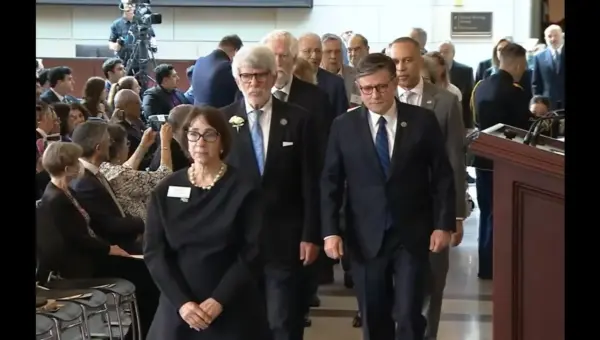
Congress recently held a solemn Holocaust remembrance ceremony, underscoring the urgent need to combat rising anti-Semitism. Survivors shared harrowing personal accounts, emphasizing that fighting hate is an American, not a partisan, issue. This event serves as a critical reminder of history's lessons.