Congressman Turner Backs Iran Military Action, Cites “Inevitable Conflict”
Congressman Mike Turner defends recent military strikes against Iran, deeming the conflict "inevitable" due to decades of Iranian aggression and nuclear ambitions. He argues the actions are crucial to preempting a greater threat, despite differing views on imminent danger.

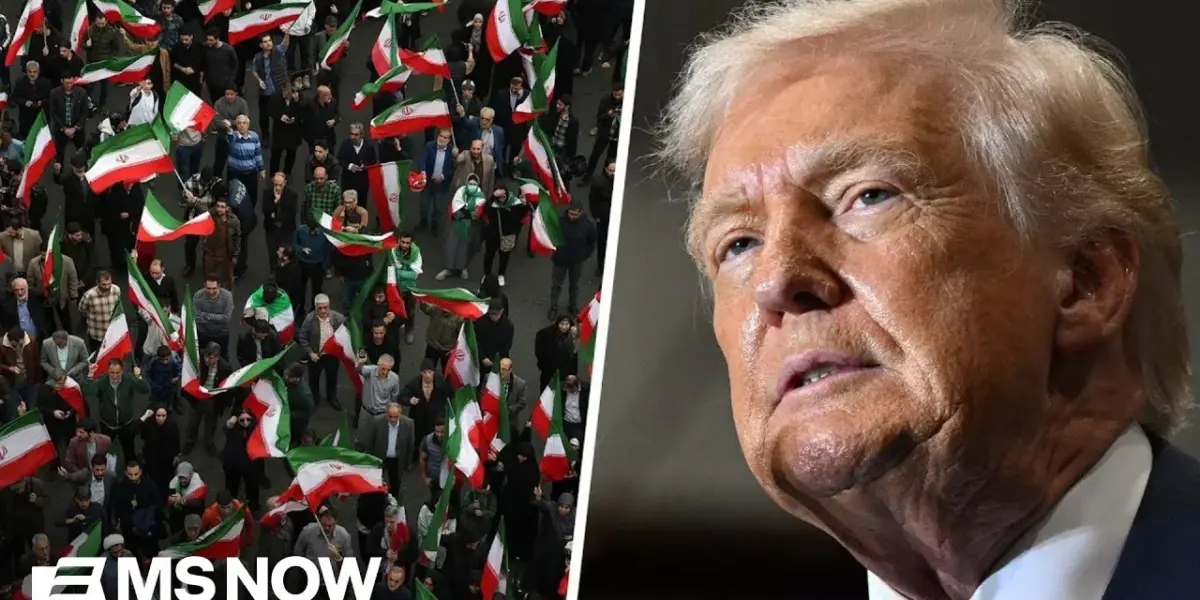
Turner Defends Military Strikes Against Iran, Citing Long-Term Threat
WASHINGTON D.C. – A senior member of the House Armed Services Committee, Congressman Mike Turner (R-Ohio), has voiced strong support for recent military actions against Iran, characterizing the conflict as an “inevitable” and necessary step to counter a persistent and escalating threat. Speaking in the wake of strikes targeting Iran’s military capabilities, Turner argued that the decision was not based on a single imminent threat, but rather on decades of Iranian aggression, nuclear proliferation efforts, and state-sponsored terrorism.
Decades of Escalation Culminate in Military Action
Turner traced the roots of the current confrontation back to the Obama administration’s Joint Comprehensive Plan of Action (JCPOA), suggesting that Iran’s continued nuclear enrichment and military buildup persisted despite the agreement. He highlighted actions taken by the Trump administration to curb Iran’s nuclear program, but noted that Iran’s defiance continued, including declarations of intent to further nuclear enrichment and military expansion.
“Iran being the continued state sponsor of terrorism, their continuing buildup of their military,” Turner stated, emphasizing the regime’s hostile rhetoric towards the United States and its allies, including chants of “death to America” and “death to Israel.” He asserted that the Trump administration’s attempts to bring Iran to the negotiating table were met with refusal, solidifying the view that Iran posed a continuous threat to U.S. Operations and interests in the Middle East.
Defining “Imminent Threat” and Strategic Opportunity
Addressing the notion of an “imminent threat,” Turner explained the concept as the intersection of opportunity and threat. He drew a parallel to North Korea, where he believes the opportunity to neutralize a threat was missed, leading to a situation where North Korea now poses a direct threat to the U.S. Homeland.
“When you take the word imminent, you have to look at the intersection of both opportunity and threat. And you can’t, you, you have to make certain that that intersection doesn’t occur past the opportunity to be able to, to, to take out that threat.”
Turner argued that the current administration’s actions are aimed at preventing Iran from reaching a similar threshold. By targeting Iran’s missile programs, space programs (which could impact ICBM capabilities), nuclear ambitions, and drone capabilities, the U.S. Is significantly diminishing Iran’s ability to threaten the United States, its allies in Europe, and the U.S. Homeland itself.
Congressional Briefings and War Powers Resolution
While acknowledging reports that some Pentagon officials briefed congressional staff that there was no *imminent* threat, Turner maintained that the administration’s actions are justified by the long-term, systemic threat posed by Iran. He indicated that he would likely oppose a War Powers Resolution, believing the President has been clear about the limited nature and timeframe of the military action.
“I certainly see no interest at this time of taking, of participating or supporting a War Powers Resolution,” Turner said. “I think the President’s been very clear that this is a limited military action that he believes to be limited in its time frame. And I think that this is one that, as I just described, even our allies see as a valid military conflict to engage in.”
Turner stressed the importance of understanding the timeline and the unfolding impact of the operations. He also noted the growing alignment of European and Middle Eastern allies in supporting the goal of eliminating Iran’s military capabilities, viewing it as a shared interest in countering a regional and international threat.
Economic Repercussions and Regional Instability
The congressman also addressed the economic fallout from the escalating tensions, acknowledging the surge in oil prices and the downturn in stock futures. He pointed to Iran’s attacks on neighboring countries, including energy infrastructure like an oil refinery plant in Saudi Arabia, as evidence of the regime’s strategy.
“Their attack on commercial ways and waterways and even their attack just on, you know, civilian populations. You’re seeing that in their military response. It’s not a military response.
It’s a civilian response. It’s a commercial response,” Turner observed. He reiterated that disrupting Iran’s military capabilities is crucial to mitigating these broader economic and commercial impacts.
Regarding the security of Gulf states, Turner acknowledged the difficulty in containing Iran, describing it as a “murderous authoritarian regime.” He expressed hope that the ongoing conflict could lead to the regime’s downfall and bring freedom to the people of Iran, while also alleviating the threat to the region.
Concerns Over Homeland Security and International Dynamics
Turner raised concerns about potential retaliatory attacks on U.S. Soil, particularly in light of preliminary reporting suggesting a recent mass shooting in Texas may have been inspired by Middle Eastern events. He criticized the potential reallocation of FBI and DHS counter-terrorism agents to immigration and deportation efforts, arguing that it diverts focus from the threat of international terrorism.
The congressman also touched upon the broader geopolitical shifts, referencing Russian President Putin’s statement about the death of Ayatollah Khomeini. Turner suggested that such shifts in alliances and rivalries, particularly in the context of the ongoing conflict in Ukraine, could have significant diplomatic and domestic security implications worldwide.
He concluded by expressing a strong hope for bipartisan cooperation to secure essential funding for homeland security, emphasizing that partisan fighting should not impede the nation’s ability to address both international and domestic threats.
Source: A valid military conflict to engage in: Armed Services member on Iran attacks (YouTube)

Related Articles


North Korea Eyes Iran Attack: A Nuclear Deterrent Boost
An attack on Iran may be reinforcing North Korea's belief that nuclear weapons are essential for its survival. The perceived failure of allies to fully support Iran, combined with South Korea's preemptive strike capabilities, strengthens Pyongyang's resolve to maintain its arsenal. This highlights the challenges in future denuclearization efforts.

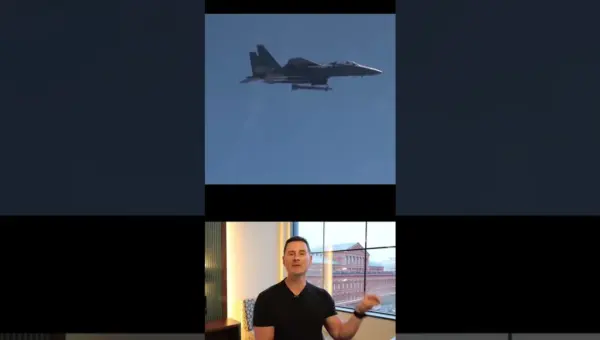
US Air Power Strikes Iranian Missile Sites
U.S. F-15E Strike Eagles deployed 5,000-pound GBU-72 bombs on hardened Iranian missile sites near the Strait of Hormuz. CENTCOM confirmed anti-ship threats were neutralized, securing vital oil shipping lanes. The strikes precede the arrival of 2,500 U.S. Marines, indicating preparatory battlefield actions.
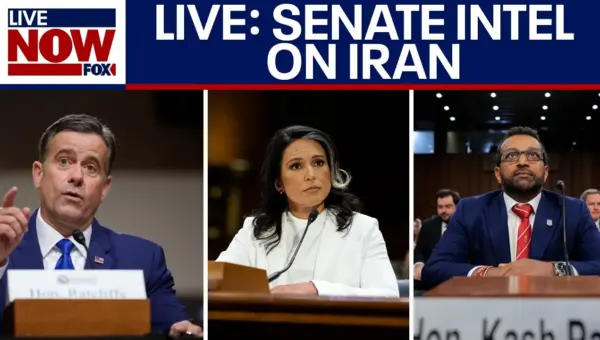
Intelligence Chiefs Detail Iran War, Terror Threats in Senate Hearing
Top intelligence officials testified before the Senate on global threats, detailing actions against Iran and ongoing risks from China, North Korea, and Russia. Concerns were also raised about potential misuse of intelligence powers and internal challenges within agencies like the FBI.