US Won’t Rule Out Ground Troops in Iran, Cites Strategic Ambiguity
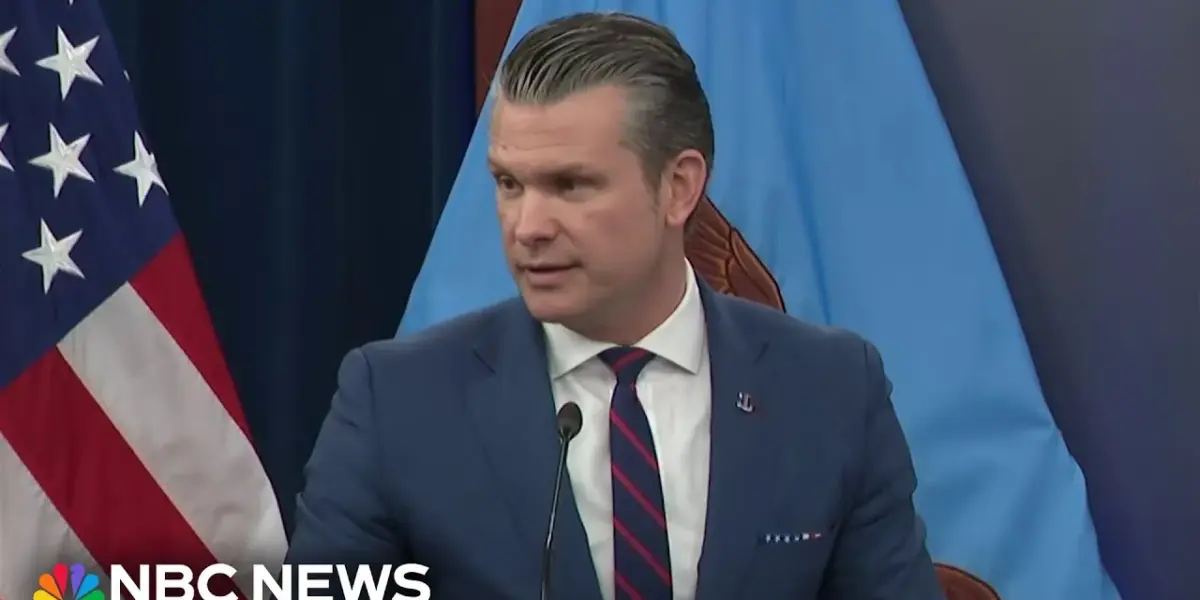
Secretary Hegseth stated the U.S. currently has no troops in Iran but refused to rule out future ground deployments, citing strategic ambiguity. He emphasized that revealing military plans to adversaries is "foolishness" and that the U.S. will "go as far as we need to go" to advance its interests.

US Won’t Rule Out Ground Troops in Iran, Cites Strategic Ambiguity
In a significant statement on potential military actions, Secretary Hegseth has indicated that the United States will not explicitly rule out the deployment of ground troops in Iran, emphasizing a strategy of “strategic ambiguity” to keep adversaries guessing about American intentions. The remarks, made in response to direct questioning about current U.S. Troop presence, signal a departure from detailed public pronouncements on military operations, a move Hegseth described as crucial for advancing American interests without revealing strategic weaknesses.
No Current U.S. Boots on the Ground in Iran
When pressed on whether American forces are currently operating within Iran, Secretary Hegseth provided a direct answer: “No.” However, this clarity was immediately followed by a firm refusal to elaborate on future possibilities or limitations. “We’re not going to go into the exercise of what we will or will not do,” Hegseth stated, framing such disclosures as a strategic fallacy that benefits adversaries.
Strategic Ambiguity as a Key Doctrine
Hegseth articulated a clear rationale for maintaining secrecy regarding military plans, criticizing the long-standing practice of informing the public, and by extension, enemies, about the precise scope and nature of potential interventions. “It’s one of those fallacies for a long time that this department or presidents or others should tell the American people this and our and our enemies. By the way, here’s exactly what we’ll do.
Here’s exactly how long we’ll go. Here’s exactly how far we’ll go.
Here’s what we’re willing to do and not do. It’s foolishness,” he explained.
Instead, the focus under President Trump, Hegseth suggested, is on ensuring that adversaries understand the U.S. Is prepared to take necessary actions. “President Trump ensures that our enemies understand we’ll go as far as we need to go to advance American interests.” This approach, he emphasized, does not equate to recklessness. “But we’re not dumb about it.
You don’t have to roll 200,000 people in there and stay for 20 years. We’ve proven that you can achieve objectives that advance American interests without being foolish about it.”
Emphasis on Decisive Action and Planning
The Secretary underscored that while strategic ambiguity is paramount, it is coupled with meticulous planning and a readiness for decisive action. “Now, will we be bold about it? Are we willing to be decisive about it?
Do we put months and months of planning into what kind of effects we want to achieve? Absolutely,” Hegseth affirmed. The core principle remains: “Going forward, why in the world would we tell you, you, the enemy, anybody, what we will or will not do in pursuit of an objective?”
Broader Implications for U.S. Foreign Policy
This stance reflects a broader potential shift in U.S. Foreign policy and military doctrine, moving away from transparency towards a more assertive and unpredictable posture. By refusing to telegraph intentions, the administration aims to maximize deterrence and operational flexibility. This strategy allows for a range of responses, from diplomatic pressure and sanctions to covert operations or, if deemed necessary, direct military engagement, without pre-committing to specific outcomes or methods.
The implications of this policy are significant. For allies, it may create uncertainty but also reassurance that the U.S. Is prepared to act decisively when its interests are threatened.
For adversaries, it necessitates a constant state of vigilance and preparedness, as the nature and scale of a potential U.S. Response remain undefined. This ambiguity can be a powerful tool, forcing potential foes to expend resources on preparing for a wide spectrum of contingencies.
The U.S. Fights to Win
Concluding his remarks, Hegseth reinforced the fundamental objective of any military engagement: “We fight to win.” This statement, though brief, encapsulates the administration’s resolve and intent to achieve objectives effectively and efficiently, avoiding protracted conflicts born from predictable strategies. The emphasis is on achieving desired outcomes with a clear purpose, leveraging both sophisticated planning and the element of surprise.
Looking Ahead
The strategic ambiguity articulated by Secretary Hegseth sets the stage for future U.S. Actions in the region and beyond. Observers will be closely watching for further indications of how this doctrine translates into concrete policy and operational decisions. The effectiveness of this approach will likely be tested as geopolitical tensions evolve, with the administration’s willingness to act decisively and unpredictably remaining a key factor in its foreign policy toolkit.
Source: 'We'll go as far as we need': Hegseth won't say whether ground troops would be involved in Iran (YouTube)

Related Articles

Reeves Targets Energy Aid, Trump’s ‘Gift’ Fuels Speculation
UK Chancellor Rachel Reeves is shifting energy support to focus on benefit recipients, a move praised by some for fiscal responsibility but questioned for its bluntness. Meanwhile, Donald Trump's vague claims of a "gift" from Iran have sparked speculation about potential de-escalation or market manipulation. Separately, Labour's Angela Rayner criticizes the party's current strategy, drawing parallels to past electoral defeats and positioning herself for future leadership.
Pakistan’s Tightrope Walk: Caught Between Iran and Saudi Arabia
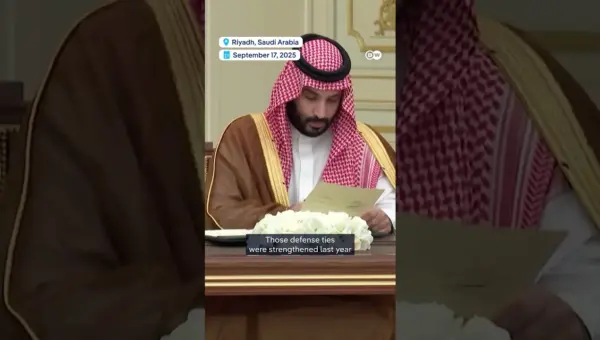
Pakistan is navigating a complex diplomatic tightrope as conflict intensifies in Iran. Deep historical and cultural ties with Iran, including a significant Shia population, fuel strong public solidarity with Tehran. However, Pakistan also shares a crucial mutual defense pact with Saudi Arabia, which has been targeted by Iran.
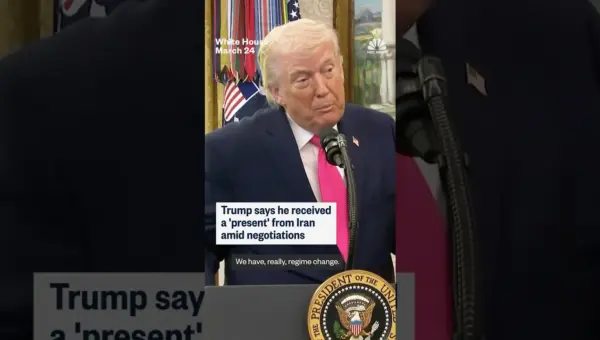
Trump Claims Iran Sent ‘Huge Present’ Amid Talks
Former President Donald Trump announced Iran sent a "very big present" worth "tremendous" value, described as oil and gas related, not nuclear. He stated the gift signaled he was "dealing with the right people" amid ongoing negotiations.