Democrats’ Donor Dilemma: Is Big Money Undermining the Party?
An analysis questions whether Democratic leaders are compromised by donors like Palantir and AIPAC, drawing parallels to paid-to-lose opponents. The piece explores the influence of big money on political integrity and its potential impact on electoral success.

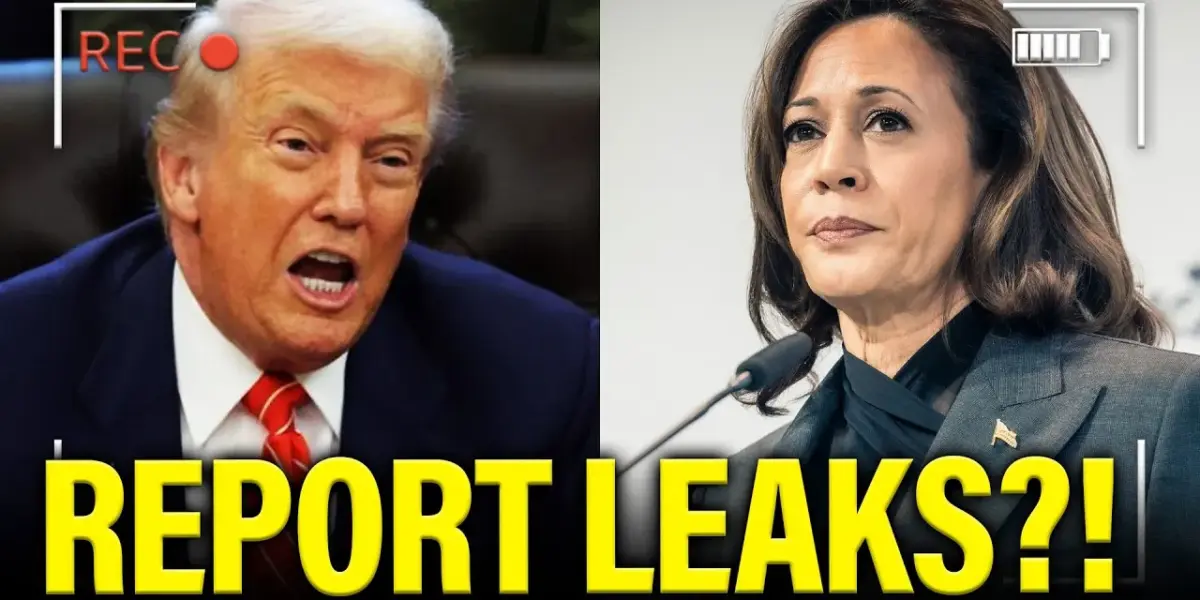
Democrats’ Donor Dilemma: Is Big Money Undermining the Party?
In the complex world of political financing, a recent analysis by Suri Crowe on the Midest Touch Network has brought to light a contentious issue: the influence of corporate and special interest money within the Democratic Party. Drawing an analogy to the Harlem Globetrotters and their paid-to-lose opponents, the Washington Generals, Crowe suggests that certain political figures may be compromised by their donors, potentially hindering their ability to effectively challenge opposing forces.
The Specter of ‘Paid to Lose’ Politics
Crowe introduces the analogy of the Harlem Globetrotters, where the opposing team, the Washington Generals, were historically paid to lose, creating an entertaining spectacle. This serves as a metaphor for what Crowe perceives as a similar dynamic in politics, where some politicians might be taking money from entities that, in effect, undermine the very causes they claim to support. The central figures in this critique are Hakeem Jeffries, a prominent Democrat, and his campaign’s acceptance of donations from Palantir and PACs like AIPAC.
Questioning Hakeem Jeffries’ Stance
The transcript highlights an interview where Hakeem Jeffries is questioned by Jack Posobiec about a $44,000 donation from a Palantir executive to his victory fund. Jeffries’ response, characterized by Crowe as “word salad” and “hand gesturing,” involved a commitment to “look into” the issue and a proud assertion of raising over $20 million with an average contribution of $27. However, he stopped short of a definitive commitment to cease taking such donations. This perceived ambiguity is interpreted by Crowe and others, like Wajhat Ali, as a sign of being “bought and paid for,” and “completely compromised.”
Further scrutiny comes from reporting by Matthew Edy, which suggests that AIPAC might be using a network of three campaigns, including those for Hakeem Jeffries (nicknamed “Apac Shakur”), to obscure the source of its donations. This alleged scheme, utilizing Democracy Engine as a payment processor and unique campaign IDs, allows AIPAC to track donations while making them appear as individual contributions on Federal Election Commission (FEC) filings. Crowe argues this is a “super shady” method to “hide pro-Israel donations” and influence votes.
The Palantir and AIPAC Connection
The criticism extends to the nature of the donors themselves. Palantir is described as a “state surveillance outfit” owned by Peter Thiel, who is characterized as anti-democratic and a hater of the working class, having allegedly installed JD Vance as a potential Vice President for Donald Trump. AIPAC, on the other hand, is linked to a DNC autopsy report after the Harris-Waltz loss, which indicated that Biden’s support for Israel’s actions in Gaza was a significant factor in voter disengagement. This, Crowe argues, is akin to “shooting ourselves in the foot.”
This critique is echoed by Carlos Kalzadia Palacios, founder of Disrupt, a Gen Z-focused movement. Palacios emphasizes the disconnect between the political elite and everyday people, particularly concerning the war in Gaza. He notes that many politicians are hesitant to criticize Israel due to the financial influence of groups like AIPAC, fearing repercussions from donors more than from their electorate. Palacios calls for a fundamental change in the political system to remove “big money from politics” and suggests that rejecting AIPAC money should be a “litmus test” for all politicians.
A Call for Integrity and Transparency
Crowe contends that leaders like Chuck Schumer, who openly states he prioritizes Israel, and Hakeem Jeffries, who allegedly “throws literal temper tantrums” when questioned about AIPAC donations, are failing to meet this standard. The issue is further complicated by the controversial role of ICE (Immigration and Customs Enforcement). Jeffries’ refusal to call for abolishing ICE, an agency described as a “rogue terrorist organization” that allegedly stockpiles arms and operates outside constitutional law, is seen as a critical failure by Crowe and others.
The argument is made that in a fight against “Nazis” and “fascists,” the Democratic Party needs leaders with “integrity” who are not “collaborating with the enemy.” Crowe expresses a preference for politicians like Thomas Massie, despite policy disagreements, because his stance is clear, unlike what she perceives as the “greasy and shady” approach of Jeffries and Schumer’s “Israel first” agenda. She contrasts them with progressive Democrats like Ro Khanna, Robert Garcia, Pramila Jayapal, and Alexandria Ocasio-Cortez, who she believes are not compromised.
Historical Context and Future Outlook
The transcript touches upon broader geopolitical influences, suggesting that figures like Netanyahu and Ben Gvir, along with Vladimir Putin, desired a Trump presidency. The mention of Jeffrey Epstein and his alleged connections to Russia and Israel further fuels the narrative that certain foreign entities with “fascist dictatorial regimes” sought to influence American politics through Trump. This context is used to question why any Democrat would collaborate with “enablers of fascism and dictatorship” like Elon Musk and Peter Thiel, who are accused of “actively destroying and dismantling democracy.”
The urgency of the situation is amplified by the looming threat of Donald Trump potentially attempting to “steal the midterms” with a “thug army.” Crowe believes that compromised leadership, such as that of Jeffries and Schumer, could lead Democrats to “defeat.” The call to action is for supporters to “wake up,” “support progressives,” and “make a big stink” within the party to ensure the election of individuals with integrity who are genuinely fighting for democracy.
Why This Matters
The core of this analysis lies in the tension between the need for campaign funding and the imperative to maintain ideological purity and public trust. The allegations suggest that significant financial contributions from specific interest groups may be creating a conflict of interest for some Democratic leaders, potentially leading them to adopt positions that alienate key segments of their base, particularly young voters concerned about issues like the conflict in Gaza and the role of agencies like ICE. This raises fundamental questions about the health of American democracy when campaign finance structures appear to give undue influence to wealthy donors and special interests over the will of the people. The ongoing debate highlights a critical juncture for the Democratic Party as it navigates how to fund its campaigns effectively without compromising its stated values and alienating the very voters it needs to win elections and advance its agenda.
Implications, Trends, and Future Outlook
The critique presented points to a growing trend of progressive dissatisfaction with the perceived centrist or establishment wing of the Democratic Party, particularly concerning foreign policy and the influence of money in politics. If these concerns are not addressed, the party risks further alienating young voters and progressive activists, who are crucial for grassroots mobilization. The future outlook suggests a potential for increased internal party conflict and challenges to leadership if transparency and accountability regarding campaign finance are not prioritized. The success of movements like “Disrupt” indicates a desire for a more ethically grounded and responsive political landscape among younger generations.
Historical Context and Background
The discussion implicitly draws on historical precedents of political funding influencing policy, from the “Gilded Age” to modern campaign finance debates. The analogy to the Washington Generals, while lighthearted, points to a long-standing critique of political theater that may mask underlying power dynamics. The specific issues raised—Palantir’s surveillance capabilities, AIPAC’s lobbying power, and the controversies surrounding ICE—are not new but are framed here within the context of an alleged “fascist dictatorship” under Donald Trump and his allies, raising the stakes of the current political moment.
Source: LEAKED HIDDEN REPORT Could Be MISSING LINK to DEFEAT MAGA?! (YouTube)

Related Articles

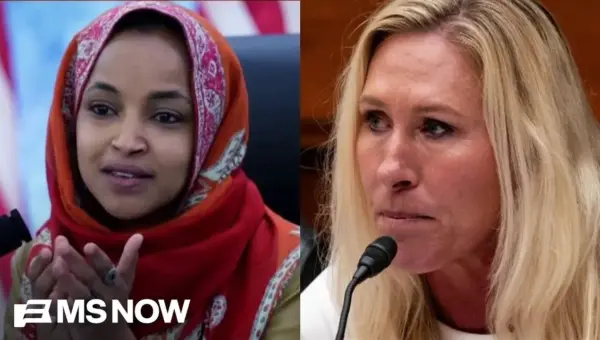
Omar Urges Democrats to Welcome Ex-MAGA Figures
Rep. Ilhan Omar is urging Democrats to embrace former Trump allies like Marjorie Taylor Greene who are now breaking with the former president. Omar believes these individuals deserve credit for their "wake-up call" and should be welcomed to help save the country. This call comes as Democrats explore strategies to broaden their coalition and appeal to disillusioned Republicans.

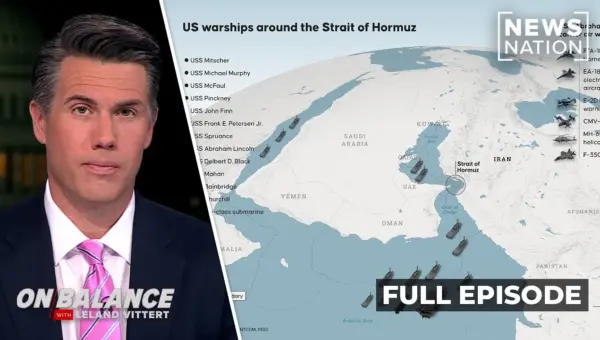
Iran Tensions Rise as US Blockades Ports
The US has imposed a naval blockade on Iran to cut off its funding, a move supported by most Americans in principle but not in practice due to economic costs. Meanwhile, internal Democratic Party struggles and a major scandal in California's gubernatorial race add to the political turbulence.

Swalwell Resigns Amid Ethics Probe, Fueling Political Firestorm
Congressman Eric Swalwell resigned amid an ethics probe, potentially avoiding an expulsion vote. The situation highlights ongoing scrutiny of political conduct and campaign finance. Investigations into alleged foreign donations to a major political group also raise concerns about election integrity.