Freeman Roars: Icon’s Fiery Trump Rebuke Echoes Nation’s Doubts
Iconic actor Morgan Freeman has publicly questioned the fitness of a convicted felon for the presidency, a sentiment that resonates with national polling data showing widespread skepticism towards Donald Trump. His critique echoes a historical tradition of cultural figures engaging in civic discourse, highlighting a potential leadership deficit and serving as a call to action for voters.

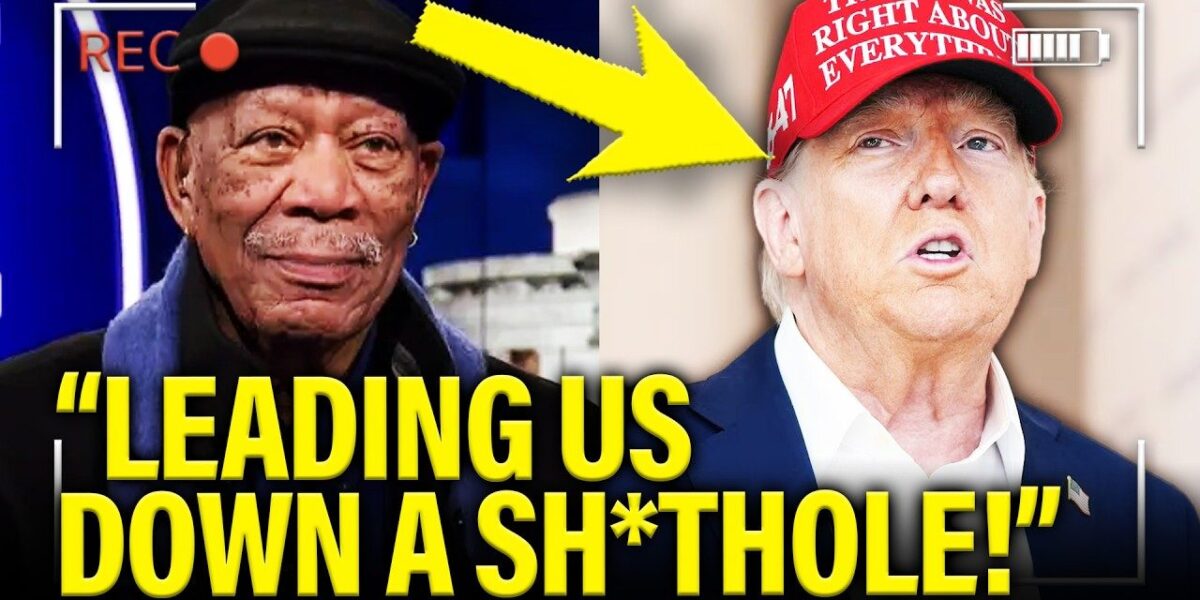
Iconic Voice, Unflinching Critique: Morgan Freeman Challenges Presidential Fitness
In a moment that rippled through national discourse, beloved actor Morgan Freeman, a voice synonymous with gravitas and authority, broke his silence on the current political climate, delivering a scathing critique of former President Donald Trump live on national television. Speaking with staunch Trump critic Lawrence O’Donnell, Freeman did not mince words, expressing profound disbelief that a “convicted felon” could aspire to the presidency. His remarks, amplified across social media, tapped into a vein of public sentiment that sees widespread skepticism regarding Trump’s fitness for office, a sentiment echoed in recent polling data.
A Convicted Felon in the White House? Freeman’s Moral Calculus
The core of Freeman’s public condemnation centered on the unprecedented situation of a former president facing and receiving a felony conviction. “I can’t personally understand how a convicted felon, convicted 34 times of wrongdoing, gets to be president,” Freeman stated, questioning the logic and the very fabric of the democratic process that would allow such a scenario. He dismissed any potential justifications, such as arguments about actions taken before assuming office, asserting that the ruling’s finality makes the matter clear: “it just doesn’t make sense to me.” This direct challenge to the legitimacy of a convicted individual holding or seeking the highest office in the land resonated deeply, particularly as it came from an individual whose own public persona is built on wisdom and moral authority.
Polling Data Corroborates National Unease
Freeman’s outspokenness did not occur in a vacuum. The transcript highlights that his sentiments align remarkably with broader public opinion, as evidenced by numerous polls, including those from outlets traditionally considered more conservative. These surveys reveal significant apprehension across various demographics, including independents and even segments of Trump’s own base. Questions about Trump’s mental sharpness, commitment to American rights and freedoms, and his use of the presidency for personal enrichment consistently show disapproval ratings above 50%. For instance, 70% of Americans reportedly question his mental acuity, while 56% doubt his commitment to protecting rights and freedoms, and a striking 62% believe he uses the presidency for self-enrichment. These “extraordinary numbers,” as described, suggest a deep-seated concern that transcends partisan lines, indicating a potential leadership deficit rather than mere policy disagreement.
Echoes in Conservative Media and Economic Woes
The analysis extends beyond public opinion polls to include observations from within conservative media circles. The transcript points to instances where even Fox News anchors and commentators are compelled to acknowledge the political and economic vulnerabilities surrounding Trump. Discussions about the economy, a key concern for voters, reveal a significant disconnect between the administration’s narrative and public perception. Polls cited show a stark disapproval of the handling of the economy, with approval ratings hovering around 40% against a 59% disapproval. This economic anxiety, coupled with concerns over inflation and market volatility, adds another layer to the public’s unease. Reports on producer price index figures coming in hotter than expected, impacting market futures, underscore the tangible economic pressures that voters are experiencing, further complicating the political landscape.
Historical Context: Artists and Athletes as Social Conscience
The dismissal of figures like Morgan Freeman as mere “Hollywood elites” who should “stick to acting” is a recurring theme, but one that overlooks a rich history of artists and athletes using their platforms for civic engagement. The piece draws a parallel to historical figures such as Muhammad Ali and the athletes of the 1968 Mexico Olympics, like John Carlos and Tommie Smith, who faced significant backlash for their protests but are now celebrated for their courage. The argument is made that these cultural icons, by speaking out, pushed boundaries of public discourse and challenged the status quo. In this vein, figures like Colin Kaepernick are presented as modern examples whose actions, though controversial at the time, may be re-evaluated in a more favorable historical light. The piece asserts that Freeman’s willingness to speak out, despite potential professional repercussions, aligns with this tradition of using influence for public good.
The Power of Moral Framing and a Call to Action
Morgan Freeman’s critique is framed not just as a political opinion but as an introduction of a moral and civic lens into political debate. When such commentary aligns with widespread public dissatisfaction, it gains significant weight, challenging the notion that it is simply an out-of-touch elite perspective. Instead, it reinforces perceptions of a broader leadership vacuum. Furthermore, Freeman’s explicit call for the younger generation to vote transforms his critique into a direct call to action, underscoring that the current political moment is not merely a matter for observation but for active participation. The piece concludes by emphasizing that while anger and outrage are valid responses, hope can be found in collective action and the inherent capacity of citizens to rise to the challenge, echoing the sentiment that “We the people” are the ultimate arbiters of the nation’s future.
Why This Matters
Morgan Freeman’s public denunciation of Donald Trump, particularly his focus on the conviction of a felony, serves as a powerful cultural moment that amplifies existing public concerns about political integrity and fitness for office. It demonstrates that the discourse surrounding Trump’s character and legal standing is not confined to political pundits or partisan circles but has permeated into the broader cultural consciousness, voiced by figures whose credibility is widely established. The alignment of Freeman’s critique with polling data from various sources, including those within conservative media, suggests that these concerns are widespread and potentially influential in shaping voter perceptions. This intersection of cultural commentary and empirical data underscores a significant challenge for any candidate facing felony convictions, forcing a broader public reckoning with the ethical and moral standards expected of political leadership. The historical context provided also highlights the enduring role of public figures in shaping social and political movements, suggesting that Freeman’s words could contribute to a sustained public dialogue about accountability and the future direction of American democracy.
Implications, Trends, and Future Outlook
The trend of cultural figures engaging more directly in political commentary, especially when critical of a former president, is likely to continue. This phenomenon challenges traditional notions of celebrity neutrality and reflects a growing public expectation for prominent individuals to voice their concerns on matters of civic importance. For Donald Trump, the persistent questioning of his fitness for office, amplified by respected voices like Freeman, poses a significant hurdle. It forces his campaign to not only address policy but also to confront deep-seated concerns about character and legal standing. The future outlook suggests a political landscape where such critiques will be increasingly scrutinized, both by supporters seeking to dismiss them and by opponents seeking to leverage them. The challenge for the electorate will be to discern genuine civic concern from partisan attacks, and for political movements to harness the power of cultural influence effectively and ethically.
Historical Context and Background
The tradition of artists and athletes engaging in political discourse is long and storied. From the activism of Paul Robeson and the civil rights advocacy of Harry Belafonte to the anti-war stance of Jane Fonda and the protest movements led by Muhammad Ali, cultural figures have consistently used their platforms to challenge societal norms and advocate for change. The 1968 Olympics protests by Tommie Smith and John Carlos, and more recently, the activism of Colin Kaepernick, exemplify moments where athletes faced severe professional repercussions for speaking out on issues of racial injustice and police brutality. These historical instances provide a crucial backdrop to understanding Morgan Freeman’s intervention. They illustrate that such interventions, while often met with immediate controversy and criticism, can evolve to be seen as pivotal moments of conscience and courage, shaping public opinion and historical memory over time. The current political climate, marked by intense polarization, has arguably amplified the impact and visibility of these interventions, making them central to the ongoing narrative of American politics.
Source: OMG! Beloved ICON absolutely TEARS into TRUMP LIVE on AIR (YouTube)

Related Articles
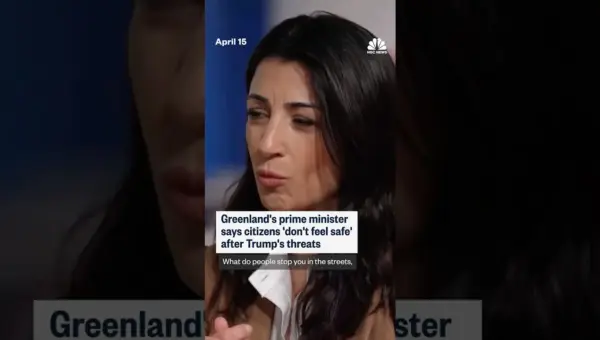
Greenland’s Leader: Trump’s Threats Make Citizens Unsafe
Greenland's Prime Minister revealed that citizens felt unsafe and angry after then-President Trump's 'threats' to buy the island. The comments highlight the human impact of geopolitical discussions on national sovereignty.
Iran Shuns Trump’s Deal Demands, Escalating Global Tensions
Iran has rejected President Trump's demands in ongoing negotiations, leading to heightened global tensions. Pakistan has stepped in as a mediator amid fears of escalating conflict. Meanwhile, the White House press briefings presented mixed messages on the economy and policy, facing scrutiny over strategy and communication.
GOP Senators Show Weariness With Trump’s Iran Stance
Republican lawmakers are showing signs of frustration with President Trump's prolonged engagement in Iran. Diplomatic talks continue, with a potential ceasefire extension being considered, while the U.S. bolsters its military presence. Meanwhile, domestic economic pressures and battles with the Federal Reserve chair add to the political complexities.