Geopolitical Turmoil Bolsters Bitcoin Amidst ETF Inflows
Geopolitical tensions and strong Bitcoin ETF inflows are creating a resilient market. Analysts point to exhausted sellers and the potential for capital rotation into crypto, while regulatory clarity on the Clarity Act could unlock significant institutional investment.

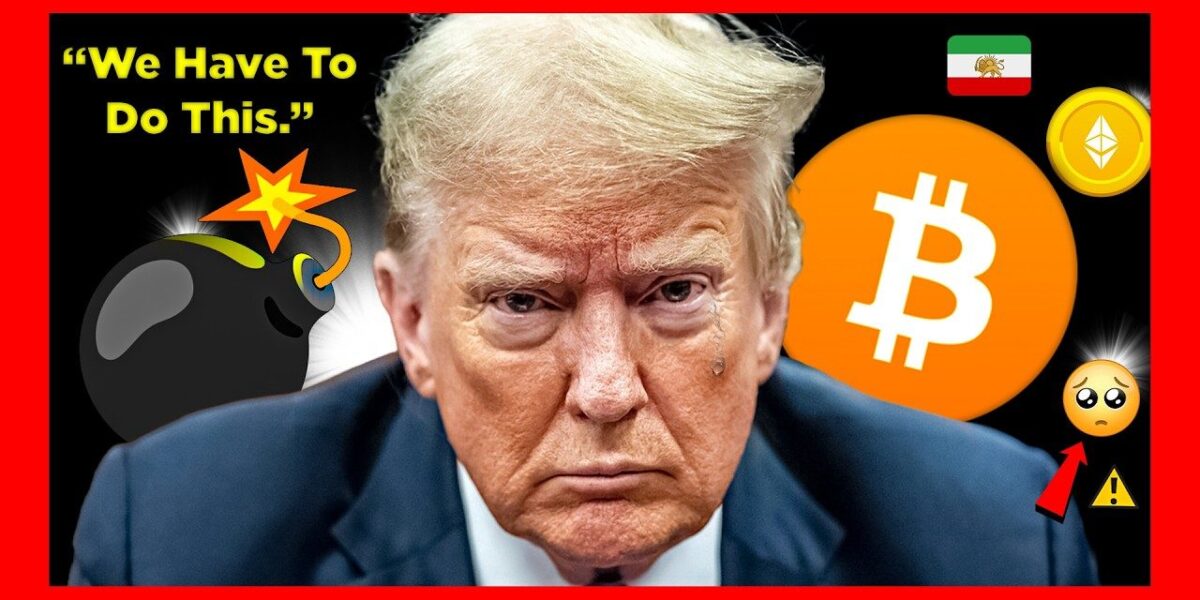
Bitcoin Holds Firm Amidst Global Tensions, ETF Inflows Surge
In a dramatic turn of events, escalating geopolitical tensions in the Middle East, coupled with significant inflows into Bitcoin spot Exchange Traded Funds (ETFs), have created a complex but potentially bullish narrative for the flagship cryptocurrency. Despite explosions rocking multiple cities in Iran and the United States signaling continued military action, Bitcoin has demonstrated remarkable resilience, defying expectations of widespread panic selling.
Geopolitical Uncertainty Fuels ‘Fear Asset’ Narrative
The recent events involving Iran have injected a new layer of uncertainty into the global economic landscape. As conflicts simmer and geopolitical risks rise, traditional safe-haven assets like gold have seen increased attention.
However, the transcript highlights a growing perspective that Bitcoin, too, is emerging as an ‘asset of fear.’ This theory posits that in times of economic instability, currency debasement fears, or general insecurity, investors turn to assets like Bitcoin and gold to preserve value. Larry Fink, CEO of BlackRock, has alluded to this, suggesting that Bitcoin, like gold, plays a role as a hedge against financial and physical insecurities.
Bitcoin Spot ETFs See Strong Weekly Inflows
Adding to the positive sentiment, Bitcoin spot ETFs have recorded substantial net weekly inflows, exceeding $700 million for the first time since January. BlackRock’s clients were reportedly responsible for the majority of these investments.
This influx suggests a growing institutional appetite for Bitcoin, even as macroeconomic conditions remain turbulent. The ability of Bitcoin to absorb these inflows and maintain price stability amidst global conflict underscores its increasing integration into mainstream financial markets.
Market Dynamics: Exhausted Sellers and Potential Rotation
Analysts suggest that the current market strength of Bitcoin might be attributed to an exhaustion of sellers. For months, the market has seen consistent selling pressure, potentially leading to ‘weak hands’ being flushed out. With the major geopolitical event occurring over the weekend, when traditional markets were closed, cryptocurrencies like Bitcoin and Ethereum continued to trade, allowing for a more continuous price discovery.
The consensus points towards potential upward trends in commodities like gold, silver, and oil in the short term. However, the narrative is shifting towards an expectation that as the immediate uncertainty of the US-Iran conflict potentially recedes, capital may rotate back into riskier assets such as stocks, equities, and crucially, Bitcoin and other cryptocurrencies.
M2 Money Supply and Debt: A Macroeconomic Backdrop
The broader macroeconomic environment continues to be defined by an ever-increasing M2 US money supply, which has now reached $22.5 trillion, and a continuously rising national debt. This persistent expansion of the money supply, coupled with increasing debt levels, fuels concerns about currency debasement. In such an environment, assets with a fixed or limited supply, like Bitcoin, are often seen as a potential hedge against inflation and a store of value, further strengthening the ‘asset of fear’ argument.
Ethereum’s Struggles and Potential Bottoming
While Bitcoin has shown resilience, Ethereum has experienced a prolonged period of negative monthly closes, marking its sixth consecutive month in the red. This sustained downtrend has suppressed sentiment and price action. Historically, Ethereum’s worst performance was six red months in 2018.
If March also closes in the red, it would tie that record. Despite this, there are strong bullish indicators for Ethereum. Transaction volumes on the Ethereum mainnet are at all-time high levels, while transaction fees have reached all-time lows.
This indicates increased utility and accessibility. The ecosystem is seeing a massive explosion in stablecoin usage, with most of this activity occurring on Ethereum. Future developments, including private transactions, quantum-proof security, Layer 2 scaling solutions, and the full implementation of account abstraction, are expected to further enhance Ethereum’s capabilities.
Regulatory Clarity: The Clarity Act and Institutional Adoption
A significant development on the regulatory front is the anticipation surrounding the Clarity Act. The White House was expected to announce progress on this legislation, which aims to provide clearer rules for the cryptocurrency market. The potential passing of the Clarity Act is seen as a major catalyst for institutional adoption.
Financial institutions like Morgan Stanley are making moves to expand their crypto services, with filings for a national trust bank charter to launch a crypto-focused entity, Morgan Stanley Digital Trust. Similarly, JP Morgan has voiced support for the Clarity Act, believing it will boost institutional adoption and tokenization.
Experts suggest that the Clarity Act could unlock significant institutional and sovereign wealth, potentially driving Bitcoin’s price towards $150,000 to $200,000 once it becomes a regulated security. The resolution of stablecoin yield issues within the next 60 days is also seen as a precursor to the Act’s passage, though it might negatively impact certain altcoins.
Future Outlook: Bullish March and Q1 End
The outlook for the next 30 to 60 days appears cautiously optimistic, with expectations of a bullish March. Factors contributing to this sentiment include the de-escalation of immediate geopolitical fears, scheduled liquidity injections into the market, and the ongoing progress of the Clarity Act. Despite short-term volatility, the market has shown an ability to hold recent lows.
A veteran crypto trader anticipates a potential 30% move in Bitcoin, reaching the $84,000 to $86,000 region by the end of Q1. This aligns with technical indicators and the broader thesis of new all-time highs being achieved this year, potentially diverging from historical four-year cycles. The increasing integration of traditional finance with blockchain technology, exemplified by BlackRock’s plans to tokenize all of its ETFs within the next 3 to 12 months, suggests a significant shift towards on-chain finance.
Conclusion: Crypto Poised for Surprise Growth
The confluence of geopolitical events, robust ETF inflows, increasing institutional interest, and regulatory clarity points towards a potentially transformative period for the cryptocurrency market. While short-term volatility is to be expected, the underlying fundamentals and the growing adoption trends suggest that Bitcoin and other digital assets are poised to surprise many observers with their performance in the coming months.
Source: US Declares WAR!!? The next 30 days look like this… (Bitcoin Update) (YouTube)

Related Articles


Israel Strikes Key Iran Leaders, Boosts Regional Security
Israel has eliminated key Iranian militant leaders, including Lar Johnny, a potential successor to the Ayatollah, and Solommani, head of the repressive Beiji militia. The operation, based on extensive intelligence, also killed hundreds of militia members. This significant strike aims to disrupt militant operations and enhance regional security.


Putin’s Internet Shutdown: Paranoia or Precaution?
Russia's recent internet restrictions fuel speculation about President Putin's paranoia, potentially driven by fears of a coup and the weaponization of digital information by adversaries. Actions like buffer zones and dismissals suggest a leader under pressure.


EU Warships Near Cyprus Test Defense Without US
European Union warships have deployed near Cyprus, marking a potential turning point for the bloc's collective defense capabilities without U.S. involvement. The move follows a drone attack on a British base and highlights Cyprus's strategic location. While seen as a low-risk show of solidarity, it raises questions about Europe's long-term defense independence.