Iran’s Escalation: Strategic Strikes and Shifting Alliances
Iran launched over 700 drones and missiles in a major overnight assault, with 90% intercepted by defenses. The strikes targeted multiple regional locations, including Israel, but resulted in minimal casualties and did not achieve significant strategic damage due to dispersed targeting. A notable shift sees Saudi Arabia now willing to assist following impacts on its territory.

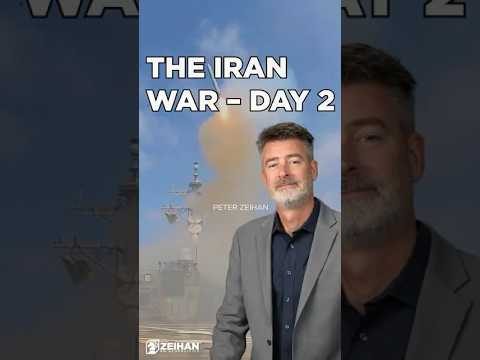
Iran Launches Major Drone and Missile Barrage
In a significant escalation, Iran launched a large-scale drone and missile attack overnight, targeting Israel and other regional locations. The strikes involved over 700 launches, comprising approximately 550 drones and 160 missiles. This unprecedented aerial assault represents a direct challenge to regional stability and the existing geopolitical order.
Interception Success and Questionable Targeting
Remarkably, an estimated 90% of the incoming projectiles were intercepted by a combination of advanced missile defense systems, fighter jets, and helicopters. This high rate of interception highlights the sophisticated defensive capabilities employed by the targeted nations. Analysts have noted that the targeting strategy employed by Iran appeared unusually diffuse.
Instead of concentrating their offensive power on a single critical location, Iran attacked multiple sites, including Kuwait Airport, Dubai, and various locations within Saudi Arabia and the Emirates, in addition to Israel. This broad dispersal, while hitting multiple areas, may have inadvertently made interception efforts more manageable for defensive forces.
The targeting was very strange. Uh, they attacked Kuwait airport, they attacked Dubai, they attacked Israel, of course, places in Saudi Arabia throughout the Emirates gutter. Uh, if they had focused everything on, you know, one place, they probably would have done a lot more damage. But by spreading them out, they made it easier for everything to be intercepted.
Limited Casualties and Strategic Impact
While the attacks resulted in casualties, reports indicate that the numbers were in the single digits in each affected location, including Dubai, Qatar, and Israel. These figures are considered insufficient to alter the fundamental strategic calculus for major players like Israel and the United States. The primary objective of inflicting significant strategic damage appears to have been largely unmet due to the interception success and the dispersed nature of the attacks.
Shifting Regional Diplomacy: Saudi Arabia’s Stance
A notable development accompanying the attacks is the reported shift in Saudi Arabia’s position. Previously opposed to such escalatory actions, Saudi Arabia has now indicated its willingness to assist in any capacity, particularly as some Iranian projectiles reportedly impacted its territory.
While Saudi Arabia, Kuwait, Qatar, and the UAE possess military capabilities, their direct offensive capacity against Iran is considered limited due to less advanced or inadequately trained military forces. However, their cooperation could significantly enhance the operational range for potential retaliatory strikes by Israel and the United States by granting access to their airspace.
The Concept of “Strategic Capitulation”
The broader context of these events points to a potential strategy articulated by American and Israeli planners, which some interpret as a demand for Iran’s “complete strategic capitulation.” This would entail Iran ceasing all power projection beyond its borders, a scenario viewed by Iran as tantamount to national surrender. The transcript suggests a grim possibility: that this strategy might involve eliminating figures within Iran’s governing system who oppose such a capitulation, thereby enabling a weakened regime to accept the terms. The effectiveness and morality of such a strategy remain subjects of intense debate.
Unseen Threats: Economic Infrastructure
Despite the extensive missile and drone launches, key economic infrastructure, such as Iran’s vital oil export systems, has not yet been targeted. This omission leaves a significant avenue for potential future escalation or pressure points that have yet to be utilized.
Looking Ahead: Iran’s Breaking Point?
The recent exchange represents a dangerous new phase in regional tensions. The coming days and weeks will be critical in determining Iran’s response to the high rate of interception and the perceived strategic failure of its offensive.
The potential for retaliatory actions from Israel and the US, now potentially strengthened by regional airspace access, looms large. The question remains whether Iran is nearing a breaking point, and if so, what the consequences of its ultimate reaction will be for the wider Middle East.
Source: Khamenei Eliminated: What’s Iran’s Breaking Point? #shorts (YouTube)

Related Articles


Putin’s Internet Shutdown: Paranoia or Precaution?
Russia's recent internet restrictions fuel speculation about President Putin's paranoia, potentially driven by fears of a coup and the weaponization of digital information by adversaries. Actions like buffer zones and dismissals suggest a leader under pressure.

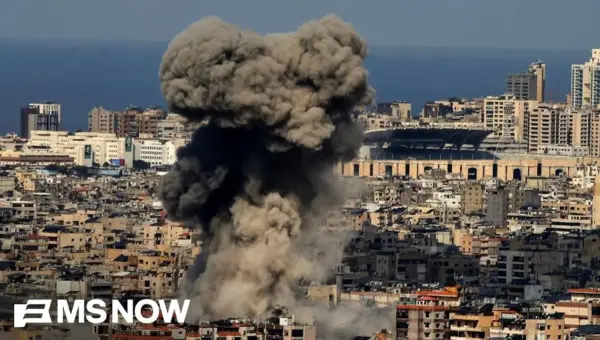
Israel Pushes into Lebanon Amid Fierce Hezbollah Fighting
Israeli forces are pushing into new territories in southern Lebanon, facing intense fighting from Hezbollah. The conflict has displaced over a million people in Lebanon, with many children out of school and struggling to find shelter. Meanwhile, the UN Human Rights Office has raised concerns that some Israeli airstrikes may constitute war crimes.


EU Warships Near Cyprus Test Defense Without US
European Union warships have deployed near Cyprus, marking a potential turning point for the bloc's collective defense capabilities without U.S. involvement. The move follows a drone attack on a British base and highlights Cyprus's strategic location. While seen as a low-risk show of solidarity, it raises questions about Europe's long-term defense independence.