Israel Strikes Iran Amidst Escalating Regional Tensions
Israel has launched intense new strikes on Iran following the death of Supreme Leader Ayatollah Ali Khamenei, escalating regional tensions. Former President Trump has warned of overwhelming force if Iran retaliates further, while global reactions vary. The strategic objectives and long-term implications of the U.S. and Israeli actions remain a subject of intense scrutiny.


Israel Launches New Strikes on Iran After Supreme Leader’s Death
Tehran was rocked by a massive explosion today as Israel launched intense new strikes targeting the heart of the city. The military action follows Iran’s interception of multiple missiles launched towards Israel earlier in the morning. This escalation comes in the wake of the death of Iran’s Supreme Leader, Ayatollah Ali Khamenei, an event that has sent shockwaves across the Middle East and beyond.
Iran’s Retaliation and Trump’s Warning
In response to the attacks, Iran’s cabinet has threatened severe retaliation. The country’s paramilitary Revolutionary Guard has vowed to launch its most intense offensive operation ever, specifically targeting Israeli and American bases.
Adding a stark warning to the volatile situation, former President Donald Trump posted on social media, cautioning Iran against further escalation. He declared that any such move would be met with “a force that has never been seen before.” This warning comes as Iran continues its retaliatory actions across the Gulf region, launching missiles not only at Israel but also at U.S. Bases in the United Arab Emirates, Qatar, Kuwait, Bahrain, and Jordan.
Global Reactions to Ayatollah’s Death
The death of Ayatollah Khamenei has elicited a wide spectrum of reactions globally. Within Iran, crowds have gathered in the streets, divided between celebration and mourning for a leader who had guided the nation for nearly four decades.
In Karachi, Pakistan, the aftermath saw clashes between police and pro-Iranian protesters who stormed the U.S. Consulate, resulting in several fatalities. The long-term strategy of the United States regarding Iran remains unclear, though former President Trump indicated in a social media post announcing the Ayatollah’s death that “heavy and pinpoint bombing would continue uninterrupted throughout the week or as long as necessary to achieve our objective of peace throughout the Middle East and, indeed, the world.”
Inside the Trump Campaign’s Deliberations
Reporting from West Palm Beach, near Mar-a-Lago, suggests an impromptu situation room has been established at former President Trump’s residence. Conversations there reportedly blend political fundraising with the ongoing military offensive. A significant question looming over these discussions is what comes next in Iran.
Trump has stated that whoever fills the power vacuum should not, and will not, possess nuclear capabilities. In a recent interview, he also mentioned the existence of potential “good candidates” to lead Iran post-Khamenei, though he declined to name them. This mirrors a previous situation following the ousting of Nicolás Maduro in Venezuela, where the path forward remained uncertain.
Former President Trump has directly addressed the Iranian people via video message, urging them to rise up against their government and seize the opportunity presented by the current crisis. However, the feasibility of such an uprising and the specific steps the Iranian people should take remain unclear.
“We will hit them with a force that has never been seen before.”
– Former President Donald Trump
Israeli Public Sentiment and Military Objectives
In Israel, the current military actions against Iran have been a long-sought objective for the nation’s leadership. On the ground, there appears to be broad public support for the operation, even among those directly affected by missile strikes. One individual, whose home shook from a nearby missile impact, expressed fear but unequivocally supported the continuation of the strikes, stating, “for as long as it takes, even if this means that there’s going to be destruction and that these missiles are going to be hitting from time to time.” The general sentiment among Israelis is a strong desire to neutralize Iran as a threat, regardless of the duration of the conflict.
Intelligence and Rationale for Strikes
Sources within the administration suggest that intelligence indicated Iran might attack first, potentially leading to higher casualty tolls if the U.S. Had not acted preemptively. This intelligence was reportedly presented to the “Gang of Eight” congressional leaders the previous Tuesday, forming part of the rationale for initiating military action and a potential regime change operation.
Further contributing to the decision-making process were meetings in Geneva, where U.S. Envoys Steve Whitcoff and Jared Kushner reportedly came away believing Iran was not negotiating in good faith. According to reports, Iran did not present a compelling offer, leading former President Trump to conclude that striking Iran was the only remaining option.
Crucially, Israeli and U.S. Military intelligence had reportedly been monitoring for an opportune moment, such as a meeting of senior Iranian political and military leaders where they could all be targeted simultaneously. Intelligence officers allegedly identified not just one, but three such potential opportunities, highlighting the sophisticated intelligence gathering that informed the current actions.
Trump’s ‘Off-Ramps’ and Strategic Ambiguity
Former President Trump has spoken of potential “off-ramps” following the strikes, suggesting flexibility in the duration and scope of the operation. He indicated the possibility of a prolonged campaign, a swift conclusion in “two or three days,” or even a scenario where Iran rebuilds its nuclear and missile programs in the future. National security reporters note that this approach provides Trump with maximum flexibility.
The exact meaning of “take over the whole country” remains ambiguous, but it is interpreted as potentially involving widespread strikes across the nation. Alternatively, if a new interim Iranian leadership were to agree to dismantle its nuclear program and halt ballistic missile development, Trump might consider the operation concluded.
However, the current aggressive stance from Iran suggests a lack of willingness to negotiate. The legitimacy of an interim Iranian leadership to make such fundamental concessions is uncertain.
This strategic ambiguity leads to questions about the ultimate goal: is it regime change, a Venezuela-like relationship, complete decimation of the country, or an externally imposed leadership? The answers remain elusive, with the primary known objective being the dissatisfaction with the direction of the current Iranian government.
The “12-Day War” Echoes and Future Outlook
The current events draw parallels to the “12-day war” in June of last year, when Israel and the United States also conducted strikes against Iran. The objective then was reportedly the obliteration of Iran’s nuclear capabilities, an aim that was not fully achieved.
The question arises whether the current actions are merely an extension of that previous conflict. Analysts suggest that while the current situation might be termed a “14-day war,” it is difficult to predict its duration, as wars are inherently unpredictable, and the involved leaders can be equally so.
Unlike the “one-and-done” strike of “Operation Midnight Hammer,” which aimed to de-escalate and impose leverage, the current operations appear more extensive. Strikes are reportedly targeting hundreds, possibly thousands, of military and government sites.
The potential for Iranian retaliation against regional partners, including the possibility of American casualties, raises concerns about a dangerous spiral. Unlike the previous conflict, which offered a semblance of a clean break, the current situation appears to be a more complex and potentially prolonged engagement with far-reaching consequences.
What’s Next?
The coming days will be critical in determining the trajectory of this escalating conflict. International attention will focus on whether Iran retaliates further, how the United States and its allies respond, and whether any diplomatic channels can be opened to de-escalate the situation.
The internal political dynamics within Iran, especially regarding leadership succession and the potential for popular unrest, will also be closely watched. The global community remains on edge, awaiting clarity on the ultimate objectives and the potential for a wider regional war.
Source: Israel launches intense new strikes on Iran: Inside Trump’s end goal for the operation (YouTube)

Related Articles
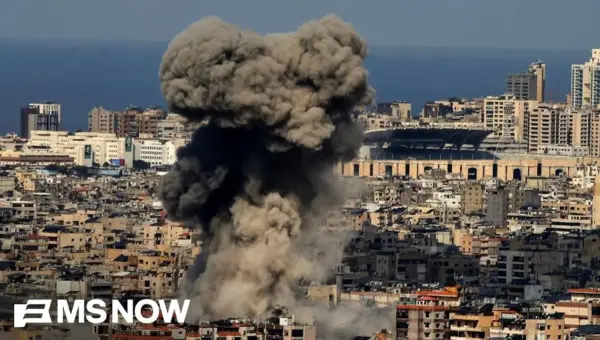
Israel Pushes into Lebanon Amid Fierce Hezbollah Fighting
Israeli forces are pushing into new territories in southern Lebanon, facing intense fighting from Hezbollah. The conflict has displaced over a million people in Lebanon, with many children out of school and struggling to find shelter. Meanwhile, the UN Human Rights Office has raised concerns that some Israeli airstrikes may constitute war crimes.

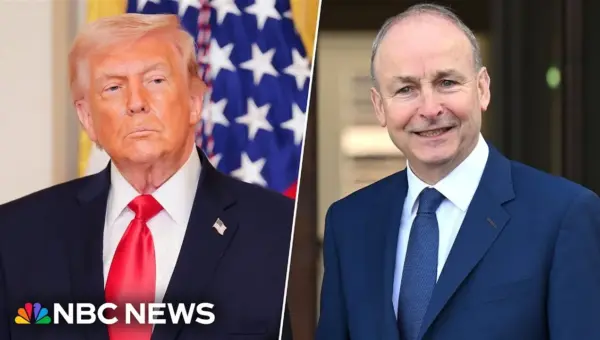
Trump Welcomes Irish Leader, Discusses Trade, Iran Tensions
President Trump welcomed Ireland's Taoiseach to the White House, discussing trade and the strong historical ties between the nations. The meeting also covered President Trump's views on Iran's military capabilities, his criticisms of NATO's support for U.S. initiatives, and upcoming foreign policy engagements.


Trump Reveals Congressman’s Terminal Diagnosis Amid Health Plea
Former President Donald Trump revealed that U.S. Representative Neal Dunn has a "terminal" heart condition. Trump stated he and Speaker Mike Johnson urged Dunn to stay in Congress despite the diagnosis. Dunn had previously announced he would not seek re-election, without specifying his health issues.