Epstein Files Unleash Avalanche of Scandal, Exposing Systemic Failures and Elite Complicity
The release of the Jeffrey Epstein files has become a chaotic spectacle, exposing not only the financier's heinous crimes but also systemic failures, official incompetence, and a deeply entrenched network of elite protection. Revelations include a secret list of co-conspirators, ignored FBI warnings from 1996, and how Epstein leveraged wealth and connections to build his empire and evade justice, highlighting a two-tier justice system.

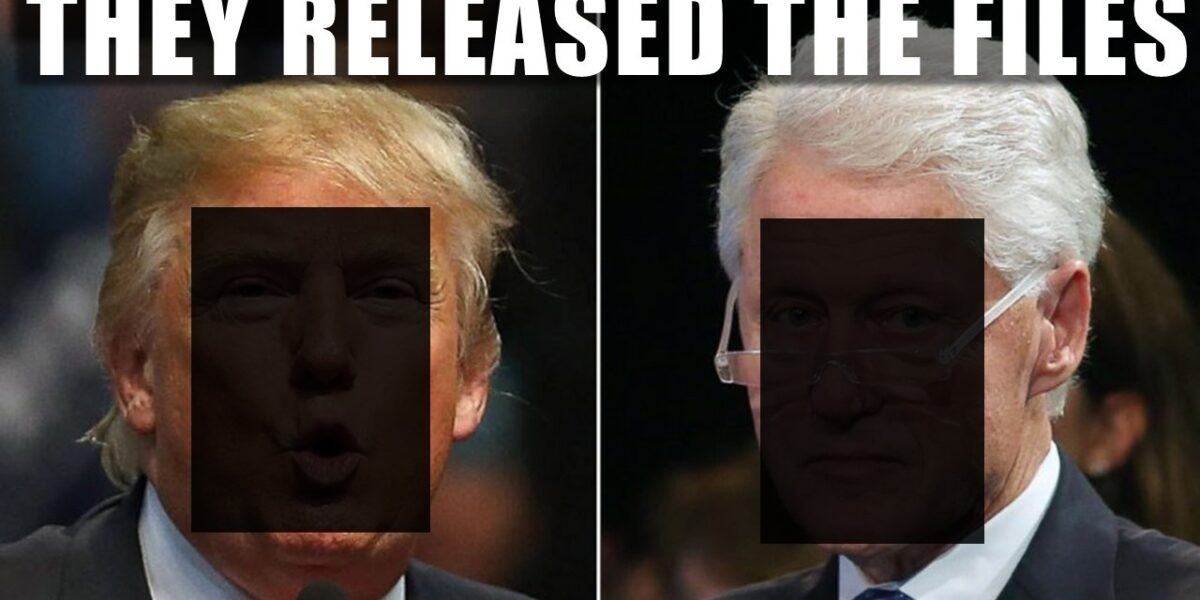
Epstein Files Unleash Avalanche of Scandal, Exposing Systemic Failures and Elite Complicity
Last month, a congressional order mandating the Department of Justice (DOJ) to release the long-awaited Jeffrey Epstein files was hailed as a monumental victory for transparency. However, the subsequent rollout has devolved into a chaotic spectacle, characterized by incompetence, technical failures, and selective disclosure, leaving even the most fervent transparency advocates questioning the government’s commitment to justice. Far from a clear revelation, the public has received a muddy trickle of information, exposing not only Epstein’s heinous crimes but also a deeply entrenched system of elite protection and systemic failure.
The initial promise of a swift and comprehensive disclosure quickly crumbled. On Christmas Eve, the DOJ made a stunning admission: an additional “over a million records” had been “uncovered” and would require “a few more weeks” for review. This revelation came after the department had released a mere 11,034 documents in small, heavily redacted increments. The scale of this omission is staggering, suggesting that the public has seen perhaps 1% of the total cache. This humiliating reversal directly contradicted Attorney General Pam Bondi’s earlier assurance in February that the “relevant files were sitting on her desk and ready for review.” The shift from “ready to release” to “too much to process” has fueled suspicions of deliberate obstruction, rather than mere oversight.
A Transparency Debacle: From ‘Ready to Release’ to ‘Millions More’
The journey from congressional mandate to public disclosure has been fraught with controversy, painting a picture of a justice system struggling, or perhaps unwilling, to fully confront the implications of the Epstein saga. The initial enthusiasm for the “Epstein Files Transparency Act” quickly waned as the reality of the release set in. What was promised as a flood of clarity became a mere drip, heavily filtered and obscured. The sudden “discovery” of an additional million documents, after months of preparation and public assurances, has been widely interpreted as a catastrophic failure of institutional memory or, more cynically, a strategic delay tactic.
Transparency advocates and legal experts argue that such a vast discrepancy between expected and actual disclosure amounts to a deliberate failure to comply with the spirit, if not the letter, of the law. The practical implications are profound: if a million documents remain hidden, the full scope of Epstein’s network, his enablers, and the institutional failures that allowed him to operate for decades remain largely concealed. This prolonged deferral of information not only erodes public trust but also perpetuates the very conspiracy theories the government claims to want to dispel, leaving the impression that significant truths are still being suppressed.
Redactions, Glitches, and Selective Disclosure
Beyond the sheer volume of withheld information, the quality of the released documents has raised serious questions about the DOJ’s competence and impartiality. The “incompetence was absolute,” as ordinary members of the public quickly discovered that some redacted text could be revealed by simply copying and pasting the document into a different format. These “digital slipups” did not expose sensitive victim data, as intended, but rather “financial records and details that the law explicitly forbade the DOJ from hiding.” This glaring error suggested that “censorship was often protecting reputations, not victims.”
Further compounding concerns, internal documents revealed that the FBI referred to the redaction effort as the “Special Redaction Project,” an initiative that incurred over $850,000 in overtime costs in a single week in March. The substantial investment, critics argue, appears to have resulted in a “sophisticated form of obstruction.” Users reported a bizarre technical anomaly where searching the digital files for “Trump” yielded almost zero results, only to be discoverable by searching “Trump ” (with a space at the end). This “coding glitch” rendered the former president “invisible to the general public.” Meanwhile, specific files, including a photo of a desk in Epstein’s home displaying two pictures of the president, were quietly removed and then re-uploaded only after public outcry. The DOJ’s decision to include an “unusually specific disclaimer” warning that the files contained “untrue and sensationalist claims about President Trump,” without similar warnings for other prominent figures, further highlighted accusations of bias and political weaponization.
Shattering the Official Narrative: Co-Conspirators and Ignored Warnings
For months, administration officials, including Attorney General Pam Bondi and FBI Director Cash Patel, steadfastly maintained “that there was no client list and nothing to see in the files.” Patel went further, telling Congress, “there’s no credible information, none, that Epstein trafficked women to others.” The recently released documents unequivocally prove otherwise.
The 2019 Co-Conspirator List
Buried within the chaotic document dump is a heavily redacted email chain from July 2019, sent just hours after Epstein’s arrest. In this timestamped federal record, an FBI agent asks a colleague for an “update on the status of the 10 co-conspirators.” This email confirms that “from the very first moments of the 2019 investigation, the FBI had identified 10 specific targets” beyond Epstein and Ghislaine Maxwell. While seven names remain redacted, citing “privacy concerns” – a justification the new law explicitly forbids for anyone other than victims – three names were left visible: Ghislaine Maxwell, Jean-Luc Brunel (the French modeling agent who died in prison awaiting trial), and Leslie Wexner, the billionaire retail tycoon behind Victoria’s Secret.
Wexner’s inclusion is explosive. For decades, he was Epstein’s primary patron, entrusting the former math teacher with total control over his billions. While Wexner severed financial ties in 2007 and claims he was never a target of federal investigation, his presence on a verified FBI suspect list suggests that “agents believe that the money trail and the abuse trail were intertwined.” The existence of this list refutes the “lone wolf” narrative and raises critical questions about why these individuals were never charged and why their identities were largely kept secret.
The 1996 FBI Warning
Even more damning is the revelation of catastrophic institutional failure spanning decades. The files show that the FBI was alerted to Epstein’s abuse as far back as 1996. Maria Farmer, an artist who worked for Epstein, filed a police report explicitly stating that Epstein and Maxwell had stolen nude photographs of her younger sisters, aged 12 and 16, that she had taken for her own personal artwork. Crucially, the FBI report notes that Epstein was “believed to have sold the pictures to potential buyers.”
This single sentence “destroys the lone wolf narrative” and provides chilling evidence of a wider trafficking network that officials denied existed. If Epstein and Maxwell were selling such photographs, then there were buyers. And if the FBI knew about potential buyers of this type of material in 1996 and had a list of co-conspirators in 2019, the question is no longer if others were involved. The more profound question becomes: “why the most powerful law enforcement agency in the world decided to stop looking for them,” and why it took 23 years and billions in stolen money to finally bring a partial halt to his activities.
Bizarre Anomalies and Distracting Noise
While the co-conspirators list points to a cold, hard cover-up, much of the release resembles a “hall of mirrors,” a chaotic junk drawer of evidence that mixes genuine leads with bizarre anomalies. This includes a purported suicide note and strange video footage, which, while included, often serve to fuel speculation rather than clarify facts.
The Larry Nasser Suicide Note
One of the most peculiar inclusions in the cache is a letter purportedly written by Epstein to Larry Nasser, the disgraced gymnastics doctor convicted of abusing over 150 women and girls. The note, addressed “Dear LN,” reads: “as you know by now, I’ve taken the short route home. Good luck. We shared one thing, our love and caring for young ladies and the hope they’d reach their full potential. Our president also shares our love of young new girls.” It then makes a lewd reference to the president’s treatment of women and signs off “life is unfair. Yours, J. Epstein.”
While the existence of a letter to Nasser has been public knowledge since 2023, there are compelling reasons to doubt its authenticity. Investigators have never established a clear link between Epstein and Nasser, making the choice of recipient unusual. Furthermore, the letter was postmarked three days after Epstein’s death and mailed from Northern Virginia, hundreds of miles from the Metropolitan Correctional Center in Manhattan where he died. Despite the DOJ labeling the letter “unfounded and false” upon release, its inclusion has only “fueled the very speculation they seem to want to discourage,” contributing to conspiracy theories about a celebrity ring of abusers while paradoxically contradicting the theory that Epstein was murdered to silence him.
Choking Footage
Another unusual item formally included in the files is bizarre footage of Epstein appearing to choke himself in his prison cell. This video, which circulated online for years, was apparently included simply because someone emailed it to the FBI asking if it was real. Such inclusions, while potentially providing a complete record, also contribute to the overwhelming “noise” that can distract from the more substantive revelations within the documents.
The Global Elite: A Web of Connections and Compromise
The files feature a surreal cast of characters spanning the entire spectrum of the global elite. Names dragged into the sunlight range from rock stars like Mick Jagger, Diana Ross, and Michael Jackson, to Hollywood A-listers such as Kevin Spacey and Leonardo DiCaprio, titans of science and industry like Bill Gates and Noam Chomsky, and even magician David Copperfield. It is crucial to state that “appearing in a photograph with Jeffrey Epstein or flying on his jet does not inherently imply criminal wrongdoing.” For many, Epstein was simply a fixture of the social circuit, a wealthy donor whose sinister reality was hidden in plain sight. But for others, the association was far deeper, revealing profound levels of compromise and complicity.
Bill Clinton’s Embarrassing Association
Former President Bill Clinton featured heavily in the first batch of released documents. While the files contain no evidence of specific crimes, they confirm a “long comfortable friendship that Clinton has spent years trying to downplay.” Images show him “relaxing in hot tubs and swimming with Ghislaine Maxwell,” pictures that are “embarrassing, if not indictable.” Yet, for the current White House, mere embarrassment was not enough. In a move that stripped away any pretense of impartiality, a deputy press secretary tweeted a photo from the files showing Clinton with Michael Jackson, Diana Ross, and three small children. The children’s faces were redacted, implying they were possible victims. This implication was a lie; the photo had been taken at a public charity event, and the children belonged to Jackson and Diana Ross. This “manufactured scandal” “speaks volumes about how low political figures will go to discredit each other,” highlighting the bipartisan nature of the embarrassment Epstein caused.
Prince Andrew: The Royal Scandal
Perhaps the most damaging revelations about a public figure concern Prince Andrew. The documents contain “what might be the closest thing to a smoking gun in the entire release:” an email exchange between Ghislaine Maxwell and a sender signed simply “A,” widely identified as Prince Andrew. In the emails, the former prince writes from Balmoral to ask Maxwell if she has “found him any new inappropriate friends,” later discussing an upcoming trip to Peru. Maxwell instructs an associate to organize “two-legged sightseeing” for the prince, specifying that the women should be “intelligent, pretty, fun, and from good families.” The revelation that a member of the royal family was using official travel budgets to procure women via Epstein and Maxwell is “a scandal that no amount of redaction can hide,” presenting direct evidence of his involvement in Epstein’s illicit activities.
Unmasking the Financial Architect of Abuse
If the failure to investigate the sexual crimes was a tragedy, the failure to investigate the financial crimes was a farce. Despite the government possessing “the ultimate investigative toolkit” – the power to compel testimony, track every cent through the banking system, and access IRS tax records – federal agents failed for over 40 years to answer the most basic question: “Where did all the money come from?” It took a team of journalists from the New York Times, “digging through dusty archives and interviewing forgotten associates, financial victims, and ex-girlfriends,” to finally dismantle the myth of Epstein as a financial wizard.
Epstein’s True Wealth Source
The Times investigation revealed a much grubbier reality: Epstein was “no wizard. He was instead a relentless scammer who built his empire on a foundation of Ponzi-like schemes, fraud, and a systematic betrayal of friends.” His career began at Bear Stearns in 1976, hired for his “poor, smart, and had a deep desire to become rich” profile. He rose quickly, even after lying about his education, effectively treating his resume “like a creative writing assignment.” He was protected by dating the chairman’s daughter but eventually left in 1981 after being caught breaking federal rules, including funneling lucrative IPO shares to a girlfriend.
After Wall Street, Epstein operated under the guise of a “bounty hunter,” but his reality was often fraud. In 1982, he convinced an acquaintance, Martin Stroll, to invest $450,000 in a crude oil deal; the money vanished, and Epstein mocked him by sending a single quart of oil. He partnered with Steven Hoffenberg at Towers Financial, where Hoffenberg later claimed Epstein helped orchestrate a massive Ponzi scheme that defrauded investors of nearly $500 million. Hoffenberg went to prison; Epstein walked free. He also used “high-stakes corporate raiding to mask simple market manipulation,” executing a pump-and-dump scheme with Penwald in 1988, then “effectively stealing” capital from friends who funded the deal.
Leslie Wexner: The Primary Patron
Epstein’s biggest source of wealth and, crucially, legitimacy, came from retail billionaire Leslie Wexner. Despite warnings from Wexner’s own financial advisor, who “smelled a rat,” Epstein managed to gain power of attorney over Wexner’s entire fortune. Wexner later claimed Epstein misappropriated vast sums of his money, which Epstein then used to “buy mansions, planes, and perhaps most importantly, credibility.” His access to Wexner opened doors to the highest corridors of power, allowing him to infiltrate the Clinton White House and sit on boards for prestigious institutions like Rockefeller University.
Enablers in High Places
The newly released documents also reveal the extent to which Epstein embedded himself within the establishment, even in his final arrangements. Two prominent figures in finance and policy were named as executives in his wills: Jess Staley, the former Barclays CEO, listed in wills from 2013 and 2014, compounding scrutiny he faced for his ties to Epstein; and Larry Summers, the former US Treasury Secretary, named as a successor executor in the 2014 will. While Summers claims “he had absolutely no knowledge of this and is deeply ashamed of the association,” his inclusion highlights “just how effective Epstein’s fraud really was.”
Perhaps the most strategic relationship Epstein purchased was with legal scholar Alan Dershowitz. In 1996, Epstein ingratiated himself with Dershowitz, even flying him to Wexner’s birthday party. More significantly, Epstein “bullied” a hedge fund manager into making Dershowitz whole after a massive investment loss, threatening to pull Wexner’s $30 million investment. This “master stroke of manipulation” ensured that “a prominent legal mind owed him a big favor.” That favor paid dividends years later when Dershowitz “helped engineer the now infamous sweetheart deal that allowed Epstein to escape federal prosecution and serve a light sentence” in 2008. In hindsight, it was not generosity but “an insurance policy paid for with stolen money.”
The True Cost of Protection: A Two-Tier Justice System
The “party girl myth” – that Epstein merely took advantage of willing teenagers – is definitively shattered by new photos released by the House Oversight Committee. These images show “young girls with lines from the novel Lolita written in black marker across their bodies on their chests, feet, and spines.” It is “a grotesque display of branding that turns literary pretention into evidence of systematic abuse,” confirming a much “nastier, more dangerous reality” involving “small children, not party girls.” The files also reveal Epstein threatened to burn down a teenage victim’s house if she spoke out, highlighting the coercive and violent nature of his predation.
When reflecting on the reality exposed by these documents, one is left with an uncomfortable realization: “Jeffrey Epstein wasn’t a ghost in the machine. He was a product of it.” Michael Tenenbaum, the senior executive at Bear Stearns who supervised Epstein’s early rise, admitted, “I didn’t realize that I was creating one of the monsters of Wall Street.” But, as the article notes, “he didn’t do it alone. It took a village of billionaires, bankers, and politicians to raise this monster.”
The Epstein files are the ultimate proof of “a two-tier justice system in the United States. One set of rules for you and me and a completely different set for the well-connected elites.” For years, this scandal has been treated like a political football, with both parties having reasons to keep the files sealed. Republicans were “desperate to cover up Donald Trump’s 15-year friendship” with Epstein, while Democrats were “willing to turn a blind eye to Bill Clinton’s association” to protect Hillary Clinton’s political future. Now, with the Clintons perceived as less politically relevant, “the shield is slipping.” A newly released email from a federal prosecutor reveals that flight logs show Trump flew on Epstein’s private jet “many more times than previously reported, including on flights where Ghislaine Maxwell was a passenger.”
The chaotic release, the easily circumvented redactions, the confirmation of a co-conspirator list, the ignored FBI warnings from 1996, and the intricate financial frauds all point to a profound failure of accountability. The files reveal not just the depravity of one man, but the systemic vulnerabilities that allowed him to thrive within the highest echelons of power, protected by wealth, influence, and a justice system seemingly designed to shield its own. What the public has seen thus far is likely “just the tip of the iceberg,” leaving a lingering question: how many more powerful individuals remain shielded by the ongoing opacity?
Source: The Epstein Files are Worse Than You Think! (YouTube)

Related Articles

FBI Docs Contradict Melania’s Epstein Introduction Claims
Newly surfaced FBI documents challenge Melania Trump's recent claims about not being introduced to Donald Trump by Jeffrey Epstein. Witness testimony suggests Epstein facilitated the introduction, contradicting Melania's public statements and raising questions about her associations and those of figures like Paulo Zampoli.

Epstein Files: Survivor Disputes DOJ Claims of Full Release
A survivor of Jeffrey Epstein's abuse, Danielle Bensky, disputes the Justice Department's claim that all relevant files have been released. Citing specific missing documents and contradictory official statements, Bensky believes more information is being withheld, potentially to protect powerful individuals. Despite frustrations, she notes progress in how sexual assault cases are generally handled.


Vance Defends Trump: Epstein Friendship Claim Is A Hoax
Senator JD Vance asserts that claims of Donald Trump being close friends with Jeffrey Epstein are a "hoax." Vance cited emails suggesting a mutual dislike and even Trump reporting Epstein to authorities, arguing this refutes the "best friend" narrative pushed by Democrats.