New AI Agents Simplify Automation for Everyone
New AI personal assistant agents are emerging, offering user-friendly alternatives to complex tools like OpenClaw. Platforms like Entropic's Claw Co-work and Meta's Manus aim to democratize AI automation with intuitive interfaces and improved accessibility.


AI Personal Assistants Emerge as User-Friendly Alternatives
The buzz around AI personal assistant agents, exemplified by tools like OpenClaw, has been undeniable. These agents promise to automate complex tasks and streamline workflows, but their accessibility and security have remained significant hurdles for the average user. Now, a new wave of AI tools is emerging, aiming to democratize this powerful technology by offering intuitive interfaces and addressing the security concerns that have plagued earlier iterations.
The Promise and Peril of Early AI Agents
Tools like OpenClaw, while powerful, often require a steep learning curve. Setting them up can involve technical expertise, making them inaccessible to individuals without a background in programming or AI. Furthermore, the cost associated with running these advanced models and the potential security risks associated with granting broad access to personal data have limited their widespread adoption. This has created a gap in the market for solutions that are both capable and user-friendly.
Introducing Accessible AI Agent Solutions
Several new platforms are stepping in to fill this void, offering functionalities similar to OpenClaw but with a focus on ease of use and enhanced security. These alternatives are designed to empower non-technical users to leverage AI for personal and professional productivity without the need for extensive setup or specialized knowledge.
Entropic’s Claw Co-work: A Windows-Friendly Update
One of the leading contenders is Entropic’s Claw Co-work. This platform has recently received an update that extends its compatibility to Windows operating systems, significantly broadening its potential user base. While the specifics of its underlying AI models and parameter counts are not detailed, its core offering is to replicate the task-automation capabilities of more complex agents, but through a more accessible interface. This update is a crucial step towards making advanced AI agents a viable option for a wider audience.
Meta’s Manus: Bridging the Gap in Agent Capabilities
Meta, a company already at the forefront of AI research, is also making strides in this area with its Manus platform. Manus is being developed with the explicit goal of providing agent-like capabilities that rival those of existing complex systems. The focus here appears to be on replicating the sophisticated task management and execution that users expect from advanced AI assistants, but within a framework that is intended to be more intuitive and easier to integrate into daily workflows. The ambition is to offer a robust AI agent experience without the prohibitive technical barriers.
Kim Cla: A Simplified Chinese Option
For users who are comfortable with their data being processed in China, Kim Cla presents another simplified alternative. This platform aims to make AI agent functionality readily available, streamlining the process of setting up and utilizing AI for various tasks. However, the geographical location of data processing is a critical consideration for many users concerned about data privacy and compliance with international regulations. While offering ease of use, this aspect of Kim Cla necessitates careful evaluation by potential users.
Understanding the AI Behind the Agents
These new AI agents, like their predecessors, are powered by sophisticated artificial intelligence models. At their core, these are complex algorithms trained on vast amounts of data. The ‘parameters’ of a model refer to the variables the AI learns during its training phase; a higher number of parameters often correlates with a model’s capacity for understanding and generating more complex outputs. While specific benchmark results for these new tools are not provided in the initial announcement, their stated goal is to achieve performance levels comparable to existing advanced agents in automating tasks.
Why This Matters: Real-World Impact
The emergence of user-friendly AI agents has the potential to revolutionize productivity across numerous sectors. For individuals, these tools could automate mundane tasks like scheduling, email management, and data entry, freeing up valuable time for more creative or strategic work. In a professional context, businesses could see significant efficiency gains by automating customer service inquiries, internal reporting, or project management workflows. The key benefit lies in making powerful AI capabilities accessible to everyone, not just AI experts. This democratization of AI could lead to widespread innovation and a significant boost in overall productivity, provided users can effectively identify and implement the use cases that best suit their needs.
Navigating the Landscape
While these new tools promise to save hours each day, exploring their full potential requires an investment of time. Users will need to experiment to discover the specific applications and workflows where these AI agents can provide the most value. The journey to integrating AI assistants seamlessly into daily life is ongoing, and staying informed about updates and new developments, as suggested by the original announcement, will be crucial for maximizing their benefits.
The Road Ahead
The AI landscape is evolving at an unprecedented pace. As tools like Entropic’s Claw Co-work, Meta’s Manus, and Kim Cla mature, they are poised to lower the barrier to entry for AI-powered automation. The focus on user experience and addressing security concerns signals a maturing market that is increasingly prioritizing accessibility alongside power. For anyone looking to harness the power of AI without the technical overhead, these emerging solutions represent a significant step forward.
Source: OpenClaw is Great, But… (YouTube)

Related Articles


AI Data Centers Spark Rural Uprising
Rural American towns are fighting back against a surge of AI data centers. These massive facilities threaten water supplies, farmland, and local infrastructure. Residents and lawmakers are pushing for new rules to control their growth and ensure companies bear more of the costs.

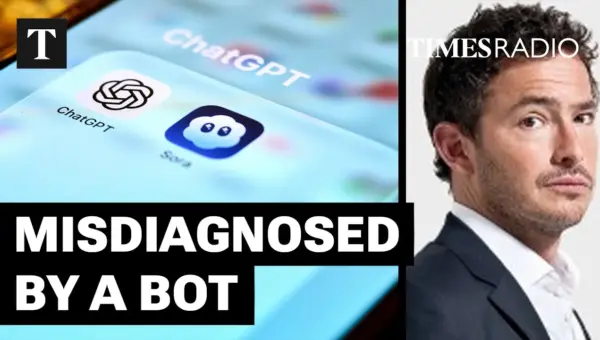
AI Misdiagnoses Medical Cases 80% of the Time
A recent U.S. study reveals that AI chatbots are misdiagnosing medical conditions in 80% of cases, highlighting significant risks in relying on artificial intelligence for health advice. Personal stories shared by individuals demonstrate how online self-diagnoses led to incorrect treatments and prolonged suffering, underscoring the irreplaceable value of human medical professionals.


AI Powers Sophisticated Scams Targeting Savings
A 76-year-old man lost $1.6 million to an AI-powered investment scam, highlighting the growing threat of sophisticated fraud. The scam involved realistic AI-generated videos and convincing fake personas. Authorities warn that AI is making these schemes harder to detect, while some perpetrators are also victims of human trafficking.