Russian Fighter Jet Downed Over Ukraine Amid Escalating Conflict and Alaskan Tensions
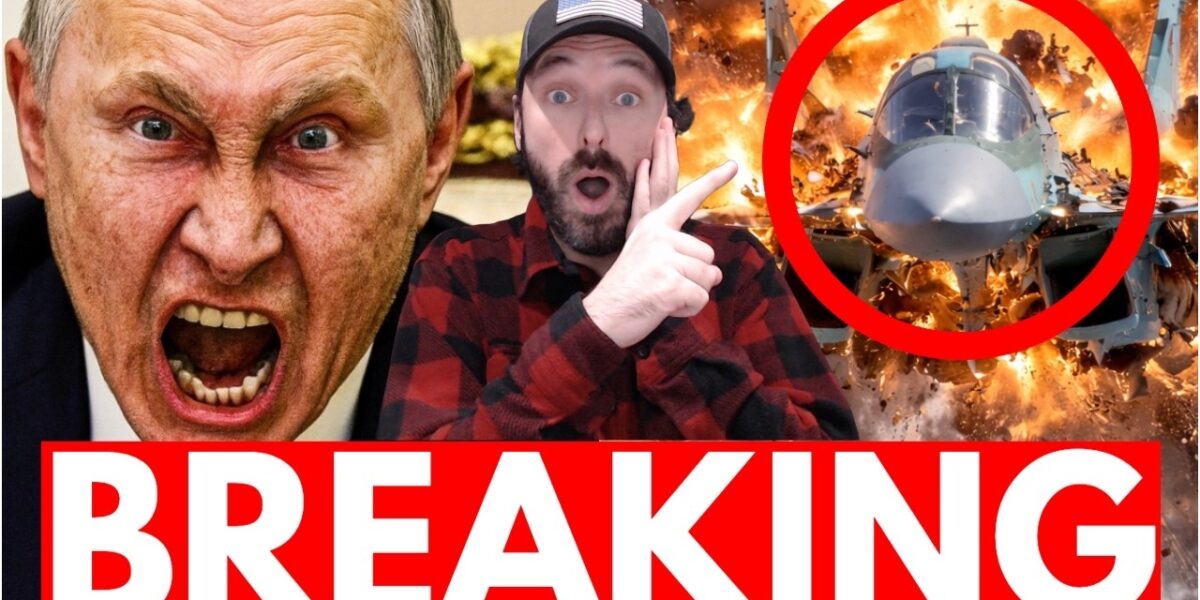
A Russian Su-34 fighter-bomber was reportedly shot down over Ukraine, marking a significant victory for Ukrainian air defenses bolstered by Western aid. This incident occurred just hours after Russian jets probed Alaskan airspace, highlighting escalating tensions on multiple fronts. The downing signifies a crucial blow to Russia's aerial capabilities and underscores the intensifying nature of the protracted conflict.

Russian Fighter Jet Downed Over Ukraine Amid Escalating Conflict and Alaskan Tensions
Kyiv, Ukraine – February 20th – In a clear reminder of the brutal and intensifying conflict in Eastern Europe, a Russian Sukhoi Su-34 fighter-bomber has reportedly been shot down over Ukrainian airspace, marking the latest blow to Moscow’s aerial capabilities. This incident, confirmed by Ukrainian sources and widely reported by war bloggers, occurred just hours after Russian strategic bombers and fighter jets conducted provocative flights near the coast of Alaska, triggering a rapid response from North American Aerospace Defense Command (NORAD).
The downing of the Su-34, a sophisticated twin-seat strike aircraft designed for ground and naval attacks, underscores Ukraine’s increasingly effective air defense capabilities, significantly strengthened by advanced Western weapon systems. It also signals a worrying escalation in a conflict that many observers believe is entering a more violent and unpredictable phase, defying any notions of an imminent peace settlement.
The Latest Incident: A Russian SU-34 Downed Over Zaporizhzhia
Reports circulating on February 20th confirmed that a Russian Su-34 fighter-bomber was successfully intercepted and destroyed by Ukrainian anti-air defenses. The incident reportedly took place over the temporarily occupied territory of the Zaporizhzhia region, a strategically vital area in southern Ukraine that has seen intense fighting. According to initial Ukrainian reports, the aircraft was on a bombing mission, having launched guided aerial bombs on an unspecified area of the Dnipro region, before being engaged by a surface-to-air missile (SAM) system and crashing near Kamianka in the Zaporizhzhia region.
While the situation remains fluid and rapidly developing, Ukrainian-based news outlets like Vizigrad 24 corroborated the reports, stating, "The Ukrainian army just shot down another Russian SU-34 fighter bomber over [the] Zaporizhzhia region of Ukraine." This marks at least the second Russian jet shot down in the past week or two, and the third reported in approximately three weeks, highlighting a concerning trend for the Russian Air Force.
The immediate engagement of the fighter jet after its bombing run suggests a highly coordinated and effective response from Ukrainian air defense units, likely utilizing advanced SAM sites. Such systems are specifically designed to detect, track, and neutralize hostile aircraft, and their increasing success against Russian aerial assets points to a significant enhancement of Ukraine’s defensive posture.
Unpacking the SU-34: A Look at Russia’s ‘Fullback’
The Sukhoi Su-34, codenamed ‘Fullback’ by NATO, is a crucial component of Russia’s tactical air power. Developed from the venerable Su-27 Flanker air superiority fighter, the Su-34 is a dedicated medium-range fighter-bomber strike aircraft. Its design features a distinctive wider, armored cockpit with side-by-side seating for its two pilots, a layout chosen to improve crew comfort on long-duration missions and facilitate teamwork during complex ground attack operations.
First flying in 1990 and entering service with the Russian Air Force around 2014-2015, the Su-34 was engineered for tactical deployments against ground and naval targets. Its operational profile includes solo and group missions, capable of operating day and night, under favorable and adverse weather conditions, and in hostile environments characterized by heavy counter-fire and electronic warfare countermeasures. It is also equipped for aerial reconnaissance.
However, despite its sophisticated design by Russian standards, the Su-34 is not a stealth aircraft. Unlike Russia’s limited number of Su-57 ‘Felon’ jets – which themselves are not considered truly stealthy by Western metrics – the Su-34 is easily detectable by modern radar and early warning systems.
This vulnerability makes it a prime target for advanced surface-to-air missile systems, especially those supplied to Ukraine by its Western allies. The fact that its electronic warfare countermeasures seemingly failed in this instance further highlights the growing efficacy of Ukrainian air defense.
The aircraft boasts a substantial weapons loadout package, including a variety of guided aerial bombs, air-to-surface missiles, and air-to-air missiles for self-defense. Its primary role in the current conflict has been to conduct precision strikes against Ukrainian military positions and infrastructure, often operating at medium altitudes to deliver its ordnance. The loss of such an aircraft represents not just a material setback but also a blow to Russia’s operational capacity and morale.
Ukraine’s Evolving Air Defense Prowess
The downing of the Su-34 is not an isolated incident but rather part of a discernible pattern demonstrating Ukraine’s increasingly formidable air defense capabilities. In late January, Ukrainian forces reportedly shot down another Su-34 over Kursk, and an Su-30 over the Black Sea, with Russian and Ukrainian channels confirming the latter incident and the unfortunate fate of its crew. These successive shootdowns indicate a significant shift in the aerial dynamics of the conflict.
This enhanced capability is largely attributable to the continuous supply of highly advanced weapon systems from the United States and other NATO allies. While specific systems responsible for this latest downing are not always immediately disclosed, Ukraine operates a mix of Soviet-era systems like the S-300 alongside modern Western contributions such as NASAMS (National Advanced Surface-to-Air Missile System) and the Patriot missile system. These sophisticated SAMs provide Ukraine with multi-layered air defense, capable of engaging targets at various altitudes and ranges, significantly complicating Russian air operations.
The effectiveness of these systems forces Russian aircraft to fly either at extremely low altitudes, increasing their vulnerability to man-portable air-defense systems (MANPADS), or to risk engagement by longer-range SAMs when attempting higher-altitude bombing runs. The ability of Ukraine to deny Russia unchallenged air superiority over significant portions of its territory is a critical strategic achievement, limiting Moscow’s ability to provide close air support to ground troops, conduct effective reconnaissance, and suppress Ukrainian defenses.
The Strategic Importance of Air Superiority
In modern warfare, air superiority is often considered a prerequisite for success on the battlefield. Control of the skies allows an army to conduct reconnaissance, provide vital intelligence, deliver precision strikes, protect ground forces from enemy air attacks, and interdict enemy supply lines. Conversely, denying the enemy air superiority severely hampers their operational effectiveness and exposes their ground forces to greater risk.
From the outset of the full-scale invasion, Russia sought to establish air superiority, but its efforts were largely thwarted by Ukraine’s resilient air defenses and the surprisingly robust performance of the Ukrainian Air Force. While Russia still possesses a numerical advantage in aircraft, the sustained losses of fighter jets like the Su-34 and Su-30 are eroding this advantage and forcing Russian pilots to operate under increasingly dangerous conditions. Each successful shootdown by Ukraine not only removes a valuable asset from Russia’s inventory but also has a psychological impact on Russian aircrews, potentially leading to more cautious and less effective missions.
Escalation Beyond Ukraine: Russian Jets Buzz Alaska
The downing of the Su-34 occurred on the heels of another significant international incident involving Russian air forces. On February 19th, NORAD detected and tracked two Russian Tu-95 ‘Bear’ strategic bombers, two Su-35 ‘Flanker-E’ fighter jets, and one A-50 ‘Mainstay’ early warning aircraft operating within the Alaskan Air Defense Identification Zone (ADIZ). This provocative maneuver prompted a swift and decisive response from NORAD.
American forces launched two F-16s, two F-35s, one E-3 Sentry (AWACS) early warning aircraft, and four KC-135 Stratotanker refueling aircraft to intercept, positively identify, and escort the Russian aircraft until they departed American air defense space. Such incidents, while not uncommon during periods of heightened tension, serve as a potent reminder of the broader geopolitical ramifications of the conflict in Ukraine and the ongoing friction between Russia and NATO member states.
These fly-bys are typically interpreted as a show of force, a test of adversary response times, and a symbolic projection of power. Coming just hours before the reported Su-34 downing in Ukraine, the dual incidents paint a picture of a Russian military increasingly engaged in both direct conflict and strategic posturing, with significant implications for global security.
A War Without End in Sight? Analyzing the Shifting Narratives
Amidst these escalating military developments, a narrative persists in some media circles suggesting that the war in Ukraine is nearing an end, with peace deals on the horizon. However, the ground realities and aerial engagements indicate a starkly different trajectory. The conflict, now well into its third year, remains defined by brutal combat, immense human suffering, and a relentless cycle of violence.
The number of casualties – killed, wounded, and disfigured – continues to mount, painting a horrific picture of the human cost. Instead of winding down, all signs point to the conflict entering a new, more intense phase.
Both sides appear entrenched, with neither willing to concede significant ground, and the strategic objectives remain fundamentally opposed. Russia continues its efforts to seize and hold Ukrainian territory, while Ukraine remains committed to defending its sovereignty and expelling all Russian forces.
The sustained provision of military aid from Western nations, coupled with Ukraine’s unwavering resolve, ensures that the conflict is unlikely to conclude anytime soon. The idea of an imminent peace deal seems increasingly detached from the grim reality on the ground and in the skies over Ukraine.
The Impact on Russia’s Air Force and War Machine
The successful downing of Russian fighter jets carries significant implications for Vladimir Putin and the Russian war machine. Unlike Western powers, Russia’s capacity to rapidly replace lost advanced aircraft is severely constrained by sanctions, technological limitations, and industrial production bottlenecks. While Russia does produce some new aircraft, the rate is insufficient to offset the losses incurred in a high-intensity conflict.
Russia primarily operates one ‘stealth’ jet, the Su-57, but only a handful are believed to be operational, and its stealth capabilities are widely questioned by military analysts. The bulk of its air force comprises older generation aircraft like the Su-34, Su-30, and Su-27 variants, which are more vulnerable to modern air defense systems. Each fighter jet shot down represents a devastating blow, not just in terms of material loss but also in the depletion of trained pilots, which are far more difficult to replace.
The cumulative effect of these losses strains Russia’s resources, impacts its ability to conduct effective air operations, and potentially erodes the morale of its aircrews. Putin should indeed be nervous, as the sustained attrition of his air force undermines a critical component of his military strategy and reduces his capacity for future offensive actions.
The Role of Western Military Aid
The ability of Ukraine to effectively counter Russian air power is inextricably linked to the continued and robust military assistance provided by its international partners, particularly the United States. The provision of advanced air defense systems, sophisticated radar technology, intelligence sharing, and comprehensive training has been pivotal in leveling the playing field against a numerically superior adversary.
Without this continuous flow of support, Ukraine’s air defense capabilities would be severely degraded, potentially allowing Russia to achieve the air superiority it has long sought. The effectiveness of Western-supplied SAMs, demonstrated by the recent shootdowns, highlights the critical importance of sustaining and even increasing this aid. It empowers Ukraine not only to defend its skies but also to inflict significant costs on the aggressor, influencing the strategic calculus of the conflict.
Looking Ahead: What the Escalation Means
The events of February 20th – the downing of a Russian Su-34 in Ukraine and the preceding Russian aerial provocations near Alaska – serve as powerful indicators of a conflict that continues to escalate on multiple fronts. The war in Ukraine is far from over; it is intensifying, demanding greater resilience from Ukraine and sustained commitment from its allies.
The successful interception of Russian aircraft by Ukrainian forces highlights the ongoing evolution of air warfare tactics and the critical role of modern air defense. For Russia, these losses represent a significant challenge to its military industrial capacity and its ability to project power.
For the international community, these incidents highlight the imperative of continued vigilance, robust defense cooperation, and unwavering support for Ukraine’s sovereignty in the face of ongoing aggression. The prospect of peace remains distant, overshadowed by the deepening shadows of conflict.
Source: BREAKING: Russian Fighter Jet SHOT DOWN – Putin PANICS (YouTube)

Related Articles

Russia Strikes Energy Grid After Easter Truce Offer
Russia launched a significant drone offensive across Ukraine, targeting energy infrastructure shortly after Kyiv proposed an Easter ceasefire. Ukrainian air defenses reported shooting down over 700 drones, with a 90% success rate, but hits still occurred in multiple regions. The strikes are seen as a direct response to Ukraine's peace initiative.

Ukraine Sells War Tech Lessons to Gulf Nations
Ukraine is leveraging its battlefield experience from the war with Russia to forge new defense partnerships in the Persian Gulf. The nation is sharing its innovative approaches to drone warfare and defense systems with countries like Saudi Arabia, Qatar, and the United Arab Emirates. These deals offer Ukraine financial support and potential energy resources in exchange for its expertise.
US Military Crushes Iran’s Global Power Projection
The US military has significantly weakened Iran's global power projection capabilities through Operation Epic Fury. Admiral Brad Cooper reported major successes in dismantling Iran's drone, missile, and naval forces, while maintaining vigilance.