US Escalates Anti-Cartel Offensive: Kinetic Strikes Mark Dramatic Shift in Strategy
The US military has dramatically escalated its counter-narcotics efforts, conducting kinetic strikes against drug cartel vessels under directives attributed to former President Donald Trump. This aggressive strategy, which recently saw a missile strike in the Eastern Pacific killing three "narcoterrorists," is set to expand to land targets, signaling a profound shift in how the US confronts transnational drug trafficking organizations.

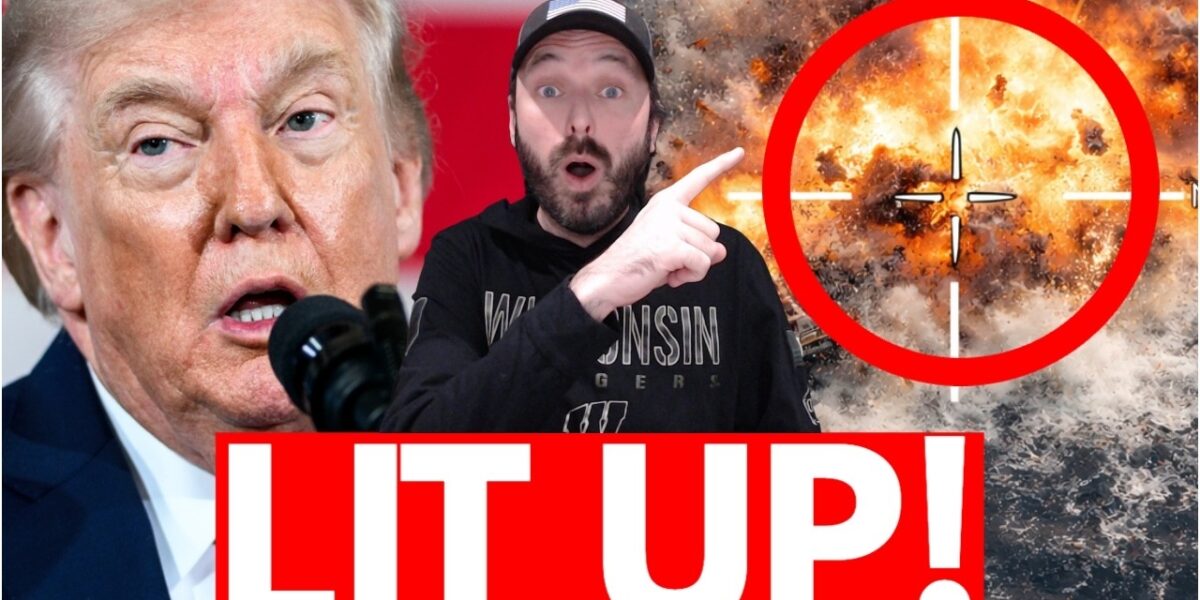
US Escalates Anti-Cartel Offensive: Kinetic Strikes Mark Dramatic Shift in Strategy
In a significant and highly aggressive escalation of its counter-narcotics strategy, the United States military, acting under directives attributed to former President Donald Trump, has reportedly intensified its kinetic operations against drug cartel targets. Recent footage and official statements confirm a series of missile strikes on vessels in international waters, signaling a dramatic shift from traditional interdiction methods to direct military engagement. This new approach, characterized by a forceful rhetoric of eradication, aims to dismantle drug trafficking networks deemed a severe threat to American national security and public health, with a stated intention to expand operations to land targets.
The Latest Strike: Three Casualties in the Eastern Pacific
The most recent publicly acknowledged incident, occurring on February 20th, involved a lethal kinetic strike conducted by Joint Task Force Southern Spear, operating under the command of US Southern Command (SOUTHCOM) and its commander, General Francis Donovan. The target was a vessel identified as being operated by "designated terrorist organizations" and engaged in narco-trafficking operations along known routes in the Eastern Pacific. Intelligence confirmed the vessel’s illicit activities, leading to the decisive engagement. The operation resulted in the deaths of three individuals described as "narcoterrorists," with no US military forces reported harmed.
The incident, as depicted in accompanying video footage, showed a missile strike obliterating the drug boat, leaving it completely destroyed in the water. The visual evidence underscores the destructive power of these precision strikes, which are reportedly delivered via drone technology. This particular strike is part of a broader pattern of increasingly aggressive actions taken by the US military against maritime drug smuggling operations.
A Policy of "Annihilation": Trump’s Stated Mandate
The intensified military campaign is explicitly linked to the policy directives of former President Donald Trump, who has consistently articulated a hardline stance against drug cartels. The commentary accompanying the footage emphasized that these "wars against the drug cartels will continue until they are defeated and America is safe again from the poison and evil they push across this border." This rhetoric frames drug cartels not merely as criminal organizations but as existential threats requiring a military solution.
Figures associated with President Trump’s declared policy agenda, including mentions of a "Secretary of War Pete Haggath" and Senator Marco Rubio (referred to as "Secretary of State Marco Rubio" in the commentary), have been cited as prioritizing the "crushing" of drug cartels. The core justification for these aggressive actions is the perceived direct threat posed by illicit drugs, particularly fentanyl, which are seen as "destroying our family, our friends, our communities, our society, fracturing and breaking it with heartbreak you can’t even put into words." The stated philosophy is one of decisive confrontation: "You confront evil, you beat evil, you don’t let evil return."
From Sea to Land: The Imminent Expansion of Operations
Perhaps the most significant development in this evolving strategy is the declared intention to extend kinetic strikes from maritime targets to land-based operations. During a recent appearance on Fox Business, former President Trump confirmed this strategic shift. He explained the rationale:
"Boats we d we have dropped drugs fent about 33%. And now we’re going to start on land. We had to do the boats first because they would go immediately to the boats. If you hit them on land, they go to the boats. So we do the boats first. Now there are no boats. Now we’re going to hit them on land. We’re going to hit them very hard on land."
Trump further claimed that these maritime interdictions have already yielded substantial results, stating, "Every one of those boats, it’s nasty, but every one of those boats that shot down in the in the seas, you’ve been watching it. We saved 25,000 American lives." This figure, while significant, is attributed directly to President Trump’s statements and reflects his assessment of the campaign’s impact on drug flows and overdose deaths.
The prospect of land strikes raises profound questions regarding international law, national sovereignty, and the potential for geopolitical repercussions. While the specific locations for these anticipated land operations remain unspecified, the commentary indicated they "could be in Mexico" or "anywhere else in South or Central America," with the overarching commitment that "wherever the drug cartels are, they can be offered no safe refuge. We will hunt them down wherever they are." This declaration suggests a willingness to operate across national borders in pursuit of cartel targets, marking a highly interventionist approach.
A String of Successful Interdictions: The Precedent
The February 20th strike is not an isolated incident but rather the latest in a series of successful kinetic operations against drug cartel vessels. The commentary highlighted several previous strikes, showcasing the consistent application of this aggressive tactic:
- February 16th: A multi-boat strike that reportedly eliminated 11 "narco terrorists." Footage showed multiple vessels being engaged and destroyed by missiles, resulting in massive fireballs and complete incapacitation.
- February 13th: A massive drug boat was targeted and obliterated. The narrator claimed to have seen "unbelievable" aftermath photos of this particular strike, emphasizing the devastating impact of the missiles.
- February 9th: Another large drug boat, described as "packed with drugs," was hit twice, demonstrating a "one-two tap" approach to ensure destruction.
- February 5th: A strike attributed to the C130J Ghost Rider, a specialized aircraft often associated with joint special operations forces (JSOC) black ops, targeted a boat attempting to evade capture.
These repeated engagements underscore a systematic and technologically advanced campaign, utilizing drones and specialized aircraft to deliver precise, lethal force against maritime drug trafficking assets. The consistent reporting of "total destruction" and "absolutely obliterated" targets reinforces the uncompromising nature of these operations.
International Cooperation and the Fight Against Narco-Submarines
While the US military is undertaking direct kinetic action, there is also evidence of continued international cooperation in counter-narcotics efforts. US Southern Command recently acknowledged the "Great work by our partners in Mexico for dealing a major blow to drug cartels." This recognition came after Mexican law enforcement, specifically referencing a "JATF" (likely a Joint Agency Task Force), successfully interdicted a semi-submersible narco-submarine.
The discovery and capture of a semi-submersible vessel represent a significant blow to cartel operations. These "narco-subs" are sophisticated, partially submerged craft designed to evade detection, making their interdiction particularly challenging and valuable. The footage accompanying this report showed Mexican forces storming the vessel and securing an "incredible amount of drugs bound for America." This incident highlights the ongoing, multi-faceted nature of the anti-drug fight, involving both unilateral US military action and collaborative efforts with regional partners.
The Broader Implications: Effectiveness, Sovereignty, and Ethics
The dramatic shift towards kinetic military strikes against drug cartels, particularly the stated intent to expand operations to land, opens a complex debate about effectiveness, international law, and ethical considerations.
Effectiveness of Kinetic Strikes
Proponents argue that such direct action disrupts cartel supply lines, eliminates key personnel, and signals an uncompromising stance against criminal enterprises. The claim of "25,000 American lives saved" and a "33% reduction in drugs" (attributed to Trump) suggests a belief in the immediate, tangible impact of these operations. From this perspective, kinetic strikes are a necessary tool to degrade cartel capabilities and protect national interests.
However, critics and many counter-narcotics experts often caution that military solutions alone rarely address the complex, underlying issues of drug trafficking. Cartels are adaptive, resilient organizations that can often replace lost assets and personnel, reroute supply lines, and exploit new vulnerabilities. The drug trade is driven by immense profits fueled by global demand, particularly in consuming nations like the United States. Simply destroying boats or even land targets may not dismantle the entire network or address the root causes such as poverty, corruption, and lack of opportunity in producer regions, or the demand for illicit substances in consumer markets.
Challenges to Sovereignty and International Law
The prospect of US military land strikes in countries like Mexico or other Central/South American nations raises significant questions of national sovereignty. Under international law, a state’s military operations within the territory of another sovereign state typically require the explicit consent of the host nation. Unilateral military action, without such consent, would be considered a violation of sovereignty and could trigger diplomatic crises, accusations of interventionism, and potentially even armed conflict.
While the US has a history of counter-narcotics cooperation with many Latin American countries, including intelligence sharing and joint operations, direct unilateral military strikes on foreign soil would represent a substantial departure from established norms. The implications for US-Mexico relations, in particular, could be severe, potentially undermining bilateral trust and cooperation on a range of issues.
Ethical and Humanitarian Concerns
While the transcript emphasizes the targeting of "narcoterrorists" and "bad guys," and claims of no US military forces harmed, direct military action inherently carries risks of collateral damage. Land strikes, especially in populated areas, could inadvertently harm civilians or destroy civilian infrastructure. Even in unpopulated areas, such operations can destabilize regions, displace communities, and contribute to cycles of violence.
The characterization of cartel members as "evil animals" reflects a demonization that, while understandable given the cartels’ brutality, can also simplify a complex socio-economic issue and potentially justify broad-brush approaches that overlook human rights considerations.
The Future of US Counter-Narcotics Policy
The rhetoric surrounding these operations is clear: "If you threaten this country, if you threaten our people with drugs or violence or whatever it might be, we will hunt you down. We will find where you are and we will eliminate you as the threat that you are." This uncompromising stance, coupled with the explicit commitment to leverage the "greatest military in the world," signals a determination to pursue a military-first approach to combating drug cartels.
The strategy represents a significant departure from previous administrations, which often emphasized a blend of law enforcement, intelligence gathering, economic development, and public health initiatives alongside interdiction efforts. While the effectiveness of this new, more aggressive posture remains to be fully assessed over time, it undeniably marks a new, more confrontational chapter in the United States’ long-standing struggle against transnational drug trafficking organizations. The world will be watching closely as these operations potentially expand, bringing with them both the promise of disruption and the perils of escalated conflict.
Source: Trump VAPORIZES Drug Cartel Target – Many Dead (YouTube)

Related Articles
Trump’s Middle East Gambit: Escalation or Empty Threat?
The US is sending troops and imposing a blockade in the Middle East, signaling escalation. Yet, conflicting messages from Donald Trump suggest peace is near. This analysis explores the contradictory actions, Iran's defiant response, and the potential global economic and political fallout.


Trump’s Memo: A Political Play, Not a Paycheck Promise
A presidential memo intended to pay TSA workers during a shutdown was more political theater than a legal solution. Lacking the constitutional "power of the purse," the memo offered false hope, highlighting the separation of powers and the limits of executive authority.


Vance Defends Trump: Epstein Friendship Claim Is A Hoax
Senator JD Vance asserts that claims of Donald Trump being close friends with Jeffrey Epstein are a "hoax." Vance cited emails suggesting a mutual dislike and even Trump reporting Epstein to authorities, arguing this refutes the "best friend" narrative pushed by Democrats.