Trump’s Rx Claims: Math Mistakes or Misdirection?
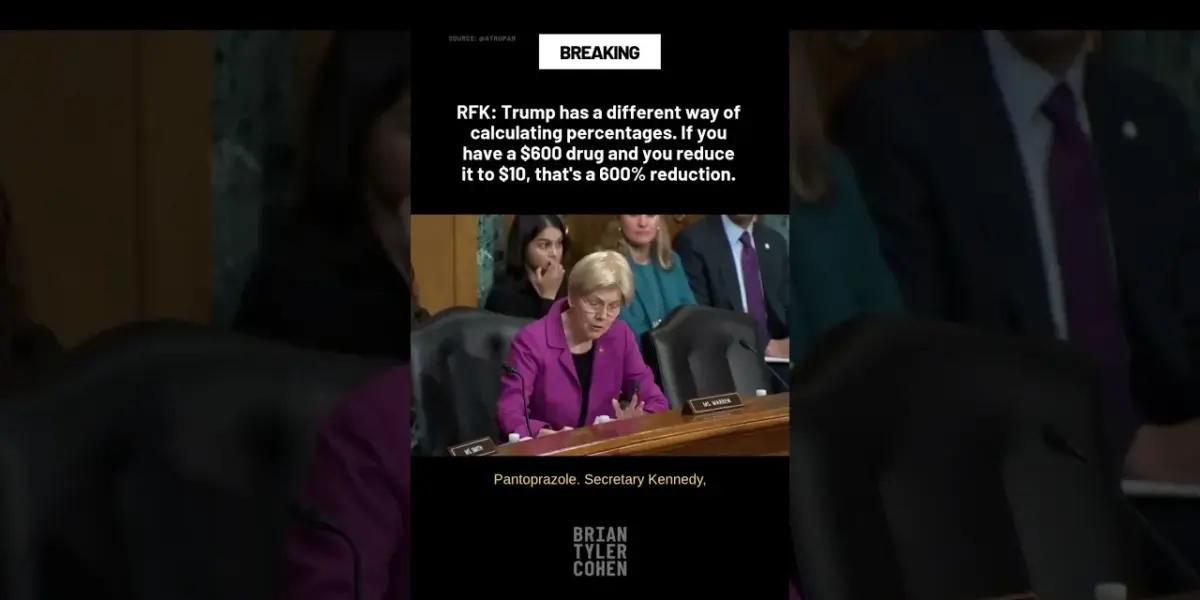
President Trump's Trump RX website claimed to slash drug prices by 600%. However, a comparison of Protonix on Trump RX ($200) versus its generic pantoprazole at Costco ($16) reveals a stark difference. The math behind the 600% claim appears to use a non-standard calculation, raising questions about transparency in healthcare cost advertising.

Trump’s Rx Claims: Math Mistakes or Misdirection?
President Trump’s administration made significant changes to healthcare policies, including cuts that affected millions of families. To address concerns about rising healthcare costs, Trump launched the Trump RX website. He claimed this platform had lowered drug prices by an astonishing 600 percent.
This claim, however, has raised questions about how such figures are calculated. A 600% reduction in price would imply that companies should pay people to take their medications, a notion far from reality. A closer look at the math behind these claims reveals a significant discrepancy between the advertised savings and actual costs.
Examining the Numbers: A Case Study
Consider the heartburn medication Protonix. On the Trump RX website, a 30-day supply of Protonix is listed at $200.
This is a substantial amount for a prescription drug. However, there is an identical generic version of this pill available, known as pantoprazole.
The question arises: what does this generic drug cost consumers? When compared to prices at major retailers like Costco, the difference is stark. While Trump RX lists Protonix at $200, the generic pantoprazole is available at Costco for just $16 for a 30-day supply.
Understanding Percentage Calculations
The discrepancy in pricing highlights a peculiar method of calculating percentage reductions. One way to interpret a 600% reduction is to look at the initial price and the final price. If a drug cost $600 and was reduced to $100, that would be a 500% reduction (you saved 5 times the original price).
However, there’s another way to frame this. If a drug’s original price was, for example, $100, and it was reduced by $600, the final price would be negative $500. This is not how price reductions typically work in the real world.
A more common understanding of a 600% reduction, as illustrated by the Protonix example, might involve a misinterpretation of the formula. If a drug cost $100 and was reduced to $0, that’s a 100% reduction. If it was reduced to a negative number, it’s not a standard calculation.
The calculation used to arrive at a 600% reduction often involves a specific mathematical approach. If a drug originally cost $600 and its price is reduced to $100, the reduction amount is $500. To get a 600% reduction, the original price would need to be lower relative to the reduction.
For instance, if a drug cost $100 and was reduced by $600, the final price would be negative $500. This is not a practical or standard way to present savings to consumers.
The Reality of Healthcare Costs
The debate over drug pricing is a long-standing issue in the United States. Prescription drug costs are consistently among the highest in the developed world. Many Americans struggle to afford necessary medications, leading to difficult choices between health and financial stability.
Initiatives aimed at lowering these costs are frequently proposed and debated. However, the effectiveness and honesty of these initiatives are often scrutinized. The way savings are calculated can significantly impact public perception of these programs.
Why This Matters
The way drug prices are advertised and calculated directly affects consumer trust and access to affordable healthcare. When savings are presented in a misleading way, it can obscure the true cost of medications and prevent people from finding genuinely cheaper alternatives. This also complicates discussions about healthcare policy and reform.
Understanding these calculations is crucial for informed decision-making. It helps individuals and policymakers assess the real impact of healthcare initiatives. Without clarity, consumers may be led to believe they are saving more than they actually are.
Implications and Future Outlook
The discrepancy in the Trump RX pricing example suggests a need for greater transparency in healthcare advertising. As more platforms aim to compete on price, clear and honest communication about savings is essential. This issue is likely to remain a significant point of discussion as healthcare costs continue to be a major concern for Americans.
Looking ahead, the focus on drug pricing will likely intensify. Consumers and regulators will demand clearer explanations of discounts and savings. The way these figures are presented will be critical for the success and credibility of any future healthcare cost-reduction efforts.
The next step for consumers is to compare prices across different pharmacies and online platforms, paying close attention to the actual dollar amounts rather than just percentage claims. Always ask for the generic equivalent when filling a prescription.
Source: RFK: Trump has a different way of calculating percentages (YouTube)

Related Articles
Senate Passes DHS Budget, Critics Slam Healthcare & Childcare Votes
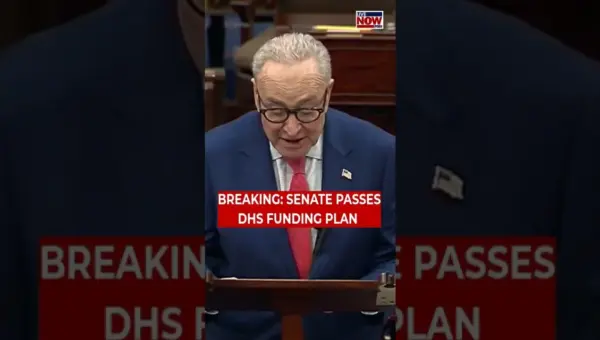
The Senate has passed a budget for the Department of Homeland Security, including funds for ICE and CBP. Senate Majority Leader Chuck Schumer criticized Republicans for voting against amendments aimed at lowering healthcare and childcare costs. Critics argue this shows a disconnect from citizens' needs.
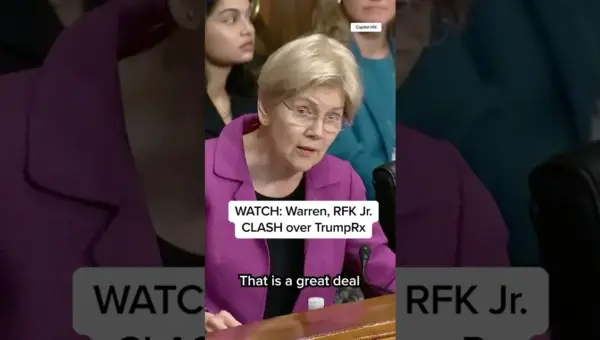
Warren and Kennedy Clash Over Trump’s Drug Pricing Plan
Senator Elizabeth Warren and Health and Human Services Secretary Robert F. Kennedy Jr. clashed during a Senate hearing over the effectiveness of Donald Trump's drug pricing website, TrumpRx. Warren accused the initiative of worsening the drug cost problem, while Kennedy defended its aim to increase transparency. The exchange highlights ongoing debates about healthcare costs and finding solutions for affordable medications.


Health Secretary Defends Budget Amidst Senate Scrutiny
U.S. Health Secretary Robert F. Kennedy Jr. faced tough questions from senators regarding the administration's budget, prescription drug costs, vaccine confidence, and abortion drug safety. Key disagreements emerged over the role of vaccines in public health and the government's approach to regulating healthcare and food products. The hearing highlighted the administration's agenda to prioritize patients and reform healthcare, while lawmakers debated the effectiveness and implications of proposed policies.