Oil Prices Surge as Iran Seizes Ships, Disrupts Trade
Tensions in the Strait of Hormuz have escalated, with Iran seizing commercial vessels and the U.S. blockading oil exports. This dual pressure is driving oil prices above $103 per barrel and threatening global supply chains. Despite rising risks, stock markets remain surprisingly resilient, buoyed by AI optimism and expectations of a swift resolution.

Oil Prices Surge as Iran Seizes Ships, Disrupts Trade
The global economy faces growing risks as tensions escalate in the Strait of Hormuz. In the past 48 hours, the situation has moved beyond military actions to a full-blown economic conflict.
The United States is attempting to cut off Iran’s oil exports, while Iran is retaliating by targeting international shipping. This dual pressure is already creating significant ripple effects worldwide, with greater disruption possible in the coming weeks and months.
Iran has seized two commercial vessels, the Panama-flagged MSC Francesca and a Liberian-flagged ship, in the Strait of Hormuz. Iran claims the ships lacked proper clearance and tampered with tracking systems.
However, the reality is that these vessels were navigating a critical global trade route and have been taken. Footage appears to show masked soldiers boarding a container ship, a clear military takeover of civilian property.
Adding to the danger, a third ship, the Euphoria, was fired upon while trying to pass through the strait. Although it escaped, the use of live ammunition signals a dangerous increase in hostilities.
Such actions make commercial shipping companies hesitant to use this vital waterway, fearing seizure or attack. This is no longer a theoretical threat but a present danger in one of the world’s most crucial shipping lanes.
Meanwhile, the U.S. is systematically enforcing its blockade on Iranian oil exports. Instead of direct confrontations in the strait, U.S. naval forces are intercepting Iranian-linked tankers in international waters.
At least three tankers, including the Deep Sea, 7, and Dina, have been stopped. The Dina, carrying approximately 2 million barrels of crude oil, was taken under U.S. control and escorted by the Navy, effectively seizing its cargo.
Other vessels have been diverted, blocked from unloading, or forced to change course. Dozens more have reportedly been warned against transporting Iranian oil. This blockade is beginning to create severe problems within Iran.
U.S. officials report that Kark Island, Iran’s main oil export terminal, is nearing capacity. Iran is struggling to load and export its oil, leading to storage issues.
Cutting oil production is not a simple solution for Iran. If production halts, storage tanks fill up, forcing a reduction in output. Abruptly stopping the flow from oil fields can damage reservoirs.
This damage can lower pressure and make restarting production much more difficult and costly in the future. The U.S. strategy aims to make the conflict economically unbearable for Iran by choking off its primary income source.
Iran’s response is equally direct: if its oil exports are blocked, it will disrupt global oil flows. This has created a two-sided economic and military conflict. The immediate result is that traffic through the Strait of Hormuz has largely halted once more.
This is a major problem because the strait is the world’s most vital oil chokepoint. Approximately 20% of global oil and gas passes through this narrow waterway daily.
There are limited alternatives to bypass the strait. Existing pipelines can handle only about 5 million barrels per day, far less than the normal flow. Any disruption, even partial, causes an immediate supply shock.
Brent crude oil prices have surged past $103 per barrel. This represents a significant increase from around $60 per barrel just a few months ago at the start of 2026.
The rising oil prices have widespread economic consequences. Transportation, manufacturing, and food costs increase. Higher energy bills contribute directly to inflation.
This puts central banks globally in a difficult position. Rising inflation may force them to keep interest rates higher for longer, or even increase them further. Higher interest rates typically slow economic growth.
Market Impact: What Investors Should Know
Despite these escalating tensions and rising oil prices, global stock markets have not reacted as one might expect. Major indices are not plummeting. Several factors explain this apparent disconnect.
- Focus on AI and Earnings: Investors remain heavily invested in the artificial intelligence boom and strong corporate earnings reports. Money continues to flow into technology and semiconductor stocks, helping to support overall market indexes.
- Belief in Temporary Resolution: Many market participants still believe the current situation is temporary. There is an expectation that shipping will return to normal relatively quickly once a resolution is found.
- Uneven Economic Impact: The economic effects are not felt uniformly across all countries. Some nations, especially large oil importers, are feeling more pressure than others, masking the broader global risk.
- U.S. Energy Independence: The United States is less vulnerable to immediate energy shocks due to its significant domestic oil production. This cushions the impact compared to regions more reliant on imports.
- Optimism or Complacency: There is a degree of optimism, or perhaps complacency, that the conflict will not escalate further. However, the events on the ground suggest this may be a risky assumption.
With stalled negotiations, no clear path to a ceasefire, seized ships, and live fire incidents, the situation remains unstable. The longer the conflict persists, the greater the economic damage will be. Higher energy prices fuel inflation, which keeps interest rates elevated.
Elevated rates, in turn, slow global economic growth. While markets may be holding steady now, the underlying economic fundamentals are moving in a concerning direction.
This dynamic suggests a potential future reconnection between market performance and deteriorating economic conditions. Investors should monitor this situation closely. If the conflict continues or intensifies, the impact on the global economy could be significant and long-lasting.
Source: Seizure (YouTube)

Related Articles

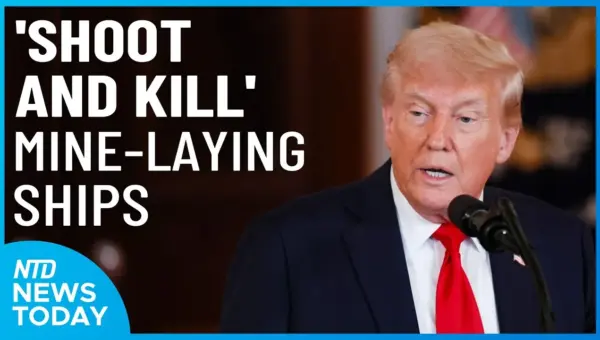
US Navy Readies Lethal Force Against Iran in Hormuz Strait
President Trump has ordered the US Navy to use lethal force against Iranian mine-laying boats in the Strait of Hormuz, escalating tensions. Meanwhile, the White House accuses China of stealing AI technology, adding another layer to global competition. These actions, coupled with economic sanctions on Iran, aim to reshape regional dynamics and prevent nuclear proliferation.
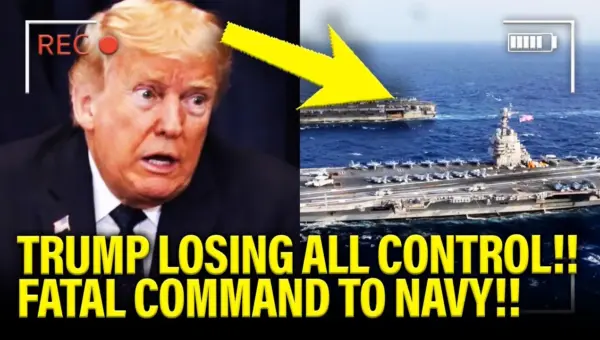
Trump’s Navy Orders Spark Global Firestorm
President Trump's directive for the U.S. Navy to fire on Iranian boats in the Strait of Hormuz, based on a disputed claim of mine-laying, has sparked significant controversy. The author criticizes the order as delusional and highlights concerns about the appointed acting Navy chief's past remarks.


Trump Orders Navy to Shoot Iran Boats in Strait of Hormuz
President Trump has ordered the U.S. Navy to "shoot and kill" any Iranian boats attempting to place mines in the Strait of Hormuz, escalating regional tensions. Meanwhile, exiled Iranian Crown Prince Reza Pahlavi was attacked in Berlin after criticizing U.S.-Iran talks. Geopolitical experts highlight the strait's critical role in global trade and the complex diplomatic and military dynamics at play.