Virginia’s Gerrymandering Sparks Outrage, Threatens Midterm Balance
Virginia voters narrowly approved a Democrat-backed redistricting plan, shifting the state's congressional map dramatically. Meanwhile, the FBI is investigating the mysterious deaths of 11 scientists, and peace talks with Iran face continued uncertainty.

Virginia Voters Back Controversial Redistricting Plan
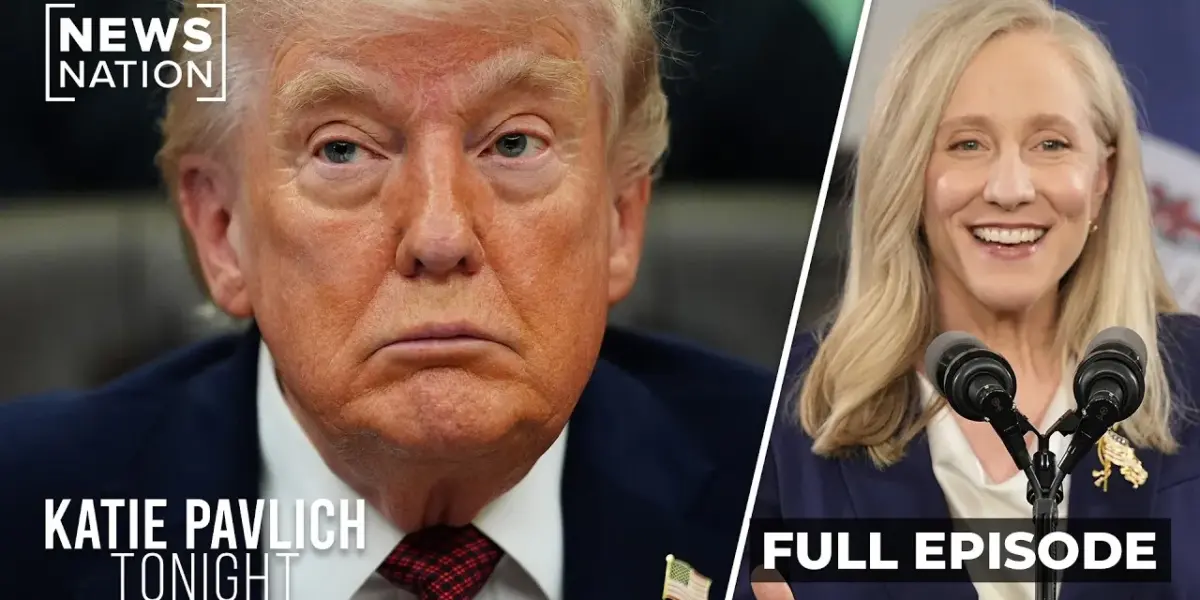
Virginia voters narrowly approved a new plan to redraw congressional districts. This plan, backed by Democrats, significantly shifts the state’s political balance. It moves from a nearly even split to a 10-to-1 advantage for Democrats, just before the crucial midterm elections.
The vote happened less than 200 days before Americans decide who will control Congress. This change could give Democrats a strong edge in upcoming elections. Some observers suggest this could even lead to Supreme Court retirements before November, though others say justices are not considering stepping down.
Experts Weigh In on Fairness and Political Strategy
Molly Hemingway, editor-in-chief of The Federalist, expressed surprise the vote wasn’t more overwhelmingly in favor of Democrats. She noted the significant investment from out-of-state and national Democratic groups. Hemingway called it the “most egregious of all the gerrymanders” seen recently.
Jamie Jackson, founder of Vantage Global Media, saw the results differently. As a Virginia native, he called it a win for Virginians and Americans. Jackson believes this gives Democrats a real chance to regain the majority and hold the current administration accountable for its policies.
The Shifting Political Landscape
The discussion highlighted the shift from a 6-4 district split to a potential 10-1 advantage for Democrats. This change, despite Virginia having a nearly 50/50 split in presidential votes, raises questions about fairness. Districts now stretch from Fairfax County to West Virginia, impacting rural and working-class voters, as well as minority communities.
Jamie Jackson explained this as a response to a broader trend. He mentioned similar redistricting efforts in Texas, Missouri, and North Carolina, with California also reacting. The Virginia Supreme Court upheld the redistricting initiative, but Jackson anticipates legal challenges to its constitutionality.
Supreme Court Retirements and Political Maneuvering
The conversation turned to potential Supreme Court retirements ahead of the midterms. Molly Hemingway discussed the idea of justices like Clarence Thomas or Samuel Alito retiring. She noted that such justices are seen by some as the court’s strongest, most consistent members.
Hemingway also pointed out that Chief Justice John Roberts is in his 70s, suggesting other retirements might still occur. However, reports from Thomas and Alito’s circles indicate no interest in retiring soon.
Jamie Jackson drew a parallel to Justice Ruth Bader Ginsburg’s passing, which allowed President Trump to appoint Amy Coney Barrett. He suggested Democrats might have pushed Justice Stephen Breyer to retire to appoint Ketanji Brown Jackson. Jackson believes Democrats are concerned about facing challenges in the Senate if President Trump were to appoint new justices.
The Aftermath of the Dobbs Leak
Molly Hemingway discussed her new book, “Alto,” which explores the Supreme Court. She revealed that after the *Dobbs* leak, the three liberal justices intentionally delayed their dissent. This happened despite threats and violence against the court, including firebombings.
Hemingway stated that these justices told colleagues it would be helpful for their families if the dissent was published sooner. She also noted a footnote in their dissent referencing a case weeks away, causing it to come out late in the term, after the leak caused significant damage.
Jamie Jackson raised concerns about the lack of condemnation from Democrats following the *Dobbs* leak. He mentioned White House Press Secretary Jen Psaki’s comments about protesters at Amy Coney Barrett’s home. Jackson believes Democrats should more strongly defend the Supreme Court and its justices, regardless of who appointed them.
Jackson pushed back slightly, stating that Congress, during his time as senior counsel to House Majority Leader Steny Hoyer, passed bipartisan legislation for increased Supreme Court justice protection. He acknowledged that more protection is needed for federal judges and Supreme Court justices overall, noting unequal treatment where liberal justices can appear publicly while conservative justices face difficulties.
Uncertainty Looms Over Iran Peace Talks
Shifting focus to Iran, peace talks remain uncertain. A hard deadline for a deal before the ceasefire expired has been lifted.
President Trump announced an extension, citing Iran’s fractured government. He stated talks would resume only when Iran could present a unified proposal.
President Trump also maintained the military blockade of Iranian ports. He noted Iran’s threat to open the Strait of Hormuz, attributing it to the blockade. He warned that ending the blockade would prevent a deal with Iran.
Military Presence and Diplomatic Stance
Vice President JD Vance was set to travel to Pakistan for peace talks, which are now on hold. These talks will not proceed until Iran responds to U.S. positions. Brent Sadler, a retired Navy captain and former Pentagon official, offered a mixed view on the situation.
Sadler believes the pressure from the blockade is why Iran is considering concessions. He suggested that removing this pressure gives Iran more time to complicate negotiations or distract U.S. leadership. Sadler emphasized the need to maintain the blockade’s pressure.
He also expressed surprise that military strikes did not follow the IRGC’s weekend attacks. Sadler stated that targeted strikes should occur if such attacks happen again, focusing on the culprits or headquarters. He noted that enforcing the blockade has not yet led to this.
Iran’s Internal Divisions and U.S. Strategy
Dr. Sheila Nazarian, an Iranian American surgeon, believes President Trump’s strategy is to economically strangle the regime. She thinks this is the most non-violent way to force regime change. Nazarian suggested that continued economic pressure would deplete Iran’s funds for the IRGC and militias, leading to internal collapse.
Nazarian felt President Trump is calculating that Iran will self-destruct without direct U.S. military intervention. She supports continuing economic pressure to let Iran implode.
Brent Sadler addressed Iran’s Foreign Minister’s statement calling the blockade an act of war. He believes this minister may no longer speak for the regime.
Sadler suggested a senior IRGC general is now in charge and controls access to the Supreme Leader. He stated the minister’s diplomatic notes hold little value.
Sadler sees this as a symptom of the regime fracturing. He believes this process should continue with sustained pressure to achieve an outcome favorable to U.S. interests and the Iranian people.
Escalating Military Posture in the Middle East
The U.S. is sending another aircraft carrier to the Middle East, bringing the total to three carrier strike groups. This significantly increases firepower and sustained strike capacity. Sadler believes this shows the U.S. is preparing for sustained strikes at an unprecedented tempo if necessary.
He hopes the Iranians will better understand the threat arrayed against them. Sadler noted that the potential targets would differ from previous actions.
Human Rights Concerns Amidst Negotiations
President Trump called for the release of eight female protesters facing execution in Iran. He stated their release would help peace talks move forward. Dr. Nazarian appreciated this call, noting that the regime continues to kill and torture people daily.
Nazarian emphasized that as long as these actions continue, the regime has not changed for the Iranian people. She thanked President Trump for not forgetting the ongoing violence during negotiations.
FBI Investigates Mysterious Scientist Disappearances
The FBI is now investigating a potential link between 11 American scientists who have died or disappeared under mysterious circumstances. NASA is cooperating with authorities, as several scientists worked on space research.
So far, NASA reports no signs of a national security threat. Former Navy SEAL and FBI agent Jonathan Gilliam discussed the case. He noted that while some individuals were administrative staff, the circumstances of at least four disappearances are strange.
Unusual Disappearances and Potential Connections
Gilliam mentioned one case where a woman disappeared while hiking a short distance behind companions. He finds it odd that these individuals, some of whom worked near each other, are vanishing. One general overseeing their programs also recently disappeared.
Gilliam highlighted a vulnerability: the government does not track former employees to prevent them from retaining or using sensitive information. He believes this aspect has not been fully explored.
Congressman Tim Burchett expressed frustration, stating they are not getting answers. He questioned how people can disappear without identification, sometimes taking a pistol but no ID. Burchett found it hard to believe that in an age of constant surveillance, these disappearances go unrecorded by cameras.
Investigative Challenges and National Security
Jonathan Gilliam pointed out that law enforcement had previously investigated many of these individuals. However, he stressed the difference between investigating single incidents and looking for connections across 11 potential cases.
Gilliam believes the FBI’s involvement is crucial. They can access global sources to find any nexus to national security or foreign states seeking these individuals. He also considered the possibility of a disgruntled former employee targeting people in this field.
He emphasized that each person might hold a small piece of information. Combined, these pieces could form a significant picture. Gilliam urged the investigation to concentrate on these potential links.
Regarding the downplaying of national security risks by agencies like the FBI and NASA, Gilliam acknowledged the need to avoid public panic. However, he felt both politicians and law enforcement sometimes misjudge public reaction. Gilliam stressed the importance of looking at the “totality of the circumstances” when examining multiple disappearances.
He concluded that while individual cases might appear as suicide, murder, or common disappearances, the pattern across 11 people working in related fields paints a different, more concerning picture. This requires a focused investigation.
Southern Poverty Law Center Faces Indictment
The Southern Poverty Law Center (SPLC) faces an 11-count federal indictment in Alabama. The indictment alleges the SPLC funneled over $3 million to hate groups it claimed to combat, including members of the American Nazi Party and the Ku Klux Klan.
Acting Attorney General Todd Blanch stated the SPLC was not dismantling these groups but manufacturing extremism. The indictment claims a field source helped plan the 2017 Unite the Right rally in Charlottesville. This individual allegedly made racist posts and coordinated transportation, receiving over $270,000 in SPLC payments.
Allegations of Fabricated Extremism
The indictment suggests the SPLC’s actions created the appearance of extremism for political purposes. This event was later used by the left to criticize President Trump and his supporters. Joe Biden cited Charlottesville as the moment he decided to run for president, based on what is called the “fine people hoax.”
The SPLC was repeatedly cited as a reliable source by media, corporations, and Big Tech. The indictment alleges the SPLC felt America was not sufficiently racist to meet its fundraising goals. It claims the organization secretly funded hate groups to maintain relevance, while smearing other organizations like Alliance Defending Freedom and Turning Point USA.
This case is presented as an example of leftist projection, where conservatives are labeled hateful while the SPLC allegedly funded actual hate groups. The report indicates this story may not receive widespread coverage elsewhere.
Source: Virginia Redistricting Fallout; Iran Peace Talk Chaos | Katie Pavlich Tonight Full Show 4/21 (YouTube)

Related Articles

Redistricting Wars: Florida Poised to Decide Midterm Battles
States are locked in a fierce battle over redrawing congressional districts, a process that could significantly impact the upcoming midterm elections. Florida's upcoming special session on redistricting is highlighted as a potential deciding factor, with implications for fair representation and the balance of power in Congress.

Gerrymandering War: How Democrats Outmaneuver GOP
A Virginia court blocked a Democratic-favored congressional map, sparking debate on gerrymandering. Experts suggest Democrats are currently more successful in this practice. The discussion also covered widespread government bureaucracy and waste within the HHS.

Trump’s Iran Talks Stall, Supreme Court Rebuke, and Election Claims
Donald Trump's diplomatic efforts with Iran remain stalled, with the U.S. and Iran trading accusations of hypocrisy and unmet commitments. Meanwhile, Trump faced a Supreme Court rebuke over illegal tariffs, leading to ordered refunds that he allegedly threatened businesses against pursuing. The focus then shifted to Trump's claims of a "rigged" election in Virginia, even as redistricting plans in several states may lead to increased Democratic representation in Congress.