Giants of Science Got It Wrong
From Newton's alchemical pursuits to Einstein's doubts about black holes, history's greatest scientific minds weren't always right. This look at 10 geniuses reveals their major contributions alongside fascinating, yet incorrect, beliefs that were later disproven by new evidence and discoveries.

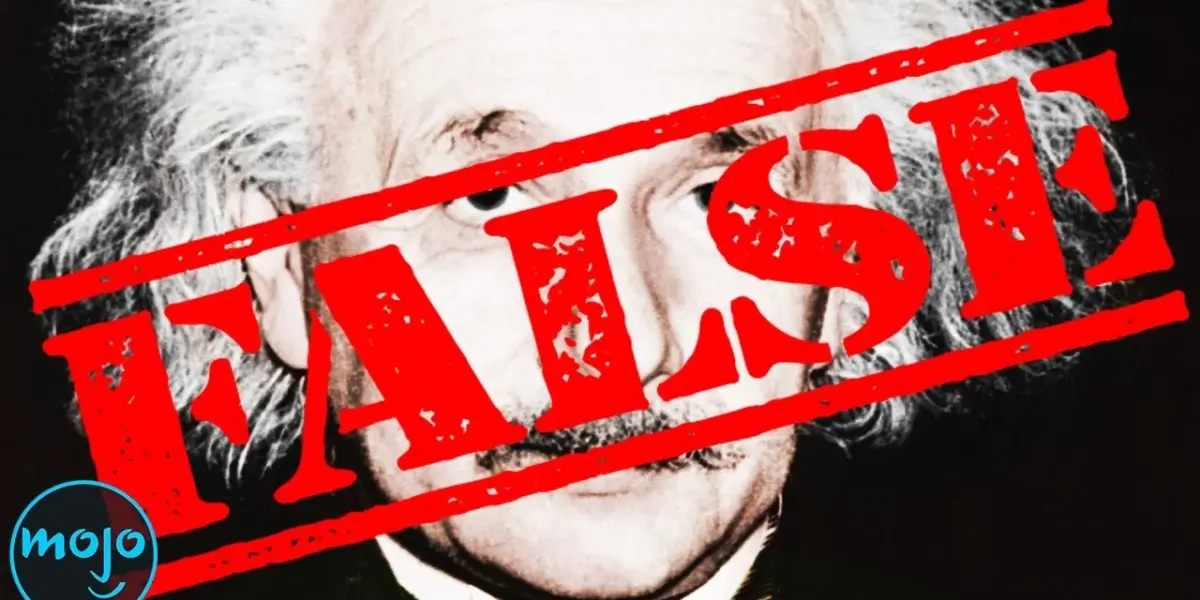
Giants of Science Got It Wrong
Even the brightest minds in history made mistakes. We look at 10 geniuses who were proven wrong by later discoveries.
Isaac Newton and Alchemy
Sir Isaac Newton is a towering figure in science. He gave us the laws of motion and the theory of universal gravitation, forming the basis of modern physics.
But Newton also spent years studying alchemy, trying to turn lead into gold. This quest, while fascinating, proved to be a dead end.
Aristotle’s Falling Objects
Aristotle, a giant of ancient Greek philosophy, greatly influenced Western thought. His ideas on biology, politics, and early science were widely accepted.
However, his belief that heavier objects fall faster than lighter ones was wrong. This idea was accepted for nearly 2,000 years.
Galileo Galilei later proved that objects fall at the same rate, regardless of weight, when air resistance is removed. This showed that gravity doesn’t care about how heavy something is.
Galen’s Theory of Humors
For over a thousand years, Western medicine was based on the theory of four humors. Developed by Hippocrates and expanded by Galen, this theory stated that health depended on balancing four body fluids: blood, phlegm, yellow bile, and black bile. Illness was thought to happen when these humors were out of balance.
Treatments involved methods like bloodletting to restore harmony. While Galen was a skilled observer, this theory ultimately led medicine down the wrong path for centuries. Modern science now knows that diseases are caused by pathogens, genetics, and other biological processes, not imbalanced fluids.
Benjamin Franklin’s Electrical Fluid
Benjamin Franklin made huge contributions to understanding electricity. His famous kite experiment showed the link between lightning and electricity. He even invented terms like ‘electrician’ and ‘battery.’
Franklin believed electricity acted like an invisible fluid. He thought a positive charge meant too much fluid and a negative charge meant too little.
While his terms stuck, modern science explains electricity as the movement of tiny particles called electrons. Even Nikola Tesla, a pioneer in electrical technology, rejected the idea of electrons.
Lamarck’s Inheritance of Acquired Traits
Before Charles Darwin, French biologist Jean-Baptiste Lamarck suggested that animals evolve by passing on traits they gained during their lives. He believed that an organism’s efforts and its environment could change it, and these changes would be inherited by its offspring.
Lamarck’s famous example was giraffes stretching their necks. He thought this would lead to longer necks in future generations.
However, modern genetics shows that inherited traits come from DNA, not from changes acquired during life. Evolution happens, but not through inherited gym workouts.
Ptolemy’s Earth-Centered Universe
In the 2nd century AD, astronomer Claudius Ptolemy created a detailed model of the cosmos. His geocentric theory placed Earth at the center, with the sun, moon, and planets revolving around it. He used a complex system of circles called epicycles to explain planetary movements.
This Earth-centered model was believed for 1,300 years. Eventually, Nicolaus Copernicus, Johannes Kepler, and Galileo Galilei showed that the sun is at the center of our solar system, and Earth orbits it. This heliocentric model replaced Ptolemy’s complex cosmic clockwork.
Lord Kelvin’s Doubts and Estimates
Lord Kelvin was a highly respected 19th-century physicist, known for his work in thermodynamics and electrical science. Despite his achievements, he made some famous miscalculations. In 1895, he declared that flying machines heavier than air were impossible, stating no engine could provide enough power for flight.
Just eight years later, the Wright brothers made the first successful powered airplane flight. Kelvin also estimated the Earth’s age by calculating how long a molten planet would take to cool, guessing between 20 and 100 million years. Later discoveries revealed Earth is about 4.5 billion years old, showing that even brilliant scientists can be mistaken.
Galileo’s Tidal Theory
Galileo Galilei, known for supporting the heliocentric model, also had ideas that proved incorrect. When explaining ocean tides, Galileo proposed they were caused by Earth’s rotation and movement through space. He described the oceans as sloshing like water in a moving container.
Galileo’s theory failed to explain the two daily tides observed in many places. He also dismissed the idea that the moon’s gravity influenced tides. Later research confirmed that lunar gravitational forces are what drive Earth’s tidal cycles.
Linus Pauling and Vitamin C
Linus Pauling was a remarkable scientist, winning two Nobel Prizes for his work. He was also a prominent activist against nuclear weapons testing. Later in his career, Pauling became convinced that very high doses of vitamin C could prevent or cure illnesses like the common cold and even cancer.
He promoted this idea widely through books and lectures. Sadly, extensive scientific studies proved that megadoses of vitamin C did not offer significant medical benefits. Pauling’s enthusiasm outpaced the scientific evidence available at the time.
Einstein’s Skepticism of Black Holes
Albert Einstein’s theory of general relativity revolutionized physics. It described gravity as the curvature of space and time. Ironically, the math from his own theory hinted at the existence of black holes, regions where gravity is so strong that not even light can escape.
Even though his theory predicted them, Einstein found it hard to believe black holes truly existed. He called them an ‘unimaginable misfortune’ of his theory. However, modern astronomy has confirmed black holes through gravitational waves and direct imaging, proving Einstein’s equations were right about these mysterious objects.
Source: 10 Geniuses Who Were Proven WRONG (YouTube)

Related Articles

Mysterious Objects Defy Physics Near US Base
Mysterious objects filmed near a US military base appear to move with instantaneous velocity, baffling observers and defying known physics. This footage adds to a long history of unexplained aerial phenomena, raising questions about technology and national security.
Why Do Basketball Shoes Squeak? Science Reveals Surprising Answer
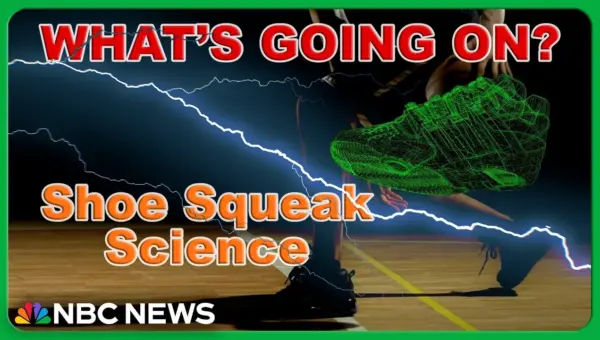
Scientists have discovered that the squeak of basketball shoes is caused by tiny gaps forming between the sole and the floor. These gaps travel at the speed of sound, kicking the air to create the noise. This research also revealed unexpected links to lightning and earthquake mechanics.


Sneaker Squeaks: Science Reveals ‘Shoe Quakes’ Behind Court Sounds
The common squeaking sound of sneakers on basketball courts has a surprising scientific explanation: 'shoe quakes.' Researchers have found that these sounds are caused by 'slip pulses,' which are like tiny earthquakes happening underfoot as the shoe slides. This discovery reveals complex dynamics in everyday materials.