Democrats Divided: Israel’s Role Sparks Fierce Party Battles
A debate between Batya Ungar-Sargon and Brianna Wu explores the shifting stance of the Democratic Party on Israel. While some see a growing anti-Israel sentiment fueled by progressive elements, others believe mainstream voters remain supportive and that the party can course-correct by emphasizing national security and moral clarity.

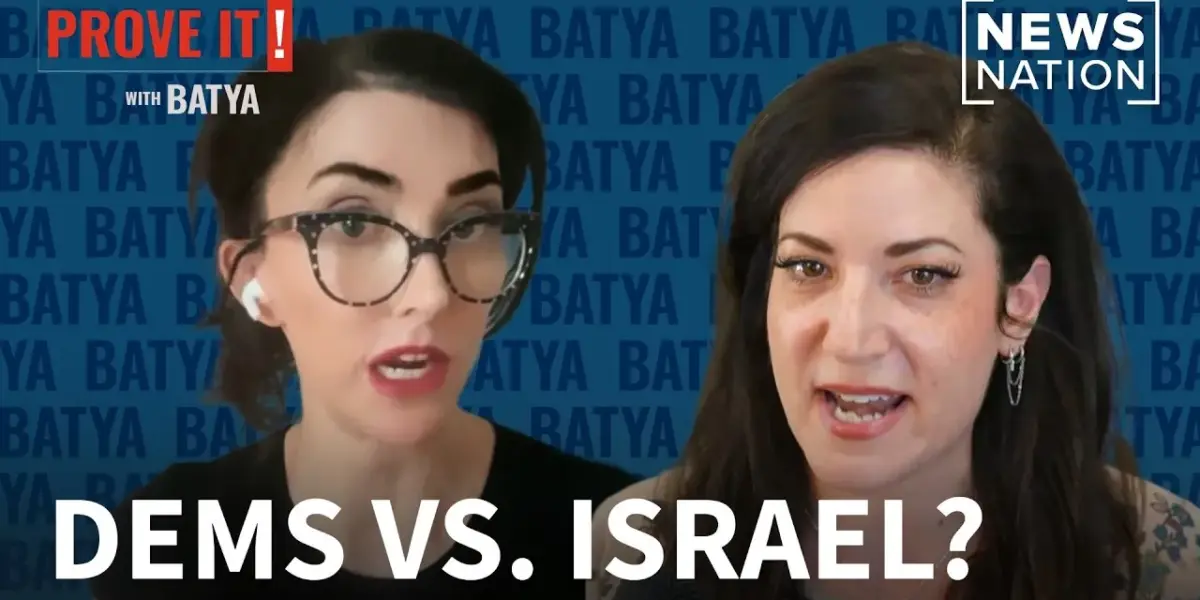
Democrats Divided: Israel’s Role Sparks Fierce Party Battles
The Democratic Party is facing a significant internal struggle over its stance on Israel. This issue has become a major talking point in recent elections, sometimes overshadowing concerns like gas prices. The debate highlights a growing divide within the party, particularly between progressive and establishment wings.
In Michigan’s Democratic Senate primary, the conversation has heavily featured the candidates’ views on Israel. Abdul El-Sayed, a progressive candidate, has taken a strong anti-Israel position, even stating that the Israeli government is as evil as Hamas. This stance has put him in a strong position in the polls, tied with another candidate.
Meanwhile, Haley Stevens represents the establishment wing and is polling significantly lower. Mallory McMorrow occupies a middle ground. This dynamic shows how foreign policy, specifically regarding Israel, can become a central theme in primary elections, even in states that have recently voted Republican.
The debate isn’t limited to Michigan. In California, the race to replace Nancy Pelosi has also seen progressive candidates making Israel a key issue. This suggests a broader trend of anti-Israel sentiment gaining traction within certain segments of the Democratic base.
Shifting Alliances and Shifting Polls
Host Batya Ungar-Sargon notes that while some Democrats focus on maintaining centrist and Jewish voter support, polling data indicates a significant shift. A large percentage of Democratic voters now hold unfavorable views of Israel, a trend that has worried many within the party.
Brianna Wu, a Democratic operative, acknowledges the decline in support for Israel within the party. She attributes this shift partly to what she describes as a coordinated effort by hostile foreign powers to influence Democratic voters with misleading information about a supposed genocide. Wu believes that by presenting the truth and highlighting the alliance’s value, the party can rebuild its support base and ensure American Jews feel respected.
Wu also points to the rise of anti-Semitism in the country, a concern she shares despite not being Jewish. She draws a parallel to the MAGA movement, suggesting that just as Republicans have had to confront problematic figures, Democrats must also address the anti-Israel sentiment within their own ranks. Wu expresses hope that the party can still win back voters by emphasizing shared national interests and values.
The Right’s Stance and the Left’s Challenge
Ungar-Sargon contrasts the situation on the left with the Republican Party’s approach. She observes that while some MAGA figures have become vehemently anti-Israel, the party leadership, including Donald Trump, has largely condemned such views. The Republican base, according to polls, shows strong support for the U.S.-Israel friendship.
In contrast, Ungar-Sargon argues that the Democratic Party has struggled to condemn figures like Representative Jamaal Bowman, who has made controversial statements about Israel. She believes this hesitation stems from a fear of alienating a vocal progressive faction, leading to a perceived moral cowardice on the left.
Wu agrees that there has been a lack of moral clarity on the left. She describes a phenomenon she calls “Islamo-leftism,” a combination of anti-American sentiment and a desire to support theocratic Islamists. Wu finds it disappointing that elected Democrats cannot openly condemn these views, which she believes are alienating core Democratic voters and undermining national security.
Underlying Sentiments and Future Outlook
Despite the visible energy on the progressive left, Wu believes the deep-seated sentiment against Israel is not as widespread as it appears. She suggests that many voters are reacting to manipulated images and information, rather than holding deeply ingrained anti-Israel beliefs. Wu is optimistic that by focusing on truth and national security interests, the party can win back moderate voters.
She argues that the typical Democratic voter is more concerned with issues like school funding and economic stability than with extreme foreign policy stances. Wu believes that by shifting the focus back to relatable issues and national security, the party can regain its footing with the broader electorate.
The discussion also touched on the reasons behind any shift in Republican sentiment, with the idea that it might be more fiscally driven than ideologically opposed to Israel. Some younger Republicans may question foreign aid due to the national debt, rather than harboring animosity towards Israel itself.
A Fiscally Motivated Right vs. Ideologically Driven Left
Ungar-Sargon distinguishes between young people on the right and left who express negative views about Israel. She characterizes the left-wing view as stemming from a belief that power is inherently evil and a tendency to support America’s enemies. This perspective often frames Israel as a colonialist entity.
Conversely, Ungar-Sargon suggests that young people on the right questioning Israel are often doing so from a fiscal standpoint. They may not believe anyone deserves foreign aid given the national debt. This is different from an inherent opposition to Israel’s right to exist, with many still affirming pro-Israel sentiments when asked directly.
Wu acknowledges this distinction, agreeing that the right’s concerns are more likely fiscal. She also defends Christian support for Israel, pushing back against the idea that it’s solely based on apocalyptic beliefs. Many Christians, she explains, support Israel based on religious conviction and a belief in caring for God’s chosen people.
Moral Framing and National Security
Wu stresses the importance of framing issues morally to resonate with Democratic voters. She believes the party should clearly articulate that anti-Israel sentiment is a form of anti-Semitism and a threat to national security. Her hope is that Democrats will recognize the danger of alienating long-time Jewish supporters and pushing them towards the Republican Party.
The conversation also addressed the comment that October 7th does not excuse Palestinian deaths and that Israel is proud of its actions. Wu countered by explaining that Israel’s primary goal is to stop missile attacks and prevent kidnappings, not to annex territory. She argued that annexing Gaza would not necessarily make Israelis safer.
Ungar-Sargon added that Israel has no colonial aspirations, pointing to peace agreements with Jordan as evidence. She also highlighted that the phrase “from the river to the sea” is considered hate speech by many Jews, and some European countries are considering making its use criminal. This brings up the point that despite criticisms, America remains one of the most tolerant countries for Jews globally.
The Core of the Debate: Hope vs. Skepticism
The central point of contention between Ungar-Sargon and Wu seems to be the level of hope for the Democratic Party’s future direction. Wu believes that the mainstream Democratic voter, who is not aligned with the progressive left, will eventually reclaim the party’s soul, leading politicians to respond to them again.
Wu argues that while progressives are vocal, they lack the organizational power and fundraising ability to truly control the party. She sees their influence as more noise than substance, as they often fail to do the groundwork needed to win elections. Wu believes the party should focus on attracting independent voters rather than appeasing a fringe element.
Ungar-Sargon remains more skeptical. She observes a convergence of the “Isamo-leftism” on the far left and the anti-Israel sentiment emerging on the right, suggesting a broader political realignment. She questions whether Democrats would support reasonable foreign policy from a Republican president, indicating a partisan mindset that limits cooperation.
A Broader National Issue
Wu acknowledges that the issue is not solely a Democratic problem. She recalls a time when both parties united on national security interests, such as during the Gulf War. The current polarization, she suggests, stems partly from the failures of the Iraq and Afghanistan wars, leading to a broader American skepticism about military engagement.
However, Wu also credits Democratic administrations, like Obama’s, for successes such as destroying ISIS. She believes that American military power, when used effectively, remains a crucial part of national security strategy. Both sides, she argues, need to acknowledge these successes and foster a more balanced view of America’s role in the world.
The discussion concluded with a shared sentiment that politicians on both sides should be willing to praise actions they agree with, even if done by opponents they dislike. This mutual willingness to acknowledge good policy, regardless of the source, is seen as essential for a healthier political discourse.
The debate also touched upon the Iran nuclear deal, with Wu emphasizing its importance for American national security. She warned that Iran’s nuclear ambitions, combined with its hatred for both Israel and the U.S., pose a significant threat, especially given concerns about border security and the potential for radiological dirty bombs. Wu believes that disabling Iran’s nuclear program is in America’s best interest, regardless of its impact on Israel.
Ultimately, the core of the debate lies in Wu’s hope that the mainstream Democratic voter will reassert influence over the party, steering it away from the progressive fringe. Ungar-Sargon, while agreeing on the need for moral framing and national security focus, expresses more skepticism about this shift occurring quickly, especially in a polarized political climate. The conversation highlights the complex and evolving relationship between the Democratic Party and Israel, with significant implications for both domestic politics and international relations.
Source: Have Democrats turned on Israel? LIVE Debate | Prove It! with Batya (YouTube)

Related Articles


MAGA’s Trump Uprising: A Calculated Power Play
Recent criticisms of Donald Trump from within the MAGA movement may not signal a moral awakening, but rather a strategic power play. Figures are reportedly distancing themselves due to Trump's declining popularity, not a change in principles. This highlights the fluid nature of political loyalty and the importance of discerning genuine conviction from calculated moves.


Senator Booker’s ‘Extreme Language’ Sparks Debate
Senator Cory Booker's use of "violent, extreme language" to describe national issues has sparked debate, with critics questioning his rhetoric and focus. The discussion touches on immigration, crime, judicial policies, and border security, raising concerns with potential economic implications.


Americans Reject Trump’s Iran Stance Swiftly
A new NBC poll reveals that a vast majority of Americans disapprove of Donald Trump's handling of the Iran situation, with opinions forming much faster than during past conflicts. This rapid disapproval, coupled with a lack of clear justification from the administration, highlights a public that is highly engaged and critical of foreign policy decisions.