Trump’s Iran Standoff Exposes Weakness, Kash Patel Lawsuit Falters
President Trump's foreign policy in Iran faces scrutiny amidst claims of unpredictable actions and hindered diplomacy. Meanwhile, Kash Patel's defamation lawsuit against The Atlantic encounters significant legal hurdles, raising questions about public figures and the media.


Trump’s Iran Standoff Exposes Weakness, Kash Patel Lawsuit Falters
The nation is watching as President Trump’s handling of international crises and domestic legal battles unfolds. Recent events suggest a pattern of unpredictable foreign policy and legal challenges that raise serious questions about national security and the rule of law.
Virginia Redistricting Hangs in the Balance
A critical vote in Virginia could significantly alter the political landscape. If a new redistricting map is approved, it could lead to five additional seats for Democrats, creating an 11-to-1 majority.
This comes after Republicans gained an advantage in Texas and California. The outcome in Virginia could mean an even playing field for Democrats or a five-seat deficit before the next election even begins.
Southern Poverty Law Center Under Fire
The Southern Poverty Law Center (SPLC), an organization known for tracking hate crimes since the 1970s, has been targeted by the Trump administration. The Department of Justice has questioned the SPLC’s methods, specifically how it used donor money to fund informants within white supremacist groups like the KKK. The SPLC argues this infiltration is a necessary tactic, much like those seen in law enforcement and historical accounts like the movie “BlackKklansman.” The government’s claim is that donor funds were used to promote extremism, a charge the SPLC disputes.
Iran Standoff: Diplomacy or Disaster?
The escalating situation with Iran presents a complex challenge. President Trump’s approach has drawn criticism from both Iranian officials and his own aides, who reportedly kept him in the dark to prevent impulsive actions.
The Iranian government itself has urged caution, suggesting that Trump’s public statements hinder diplomatic efforts. This comes amid accusations that some in the administration might be profiting from the conflict.
The effectiveness of military action versus diplomatic solutions is a key debate. While some media outlets suggest Democrats wish for Iran to win the war, the focus for many is on finding an exit strategy through negotiation.
The appointment of individuals without extensive diplomatic or military experience as lead negotiators, such as J.D. Vance, has also raised eyebrows, especially when compared to figures like Secretary of State Marco Rubio, who possesses relevant expertise but seems sidelined.
The situation is further complicated by conflicting reports and declarations of victory. Lloyd’s of London, a major insurance syndicate, reports that numerous ships have passed through the Strait of Hormuz despite stated blockades.
This suggests that the administration’s actions may not be achieving their intended impact. The conflict highlights the challenges of modern asymmetrical warfare, where a nation like Iran can disrupt global energy markets with relative ease.
The conflict in Iran will be over when the Iranians say it’s time to be over, and not before. Donald Trump knows it. The Iranians know that Donald Trump knows it. The world knows it.
Kash Patel’s Defamation Lawsuit Faces Hurdles
Former CIA Director John Brennan is also a target, with figures like Joe DeGenova and Kevin Warsh involved in legal proceedings. Meanwhile, Kash Patel’s attempt to sue The Atlantic for defamation over an article alleging excessive drinking and questionable behavior has hit immediate snags.
Patel’s lawsuit claims the article is false, citing instances like being locked out of his computer. However, during a press conference, Patel appeared to contradict his own complaint, stating he was never locked out. This inconsistency, coupled with the legal standard of “actual malice” required for public figures to win defamation cases, puts his lawsuit in a precarious position.
The doctrine, established in New York Times v. Sullivan, requires proof that the media outlet knew the information was false or acted with reckless disregard for the truth.
Legal experts suggest Patel’s complaint may not adequately plead actual malice. The Atlantic’s reporting relied on two insiders within the FBI, which could be seen as a reasonable basis for their story. The judge assigned to the case, Emmett Sullivan, has a history of upholding the rule of law, having previously sentenced Roger Stone and not dismissing charges against Michael Flynn.
The situation is made more complex by the fact that a similar defamation case Patel used as a model has already been dismissed. This precedent, along with Patel’s apparent confusion about the details of his own complaint, suggests his legal challenge may be short-lived. The prospect of a deposition with The Atlantic’s lawyers could prove particularly difficult for Patel.
Why This Matters
The events surrounding the Iran standoff and Kash Patel’s lawsuit highlight significant issues. In foreign policy, Trump’s unpredictable approach could undermine diplomatic efforts and weaken America’s standing on the global stage. The reliance on personal statements over coordinated diplomatic action creates instability and can be exploited by adversaries.
On the domestic front, the Kash Patel case, along with the targeting of organizations like the SPLC, raises concerns about the weaponization of legal and governmental systems. The intersection of these legal and political battles tests the foundations of accountability and truth in public discourse.
Implications and Future Outlook
The Virginia redistricting vote will have immediate consequences for electoral power. The SPLC’s situation could set a precedent for how government agencies interact with organizations that monitor hate and extremism.
The Iran standoff’s resolution, or lack thereof, will impact global stability and energy markets. Kash Patel’s legal troubles may serve as a cautionary tale about the challenges of defamation lawsuits, particularly for public figures.
Looking ahead, the ability of political figures to navigate complex international relations and legal challenges with credibility and consistency will be crucial. The public’s trust in institutions and media is tested when allegations of incompetence, corruption, and misinformation arise. The upcoming political calendar will likely feature more such confrontations, demanding careful scrutiny from voters and the media alike.
Historical Context
The current political climate echoes past eras of intense partisan division and scrutiny of governmental actions. The challenges in Iran recall previous Middle Eastern conflicts and the delicate balance of power in the region.
Similarly, defamation lawsuits involving public figures have a long history, often serving as proxies for broader political or ideological battles, as seen in landmark cases like New York Times v. Sullivan, which established the “actual malice” standard to protect free speech.
The targeting of organizations like the SPLC also has historical parallels, with governments sometimes attempting to discredit or dismantle groups that challenge established power structures or ideologies. The use of legal proceedings, such as grand jury indictments or defamation suits, can be seen as tactics within these larger political contests.
The Road Ahead
As these situations develop, the public will be watching closely. The Virginia redistricting vote is expected soon.
The legal proceedings involving Kash Patel will likely move forward, potentially with a motion to dismiss. The ongoing international developments in Iran will continue to be a focus of global attention.
Source: LIVE: Popok Gives URGENT UPDATE on Breaking Law and Politics News | 4/21/2026 (YouTube)

Related Articles
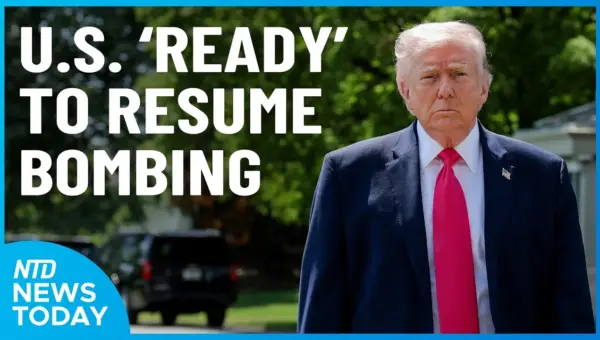
US Readies Military Might for Iran; Fed Nominee Faces Scrutiny
President Trump signals readiness to bomb Iran if deal talks fail, amidst naval blockades and potential Chinese involvement. Meanwhile, Federal Reserve nominee Kevin Warsh faces a key Senate hearing, discussing economic policy and independence. The military also shifts its vaccine policy, and investigations into Medicare fraud and the Southern Poverty Law Center continue.

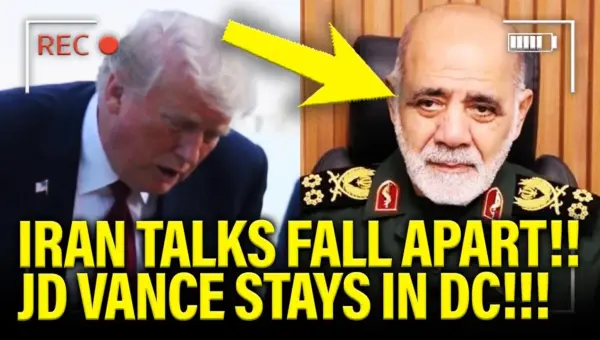
Trump’s Iran Standoff: Talks Collapse Amidst Threats
U.S.-Iran talks have collapsed amid a continued naval blockade, with Iran refusing to negotiate under threat. President Trump expects renewed conflict, while Iran warns of retaliation. Conflicting reports and aggressive rhetoric create a volatile situation with global implications.
Trump’s PACs Are Empty: Millions Raised, Millions Spent on Lawyers
Donald Trump's Super PACs are facing a severe cash shortage despite raising over $312 million this year. The money is primarily going towards legal bills, leaving the PACs with little cash on hand and significant debts.