Israel-Lebanon Peace Talks Signal Major Gains
Foreign policy expert Ali Guards highlights significant progress in recent Israel-Lebanon peace talks, noting the Lebanese government's assertion of authority and a joint statement as key wins. These discussions signal a potential shift towards state-to-state dialogue, moving away from the influence of non-state actors like Hezbollah.


Israel-Lebanon Peace Talks Signal Major Gains
A recent round of peace talks between Israel and Lebanon has been hailed as a significant success, according to foreign policy expert Ali Guards. These negotiations, aimed at de-escalating tensions and fostering a path toward peace, brought together key figures from both nations. Guards, who was present during the critical discussions, described the week as historic, particularly seeing Lebanese and Israeli ambassadors side-by-side.
The State Department’s labeling of these as “peace talks” is itself a major development. It’s a big step when two countries that have been in a state of war for decades can sit down and discuss peace. This official recognition highlights the seriousness and potential impact of these high-level discussions.
Key Victories Emerge from Talks
One of the most important outcomes was the release of a joint statement from the talks. This is rare, especially when conflict is ongoing.
It strongly suggests that the current dialogue is focused on a comprehensive peace deal between Israel and the Lebanese government, not involving Hezbollah as a primary partner. This distinction is crucial for long-term stability.
Another major win highlighted by Guards is the Lebanese government’s assertion of its state authority. For years, Hezbollah has held significant influence, often overshadowing the government’s decisions.
The fact that the Lebanese government is now actively pursuing peace talks, even against potential opposition from Hezbollah, shows a move towards reclaiming its sovereign power. This is a huge deal for a country that has felt under the influence of powerful non-state actors for a long time.
The participants reportedly came to the negotiations with a shared agenda. Everyone was on the same page, wanting to discuss similar topics like improving port access.
This alignment indicates a genuine desire from all sides to find common ground and make tangible progress. It suggests a readiness to move beyond past conflicts and focus on practical solutions that benefit both nations.
Why This Matters
The implications of these talks extend far beyond the immediate region. A stable peace between Israel and Lebanon could significantly alter the geopolitical balance in the Middle East.
It could reduce the risk of wider conflicts and open doors for economic cooperation. For Lebanon, regaining full state control is vital for its recovery and future development.
For decades, the Israeli-Lebanese border has been a source of conflict and instability. The presence of Hezbollah, a powerful armed group with significant political influence in Lebanon, has complicated any peace efforts.
Previous attempts at dialogue have often stalled or failed due to this complex dynamic. This new approach, focusing on the Lebanese government’s authority, might offer a more sustainable path forward.
Historical Context and Future Outlook
The relationship between Israel and Lebanon has been fraught with conflict, including major wars in 1982 and 2006. These wars caused immense suffering and destruction on both sides.
Since then, a fragile ceasefire has largely held, but tensions have remained high, often exacerbated by regional conflicts. The ongoing presence of Hezbollah has been a central challenge in all discussions about peace and security.
The current talks represent a potential turning point. By focusing on the Lebanese government’s role, negotiators are trying to build a foundation based on state-to-state relations.
This could sideline extremist elements and allow for more constructive dialogue. If successful, this could lead to agreements on border security, trade, and resource sharing, such as managing shared maritime resources or improving port infrastructure.
The future outlook depends on whether this momentum can be sustained. The Lebanese government must continue to assert its authority, and Israel must be willing to engage in good-faith negotiations.
The international community, particularly the United States, plays a role in supporting these efforts and ensuring that the gains made are not lost. The next steps will likely involve further detailed discussions on specific issues outlined in the joint statement.
The success of these peace talks hinges on continued commitment from all parties involved. The upcoming months will be critical in determining if this historic moment can translate into lasting peace and stability for the region.
Source: Israel-Lebanon ceasefire signaled 'big wins': Foreign policy expert | Morning in America (YouTube)

Related Articles


Trump Claims Iran Can’t Blackmail U.S. Amid Talks
Former President Donald Trump asserted that Iran cannot blackmail the U.S., describing ongoing talks with the nation as progressing well. He highlighted Iran's perceived military weaknesses and claimed his administration has effectively countered their threats, including attempts to disrupt shipping. Trump also noted shifts in global shipping patterns, suggesting increased resilience to Iranian pressure.

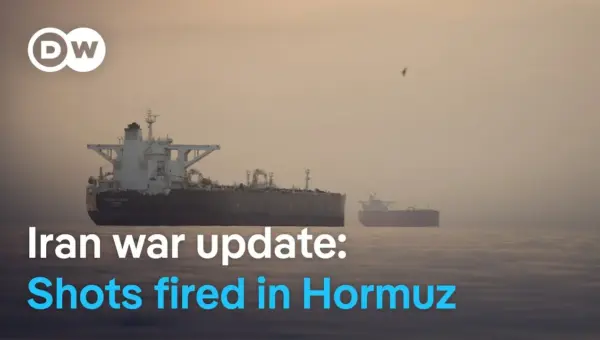
Iran Reverses Strait of Hormuz Reopening, Fuels Gulf Tensions
Iran has abruptly reversed its decision to reopen the vital Strait of Hormuz, hours after announcing it would allow maritime traffic to resume. Iranian gunboats reportedly fired on a tanker off Oman, fueling fears of escalating tensions. The move follows a fragile ceasefire in Lebanon, which experts suggest may be linked to the Hormuz situation.


Israel’s North: Ceasefire Hopes Meet Deep Skepticism
Residents in northern Israel are reacting to the recent ceasefire with a mix of hope and deep skepticism. Many feel disappointed, believing the truce might only be a temporary pause in the conflict. There are strong calls for Israel to act from a position of strength, not weakness, to ensure lasting security.