TPUSA’s Flashy Entrances Mask a Deeper Organizational Weakness
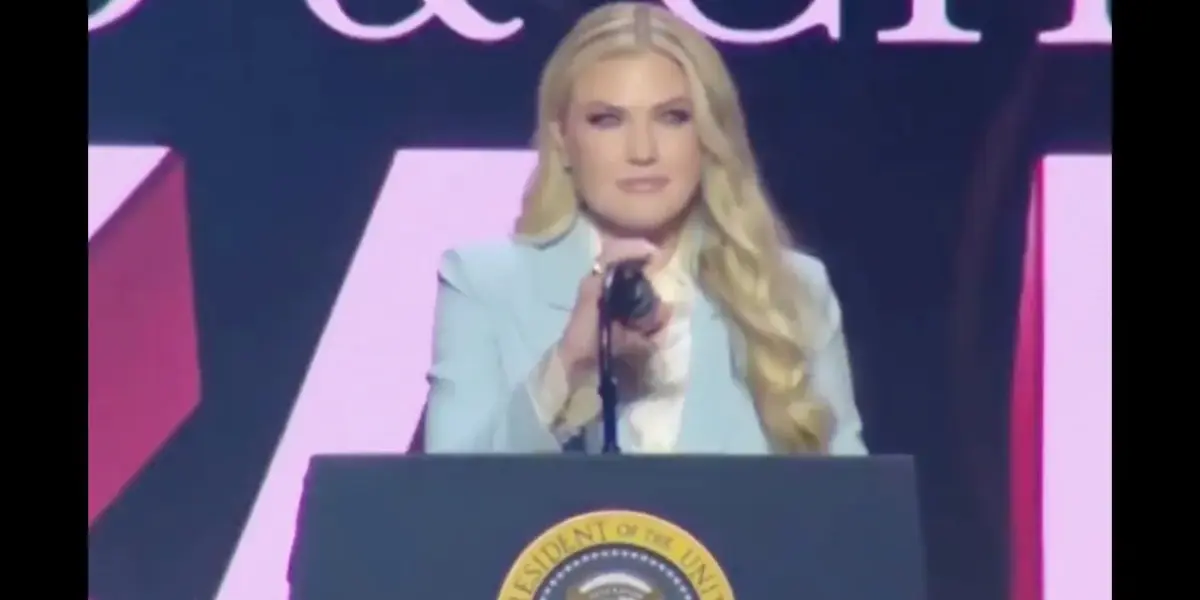
Erica Kirk's dramatic WWE-style entrance at a Turning Point USA event has sparked debate about the organization's strategy. Critics argue that the focus on spectacle overshadows the message and invites mockery. This approach may be a sign of deeper organizational challenges in building a movement based on ideas rather than entertainment.

TPUSA’s Flashy Entrances Mask a Deeper Organizational Weakness
Erica Kirk, CEO of Turning Point USA, recently made a dramatic entrance at a “Build the Red Wall” event in Phoenix, Arizona. Her entrance, complete with a WWE-style theme song and pyrotechnics, has drawn significant online attention.
This spectacle, however, has overshadowed any actual message she or other speakers, like Donald Trump, may have intended to convey. The event aimed to energize conservative voters before the midterm elections.
The elaborate entrance is not an isolated incident. It follows a pattern of public appearances by Kirk featuring flashy outfits, heavy makeup, and theatrical elements.
This approach has been noticed and commented on for months. It creates a noticeable contrast between the serious circumstances that led Kirk to her position and her increasingly flamboyant public persona.
The context for Kirk’s leadership is the assassination of Charlie Kirk, the organization’s founder. Since taking over, she has faced scrutiny for her public displays.
Critics argue that these grand entrances, while visually striking, invite mockery. A viral video from comedian Drewski highlights this criticism, suggesting that continuing such theatrics after jokes are made only validates the critics’ points.
Turning Point USA was built by Charlie Kirk into a powerful grassroots organization. Its previous product was serious, even when it was provocative.
The current approach, however, appears to be shifting. It increasingly resembles a personality-driven entertainment brand seeking its next viral moment, marked by dramatic entrances, theme songs, and pyrotechnics.
This focus on spectacle raises questions about the organization’s effectiveness. Critics have pointed to empty seats at recent Turning Point USA events. Observers noted that turnout was less than that of local church services.
Senators J.D. Vance and Jon Ossoff have both commented on low attendance at recent Republican events, suggesting a disconnect with the base.
When your own base isn’t even filling the room, fireworks do not solve the problem. They just make the empty seats harder to notice from the stage.
The online conversation following the Phoenix event focused heavily on Kirk’s entrance, not her message. This suggests a failure in the intended goal of energizing the crowd.
When the packaging becomes the story instead of the message, it signals a branding problem, not a win. It shows that the spectacle itself has become the news.
Sustaining a movement built on ideas requires more than just entertainment. It needs solid arguments, effective organizing, and a clear case for support.
Relying on theme songs and smoke machines may not be enough to persuade people. When the entertainment fades, the core message must stand on its own.
Why This Matters
The shift in Turning Point USA’s presentation reflects a broader trend in political organizing. In an era dominated by social media and short attention spans, political groups are increasingly using entertainment tactics to capture attention. This can be effective in the short term, but it risks diluting the core message and alienating potential supporters who are looking for substance.
The organization faces the difficult task of maintaining momentum after a traumatic loss. However, the strategy of prioritizing spectacle over substance may not be sustainable.
If the goal is to build a lasting movement, it needs to be rooted in ideas and genuine engagement, not just fleeting viral moments. The empty seats at events suggest that this approach may not be resonating with the intended audience.
The future outlook for Turning Point USA depends on its ability to recalibrate its strategy. It must find a balance between engaging presentation and meaningful content.
The organization needs to ensure that its message is heard above the noise of its own elaborate productions. The ultimate success will be measured by its ability to persuade and mobilize, not just entertain.
Historically, political movements have relied on strong messaging and grassroots organizing. While presentation matters, it has typically served to amplify the message.
The current trend, as seen with Turning Point USA, risks making the presentation the message itself. This could prove to be a fragile foundation for long-term political influence.
The conversation around the Phoenix event highlights a critical challenge: when the entrance completely swallows the substance, the entrance has failed. It means the focus has shifted from persuasion to performance. This is a branding problem that could undermine the organization’s stated goals of energizing voters and building a movement.
Moving forward, the organization must ask if its current strategy is truly effective. Are people being persuaded by the message, or are they simply captivated by the show?
The lack of discussion about what was actually said at the event in Phoenix suggests that the show may be overshadowing the substance. This is a critical question for any political group aiming for lasting impact.
Source: OMG: Erika Kirk EMBARRASSES herself on stage at conference (YouTube)

Related Articles

GOP Strategist Slams Trump’s Economy Remarks as ‘Dangerous’
A top GOP strategist has labeled former President Trump's recent economic commentary as "politically dangerous," arguing it ignores voters' real-life struggles with inflation and high costs. The remarks come amid growing concerns about a disconnect between political messaging and public sentiment on the economy.

Trump’s Pope Attacks Backfire, Exposing Political Missteps
Donald Trump's recent attacks on Pope Francis have backfired, revealing a significant drop in his popularity, especially among Catholics. Polling shows the Pope is far more popular than Trump. This strategy, coupled with concerns about Trump's mental fitness and controversial social media posts, is alienating voters and raising questions about his leadership.

GOP Faces Crisis: Trump’s Failures Threaten Election Wins
Republican strategists are increasingly worried that the party has accomplished little for the public. They fear Donald Trump's ongoing mistakes are costing them winnable elections. Independent voters, crucial in close races, are showing unease, making it hard for Republicans to craft a winning message.