Trump’s Iran Claims Fizzle Amidst Reality Check
Donald Trump's announcement of a deal to open the Strait of Hormuz has been met with skepticism, as evidence suggests the situation remains under Iranian control. Shipping data and Iranian officials contradict claims of a fully open passage, raising questions about misinformation and market manipulation.

Trump’s Iran Claims Fizzle Amidst Reality Check
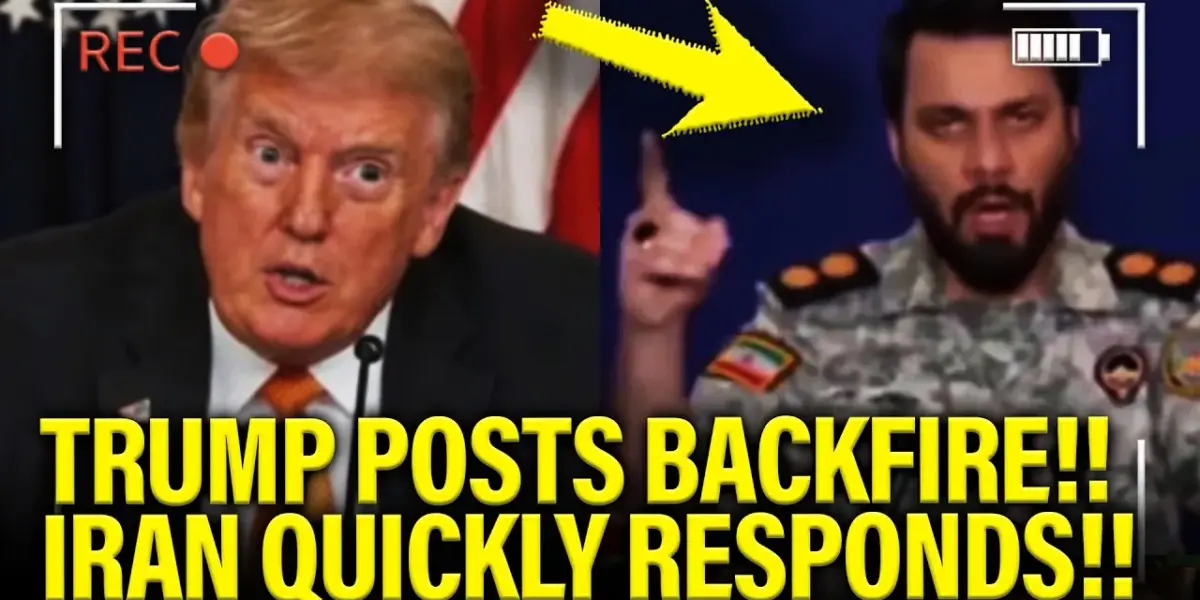
Recent claims made by Donald Trump regarding a major deal with Iran to fully open the Strait of Hormuz have come under intense scrutiny, with evidence suggesting the situation is far from what was announced. Trump declared the Strait fully open, under U.S. control, and that America would work with Iran to remove nuclear materials. He also stated Iran would stop funding proxies and receive no money from the U.S.
However, news outlets and market reactions quickly followed Trump’s announcement, which was reportedly made directly to reporters from outlets like CBS and Axios. This rapid dissemination led many to believe the Strait was indeed open. Yet, this analysis suggests a closer look at the facts reveals a different story, pointing to a significant disconnect between Trump’s statements and the reality on the ground.
Journalistic Malpractice or Misinformation?
The speed at which these claims were reported has been called into question. The Midas Judge Network, for example, chose not to report Trump’s announcement verbatim, citing a lack of factual basis. Instead, they looked at actual shipping data, which showed ships entering the Strait of Hormuz only to immediately turn back.
This observation directly contradicted the narrative of an open waterway. It appears that while ships heard Trump’s message, the situation on the water told a different tale. This discrepancy raises concerns about how such announcements are reported and the potential for market manipulation.
Iran’s Counter-Narrative
Iran’s perspective sharply contrasts with Trump’s claims. Iranian Foreign Minister Araghchi stated the Strait would be open, but only under Iran’s coordinated control via pre-approved routes. This meant ships would have to navigate areas controlled by Iran, potentially incurring tolls and facing decisions from the Iranian Revolutionary Guard about passage.
This scenario closely resembles the status quo before Trump’s announcement. Iran’s parliament leader, M.B.
Ghalibaf, further dismissed Trump’s claims, calling all seven of his statements false. Ghalibaf emphasized that the Strait’s status would be determined by actions on the ground, not by social media or media warfare.
The Ground Truth: Shipping Data vs. Rhetoric
The core of the dispute lies in verifying what is actually happening. The analysis hinges on objective observation, such as examining shipping data to see if more vessels are freely transiting the Strait of Hormuz. The question is whether ships are using routes that were open before the conflict Trump and Netanyahu are accused of initiating.
The Iranian foreign ministry spokesperson’s statement further clarified their position. They confirmed adherence to a previous framework, allowing coordinated commercial vessel traffic through routes approved by the Revolutionary Guard. Importantly, this coordination is with Iran, and it specifically means non-military ships, not U.S. military vessels.
Key Points from Iran’s Statement:
- Ship movement through the Strait of Hormuz will follow routes set by Iran and be coordinated with relevant authorities.
- A U.S. naval blockade would be considered a violation of any ceasefire and would trigger a response.
- Enriched uranium will not be transferred anywhere under any circumstance.
- Iran’s armed forces are responsible for enforcing transit measures in the Strait.
- Claims of direct talks between U.S. and Iranian officials are false.
Iran also indicated it would continue to limit the number of ships allowed to cross the Strait and would charge tolls for the remaining period of any ceasefire. This indicates that any opening of the Strait is conditional and controlled by Iran, not freely accessible under U.S. oversight as Trump suggested.
Sanctions Relief and Shifting Alliances
Adding another layer to the complex geopolitical situation, the U.S. reportedly lifted sanctions on Russian oil for another month. This decision came shortly after Treasury Secretary Besson stated the U.S. would not renew waivers for such sanctions. This move suggests a potential shift or inconsistency in U.S. policy regarding oil sanctions.
Reports indicate Trump’s statements on Israeli strikes in Lebanon caused confusion. While Trump initially seemed to prohibit such strikes, a clarification from a U.S. official suggested Israel retained the right to self-defense against imminent attacks. This ambiguity allowed for continued Israeli military operations in Lebanon.
The Nuclear Question
Regarding Iran’s nuclear program, reports from the New York Times suggest potential development sites beyond those previously known. Even in a best-case scenario presented by Trump, Iran’s compliance would be voluntary, with the U.S. relying on Iran’s word that it is not enriching uranium to weapons-grade levels.
However, Iranian officials, including M.B. Ghalibaf and spokespeople, have repeatedly stated that Trump’s claims about agreements are false.
They maintain that control over the Strait of Hormuz will be determined on the ground, not through media narratives. This persistent denial from Iran directly challenges the narrative of a breakthrough deal.
Why This Matters
The events surrounding the Strait of Hormuz highlight the critical importance of verifiable facts over political pronouncements. When major geopolitical announcements are made, especially those that can influence markets and international stability, relying on verified data and multiple credible sources is essential. The discrepancy between Trump’s claims and Iran’s statements, supported by shipping data and official Iranian communications, suggests a potential for miscalculation and increased tension.
This situation also highlights the role of the media in reporting. The practice of simply relaying statements from political figures without independent verification can lead to widespread misinformation.
It is crucial for journalists to act as fact-checkers and investigators, providing context and truth rather than simply amplifying potentially misleading claims. The potential for manipulated markets and heightened conflict due to unsubstantiated reports is a serious concern for global security and economic stability.
Implications and Future Outlook
The events suggest that diplomatic channels and on-the-ground realities are often more complex than public statements might indicate. The Strait of Hormuz remains a critical global chokepoint, and any instability there has far-reaching consequences for oil prices and international trade. Iran’s insistence on controlling passage through the Strait and its conditional approach to commercial traffic signal that a full opening, as claimed by Trump, is unlikely without significant concessions or direct Iranian authorization.
The future outlook depends on whether diplomatic efforts can bridge the gap between rhetoric and reality. The emphasis Iran places on its non-negotiables, such as treating all resistance elements as a single unit and securing conditions for a full end to the war, indicates a firm stance. Any resolution will likely require addressing these core demands, alongside issues like sanctions relief and compensation for war damages.
The ongoing situation around Iran’s nuclear program also remains a significant point of contention. Reports of potential enrichment activities, even if voluntary compliance is claimed, will continue to be monitored closely by international bodies and global powers. The interplay between sanctions, diplomacy, and Iran’s regional activities will shape the geopolitical landscape in the coming months.
The situation highlights the need for clear, verifiable communication in international affairs. As the world watches, the true state of the Strait of Hormuz and Iran’s nuclear program will be determined by actions and verified intelligence, not just by public declarations. The next steps in negotiations, particularly concerning the framework for ending the war and the scope of sanctions relief, will be critical indicators of future progress.
Source: Trump PANICS as Hormuz STAYS CLOSED!!! (YouTube)

Related Articles

Navy Commander Exposes Trump’s Blockade Plan as Fatal Flaw
A former Navy planner criticizes Trump's naval blockade of Iran as an illegal act of war. The strategy lacks authorization, undermines ceasefires, and risks global economic shock. It also strains U.S. military resources and offers no clear exit strategy.

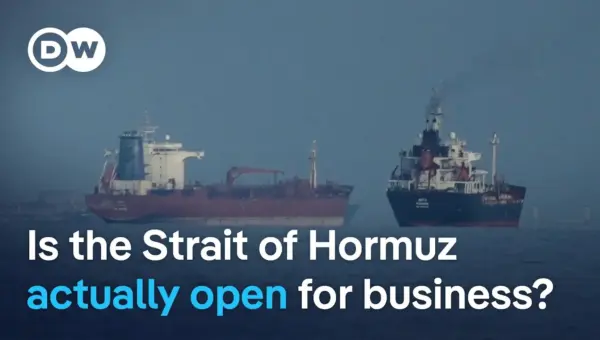
Strait of Hormuz Reopens: Global Oil Prices Drop, But Crisis Lingers
The Strait of Hormuz has reopened, causing oil prices to drop and markets to rally. However, experts caution that a full resolution to the global energy crisis is still distant due to lingering uncertainties, infrastructure damage, and ongoing geopolitical risks. Countries are now focusing on long-term preparedness through diversification and international cooperation.

Trump’s Iran Deal: Promises or Playacting?
President Trump announced a potential deal with Iran regarding the Strait of Hormuz, but conflicting reports from Iran have created confusion. While markets reacted positively, the actual terms and Iran's commitment remain uncertain, echoing past diplomatic challenges.