Voters Express Regret Over Trump’s Economic Policies
Voters in Arizona are expressing significant anger and regret over Donald Trump's economic policies, linking rising costs of fuel and goods directly to his decisions. Experts note a growing distrust fueled by perceived broken promises and a disconnect between Trump's claims and economic realities, potentially impacting upcoming elections.

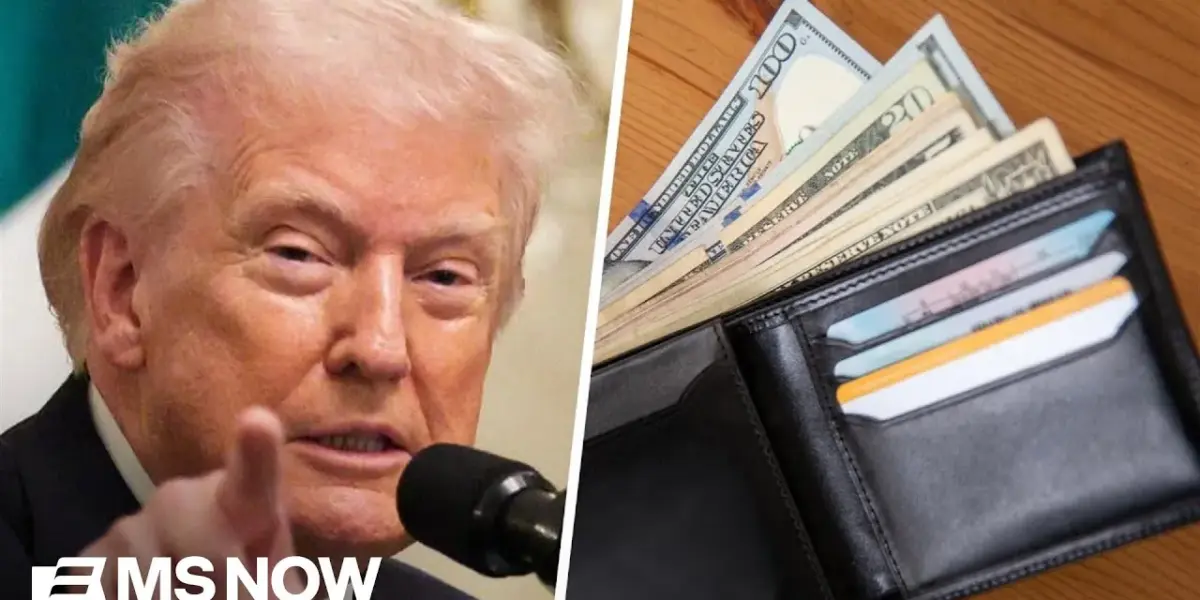
Arizona Voters Voice Frustration with Trump’s Economic Promises
In a striking shift, voters in key Arizona districts are expressing disappointment and even regret over their past support for Donald Trump, directly linking his policies to their current financial struggles. Staff writer for The Atlantic, Yvonnene Winget Sanchez, and associate professor of political science at Fordham University, Christina Greer, discussed these sentiments, highlighting a growing anger among both Trump and non-Trump voters alike. This frustration stems from the perceived negative impacts of recent economic decisions, including rising costs for essential goods and fuel, leading some to reconsider their voting choices in upcoming elections.
Sanchez described conversations with voters in competitive House districts in Arizona, noting a pervasive sense of anger. She explained that Trump voters are directly feeling the effects of certain policy decisions, such as the conflict in Iran, and are holding the former president accountable.
This direct connection, with no intermediaries to blame, has led to concrete actions like canceling summer vacations and scaling back small business investments. The potential consequence, Sanchez warned, is a significant impact on election outcomes in a state where races are often decided by very slim margins.
Economic Hardship Fuels Voter Discontent
The rising cost of living is a central theme among disgruntled voters. Sanchez shared accounts of individuals paying significantly more for everyday items, citing examples like diesel fuel costing $6 a gallon and Chicharrones (pork rinds) priced at $9.50 in rural towns outside Phoenix.
These tangible economic pressures are so severe that they are prompting voters, even those who have been loyal Trump supporters, to openly question their past decisions and express regret. This willingness to speak out on the record, particularly in districts with a strong MAGA coalition, signals a potential shift in political allegiances.
Greer pointed out that voters often prioritize pocketbook issues when heading to the polls. She contrasted this with past instances where Trump supporters seemed willing to overlook certain realities, such as when economic concerns were not directly impacting their daily lives. The current situation, however, is different.
Many voters are now experiencing life changes due to decisions made by Trump, which they feel contradict his promises of prioritizing America First. The justification for certain foreign policy actions, particularly the conflict in Iran, remains unclear to many, especially when coupled with escalating costs for essential goods and services.
“Americans go to the polls for pocketbook issues. And we have seen Donald Trump’s voters ignore realities in the past. So when he says, well, housing prices might be a little bit more, you’ll be fine with it.
And by and large, they were going along with a lot of things because, as you said, that January 6th disappointment did not last very long. But that also wasn’t a direct pocketbook issue. That was more of a moral issue.
And we know that his diehard supporters don’t really care about moral issues when it comes to this particular president. What we’re seeing now is something drastically different. We’re seeing people have to change their lives on a daily basis because of choices he’s made.”
— Christina Greer
Trump’s Economic Claims Face Scrutiny
During the discussion, Trump’s own statements about the economy were played, where he downplayed the severity of gas prices and dismissed inflation as “fake.” Greer strongly refuted these claims, presenting data that showed the average household cost for gas this year would significantly exceed any potential tax refunds. She argued that Trump appears out of touch with the economic realities faced by ordinary Americans, a sentiment echoed by voters who feel lied to on multiple issues.
The experts highlighted a pattern of broken promises from Trump, including balancing the budget, reducing government spending, and eliminating corruption. Instead, data suggests a significant increase in deficit spending and a rise in insider trading.
Voters are noticing these discrepancies, with many, especially younger individuals, expressing a deep distrust in the political system. This disillusionment is fueled by what they perceive as blatant falsehoods on issues ranging from foreign policy to housing prices, leading to a growing belief that many of Trump’s past statements were simply untrue.
Voters Questioning Loyalty vs. Principles
One voter, Jesse Wilbur, shared his feelings of betrayal, stating he believed in Trump’s promises of draining the swamp and bringing accountability, but saw neither materialize. He emphasized that his priorities—God, family, country, faith, morality, values, and truth—transcend political loyalty.
Wilbur warned that when loyalty replaces principles, great nations falter, and leaders lose credibility. His sentiments reflect a broader concern that blind allegiance can lead to national decline.
Greer acknowledged that while some voters are “late to the party” in recognizing these issues, she is glad they are seeing the light. She drew a parallel to New Yorkers’ long-standing perception of Trump as a “grifter” who has consistently failed to live up to his word, despite skillful marketing and communication.
Greer suggested that Trump taps into people’s fears and aspirations, which has contributed to his past electoral successes. However, she pointed to a current lack of focus from Trump, citing distractions like internal White House matters and public disputes, which she believes are overshadowing critical national and international issues.
Concerns Over Cognitive Decline and Distraction
The discussion also touched upon concerns regarding Trump’s focus and perceived cognitive state. Greer questioned whether Trump’s distractions, such as focusing on trivial matters or engaging in public spats, indicate a deeper issue or simply a habit of overwhelming opponents with noise.
She contrasted this with the expected focus on serious policy discussions, suggesting a disconnect between Trump’s behavior and the demands of leadership. The conversation implied that such distractions could be detrimental to effective governance.
The article closes by noting the growing sentiment among voters that Trump has consistently failed to deliver on his promises. The contrast between his rhetoric and the lived economic experiences of many Americans is becoming increasingly stark. As election season approaches, the question remains whether these widespread economic grievances will translate into significant shifts in voter behavior, particularly in closely contested races.
Source: 'He's never lived up to his word': Professor reacts to Trump's handling of the economy (YouTube)

Related Articles
Socialist Candidate Wins Big in NJ, Signals Party Shift
Socialist candidate Analilia Mejia won a special election in New Jersey's 11th Congressional District by 19 points. Her platform includes abolishing ICE, defunding police, and a $25 minimum wage. This victory signals a potential leftward shift within the Democratic Party.
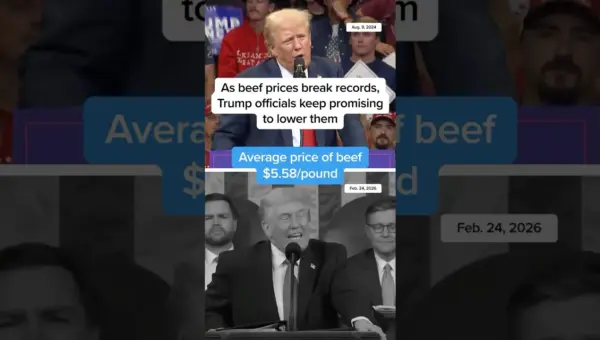
Beef Prices Soar Despite Trump Admin’s Price Cut Promises
Despite campaign promises to lower grocery prices immediately, beef costs have hit record highs, according to federal data. An investigation by MS NOW's JM Rieger reveals shifting statements from the Trump administration regarding efforts to control food prices. Consumers continue to feel the pinch as beef remains unaffordably expensive.
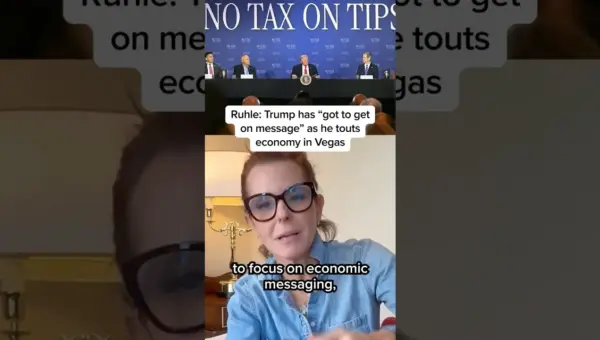
Ruhle: Trump Must Unite on Economy Message in Vegas
MSNBC anchor Stephanie Ruhle criticized former President Donald Trump's economic messaging strategy, stating he is responsible for current economic woes. As Trump visits Las Vegas to tout tax policies, Ruhle argued he needs to present a unified message. His economic policies from his presidency are a key focus of ongoing debate.