Hayes Critiques Trump’s Iran War Speech, Fact-Checks Claims
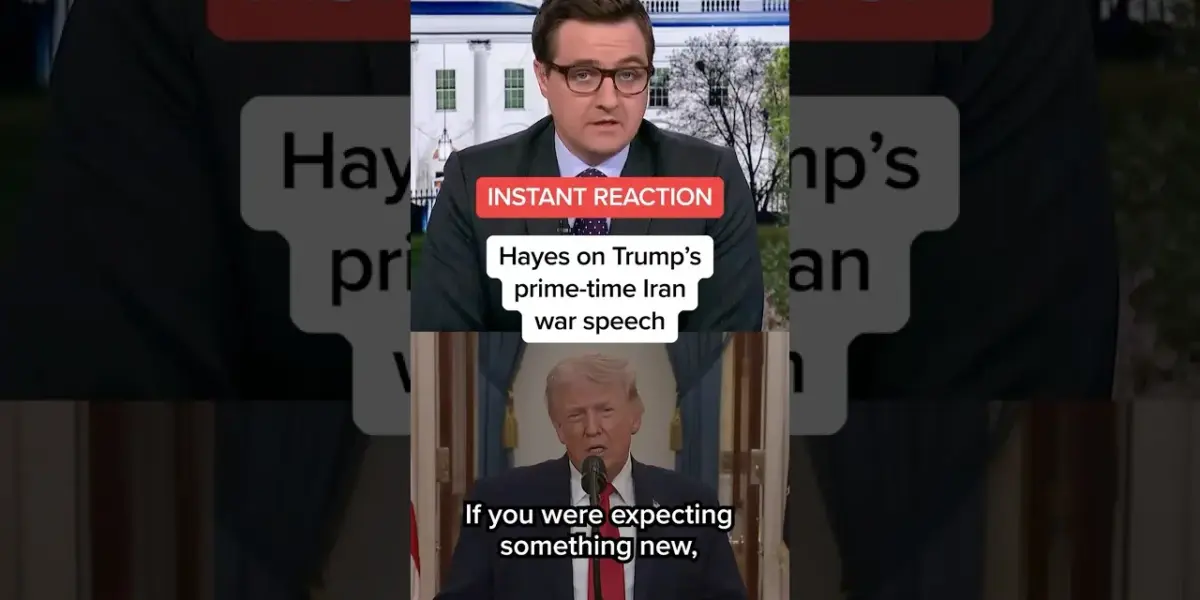
Chris Hayes fact-checked former President Donald Trump's recent prime-time address on Iran, questioning the accuracy of his claims about the Strait of Hormuz and the necessity of military action. Hayes argued that Trump's rhetoric oversimplified a complex geopolitical situation and could hinder diplomatic solutions, urging viewers to seek factual reporting.

Hayes Critiques Trump’s Iran War Speech, Fact-Checks Claims
Chris Hayes, host of MSNBC’s ‘All In with Chris Hayes,’ offered a sharp critique of former President Donald Trump’s recent prime-time address regarding Iran. Hayes focused on the accuracy of Trump’s statements and the implications of his rhetoric, particularly concerning the Strait of Hormuz and the potential for conflict. He questioned the framing of the situation and the justifications presented for potential military action.
Examining Trump’s Address
Trump’s speech aimed to justify actions taken against Iran and outline future policy. Hayes immediately questioned the narrative presented, suggesting it may not fully align with the facts. He specifically pointed to claims made by Trump about the necessity of the actions and the perceived threats from Iran.
“What we just heard from Donald Trump was a speech designed to sound tough and decisive,” Hayes stated. “But when you start to look closely, the justifications he offered don’t hold up to scrutiny. He’s presenting a very specific version of events that I think is misleading.”
Fact-Checking Key Claims
A significant portion of Hayes’ reaction involved fact-checking specific assertions made by the former president. One key area of contention was Trump’s portrayal of Iran’s actions and intentions. Hayes sought to provide a more nuanced and factually grounded perspective.
Hayes challenged Trump’s assertion that Iran posed an imminent threat requiring a strong military response. He highlighted that the intelligence and context surrounding Iran’s activities are complex.
“The idea that Iran is acting completely unilaterally and poses an immediate, direct threat that requires this level of escalation is not supported by the broader intelligence picture,” Hayes argued. He suggested that other factors and interpretations of Iran’s behavior are being ignored.
The Strait of Hormuz Context
The Strait of Hormuz, a vital waterway for global oil transport, was a central focus of Trump’s speech and Hayes’ analysis. Trump emphasized Iran’s potential to disrupt shipping in the region. Hayes countered by providing historical context and questioning the current level of threat.
“The Strait of Hormuz is always a point of tension,” Hayes explained. “But to suggest that Iran is on the verge of shutting it down completely, and that this is the sole reason for the current U.S. Posture, oversimplifies a very delicate geopolitical situation.” He pointed out that while Iran has the capability to cause disruption, its actual actions are often influenced by various political and economic considerations.
Implications for War and Diplomacy
Hayes expressed concern that Trump’s rhetoric could increase the likelihood of conflict. He suggested that the strong, often confrontational language used by Trump leaves little room for diplomatic solutions.
“When a leader speaks this way, it can box in diplomatic options and make military action seem like the only path forward,” Hayes observed. “This is dangerous because it escalates tensions without necessarily having exhausted all diplomatic avenues. The path to war is often paved with strong rhetoric and perceived inevitabilities.”
He also touched upon the broader implications for international relations and regional stability. Hayes noted that such speeches can have far-reaching consequences, affecting alliances and the global perception of U.S. Foreign policy. The way the U.S. Engages with Iran has ripple effects across the Middle East and beyond.
Broader Geopolitical Factors
Hayes stressed that the situation with Iran is not isolated but is part of a larger, complex web of regional politics. He suggested that Trump’s framing of the issue ignored these crucial connections.
“We need to understand this within the context of the broader Middle East,” Hayes urged. “There are many players involved, and Iran’s actions are often a response to what it perceives as external pressures or threats. Reducing it to a simple narrative of Iranian aggression misses the bigger picture.” He implied that a more comprehensive understanding requires looking at the history of U.S.-Iran relations and the actions of other regional powers.
What to Watch Next
Hayes concluded by emphasizing the need for continued scrutiny of official statements and a commitment to factual reporting. He urged viewers to look beyond the immediate rhetoric and seek out reliable sources of information regarding U.S. Foreign policy decisions, especially those concerning potential military engagements.
The focus will remain on how diplomatic channels are pursued or bypassed in the coming days and weeks. International reactions and Iran’s response to the heightened tensions will be critical indicators of the path forward. The potential for miscalculation remains high in such a volatile situation.
Source: Hayes' INSTANT REACTION to Trump's prime-time Iran war speech (YouTube)

Related Articles
Claim: US Economy Is ‘Hottest’ With ‘No Inflation’
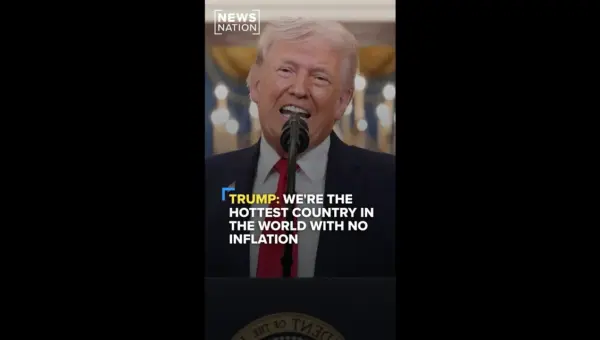
Donald Trump recently declared the U.S. economy the "hottest in the world" with "no inflation." He cited record investments and stock market highs as proof of his administration's success. This analysis examines his claims against economic data and historical context.
Trump’s Iran War Stance: Critics Cite Lack of Foresight
Journalist Molly Jong-Fast criticized Donald Trump's stance on a potential Iran war, suggesting he cannot foresee the "second-order effects." Speaking on MSNBC, she argued that Trump's comments linking war to American safety overlook the likely economic fallout, such as higher gas prices. The discussion highlighted concerns about strategic foresight in foreign policy decisions.

Trump Attends SCOTUS Hearing on Birthright Citizenship
Former President Donald Trump attended Supreme Court oral arguments on birthright citizenship, the first sitting president to do so. His administration argued to limit the 14th Amendment's guarantee of citizenship to those born in the U.S. Legal experts and the justices themselves appeared skeptical of the arguments challenging long-standing precedent.