Chevy Silverado EV Trail Boss Tackles King of the Hammers
The Chevrolet Silverado EV Trail Boss tackled the rugged terrain of King of the Hammers, proving its off-road mettle against electric rivals. Despite its size and weight, the Trail Boss demonstrated surprising capability in sandy washes and rocky climbs, showcasing the evolving potential of electric trucks in extreme environments.

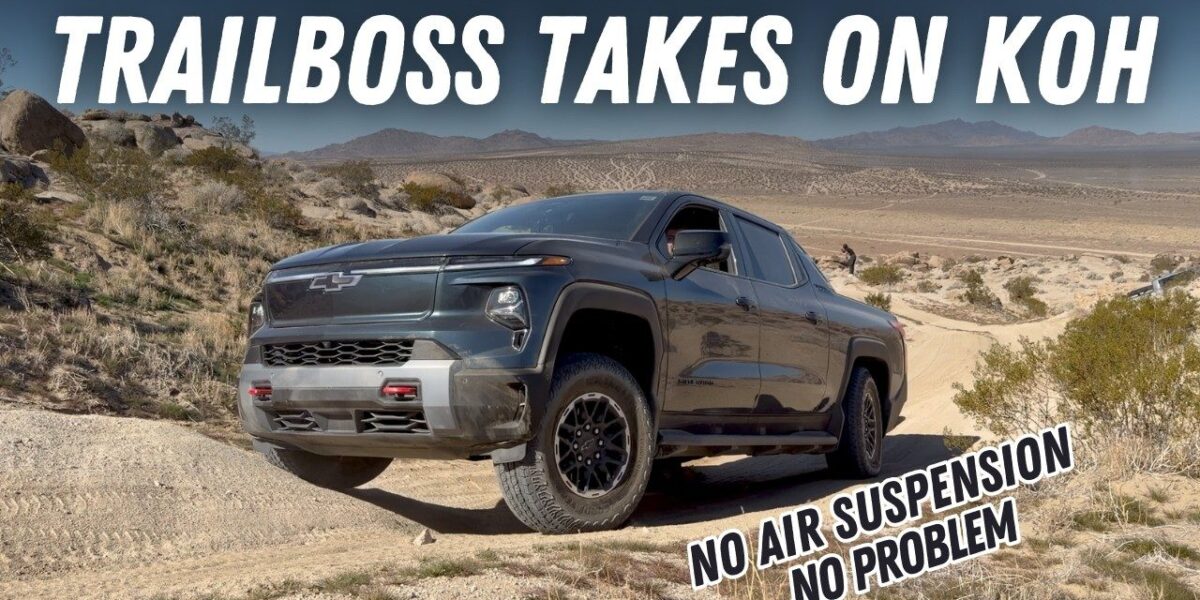
Chevy Silverado EV Trail Boss Proves Its Mettle Off-Road
The electric revolution is no longer confined to city streets and highways. Chevrolet is boldly pushing the boundaries of what electric trucks can do, and they’ve chosen the rugged, unforgiving terrain of Johnson Valley, California, home to the legendary King of the Hammers, as their proving ground. The Silverado EV Trail Boss, a behemoth of an electric pickup, faced off against a formidable lineup of electric competitors, including Rivian R1Ts and even the striking Cybertruck, in an off-road expedition designed to test the limits of electric power and endurance.
While often perceived as nimble and agile, electric vehicles, especially larger trucks, are increasingly demonstrating their capability in the extreme. The Silverado EV Trail Boss, with its substantial presence and all-electric powertrain, embarked on a rally drive and expedition, showcasing its potential beyond the paved road. This event, a unique blend of extreme off-roading and electric vehicle enthusiasm, highlighted the growing excitement and innovation within the EV community.
Performance in the Desert Heat
At the heart of the Silverado EV Trail Boss lies a dual-motor setup providing all-wheel drive, powered by a massive 220 kWh usable battery pack. Chevrolet claims impressive performance figures, with the potential for near 750 horsepower and 800 lb-ft of torque in certain configurations, though specific numbers for the Trail Boss variant tested were not detailed in the provided context. This power is delivered to 35-inch Goodyear Territory AT/R tires, mounted on 18-inch wheels, providing substantial ground contact. The suspension is tuned for off-road use, featuring steel springs, though it’s noted to be a fixed setup with no adjustability.
During the expedition, the Trail Boss demonstrated surprising capability. While its considerable weight (around 9,000 lbs) and long wheelbase presented challenges in tighter sections, the truck generally held its own. The vehicle features distinct drive modes: ‘Off-Road’ for general dirt and light trails, and ‘Terrain’ mode, which utilizes brake-based torque vectoring to simulate locking differentials for more aggressive crawling. The ‘Terrain’ mode proved particularly effective in challenging ascents, using friction brakes to maintain traction and prevent rollback, though it could lead to brake overheating on prolonged use.
Despite concerns about its underbody components, like plastic-clipped running boards and the lack of a spare tire, the Trail Boss managed to navigate rocky sections and sandy washes with more grace than anticipated. The departure angle was noted as surprisingly good, helping it clear obstacles that looked daunting. However, the vehicle’s sheer size and limited articulation meant it bottomed out in some areas where more specialized off-roaders might have excelled. The running boards, in particular, proved to be a vulnerability, scraping and showing signs of stress, suggesting they might be better removed for serious off-road excursions.
Interior and Technology
Inside, the Silverado EV Trail Boss offers a modern cabin, though the transcript focuses less on interior luxury and more on the functional aspects during the off-road event. The vehicle is equipped with advanced camera systems, including an overhead view, which proved invaluable for navigating technical terrain where forward visibility was compromised by the large hood. The inclusion of rear-wheel steering was also a significant advantage, aiding maneuverability in tight spots, although its response was noted as slightly slower compared to competitors like the Cybertruck.
The vehicle’s infotainment system allows for access to various drive modes and camera views. For an EV, the large hood is explained by its utility as a front trunk, but it does impede direct forward visibility. This highlights the trade-offs between aerodynamic design, storage, and off-road practicality.
Value and Target Audience
The Chevrolet Silverado EV Trail Boss is positioned as a more rugged, off-road-oriented variant of the electric Silverado. While specific pricing and trim levels for the Trail Boss were not detailed, the broader Silverado EV lineup is expected to offer a range of options. The WT (Work Truck) trim is slated to start around $50,000, with higher trims like the LT and the off-road-focused Trail Boss likely commanding higher prices, potentially reaching into the $80,000s or more for fully equipped models with the larger battery. The long-range variant is estimated to offer up to 450 miles of range on a full charge.
The target buyer for the Trail Boss is the traditional truck owner who desires electric power but refuses to compromise on off-road capability and towing/hauling prowess. This includes outdoor enthusiasts, ranchers, and those who frequently venture off the beaten path. Compared to competitors like the Rivian R1T, which offers a more refined and technologically advanced experience, and the Ford F-150 Lightning, which balances work and everyday use, the Silverado EV Trail Boss aims to carve out a niche for those prioritizing raw, go-anywhere electric truck performance. The value proposition hinges on its robust construction, impressive battery capacity, and the promise of true off-road durability, provided some of the more vulnerable components are addressed for extreme use.
Verdict
The Chevrolet Silverado EV Trail Boss has made a strong statement at King of the Hammers, proving that electric trucks can indeed tackle extreme off-road challenges. While not without its limitations, particularly concerning ground clearance and the vulnerability of its running boards, the truck’s powerful dual-motor system, large battery, and capable ‘Terrain’ mode allow it to navigate difficult terrain effectively. Its impressive approach and departure angles, coupled with the advantage of rear-wheel steering, help it overcome obstacles that might challenge larger vehicles. For consumers seeking an electric pickup that can confidently venture off-road without sacrificing range or capability, the Silverado EV Trail Boss presents a compelling, albeit large, option. It signifies a significant step forward in the electrification of the pickup truck segment, demonstrating that the future of off-roading is electric.
Source: Trail Boss! Chevy Silverado EV In The Desert For An EV King Of The Hammers Adventure (YouTube)

Related Articles


Rivian R1T’s Shocking Speed Stuns Corvette Z06
The Rivian R1T, a powerful electric adventure truck, shockingly outpaced a Chevrolet Corvette Z06 in a drag race. With over 800 horsepower and the right settings, the R1T achieved a 10.6-second quarter-mile time, leaving the sports car behind.

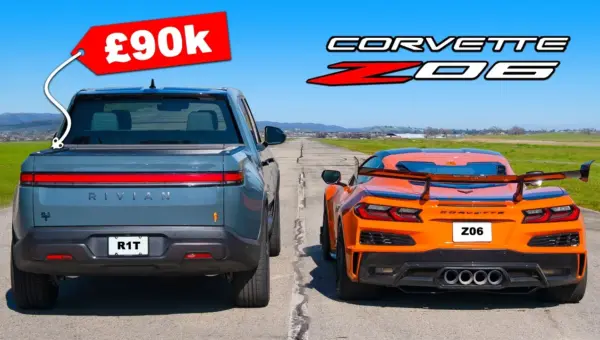
Electric Truck Beats Supercar in Shocking Drag Race
A massive electric truck, the Rivian R1T, surprisingly beat a Chevrolet Corvette Z06 in a quarter-mile drag race. Despite the Corvette's performance pedigree, the Rivian's immense power and advanced traction control settings allowed it to achieve a stunning victory.


Slate Truck Promises Affordable EV Future
Slate is aiming to launch a minimalist, modular electric truck by the end of 2026 with a target price in the mid-$20,000s. The truck boasts a customizable design and a modest range, prioritizing affordability over high-end specs. Its success hinges on navigating market challenges and meeting its ambitious price point.