Artemis II Launch Delayed, Moon Landing Shifts to 2028
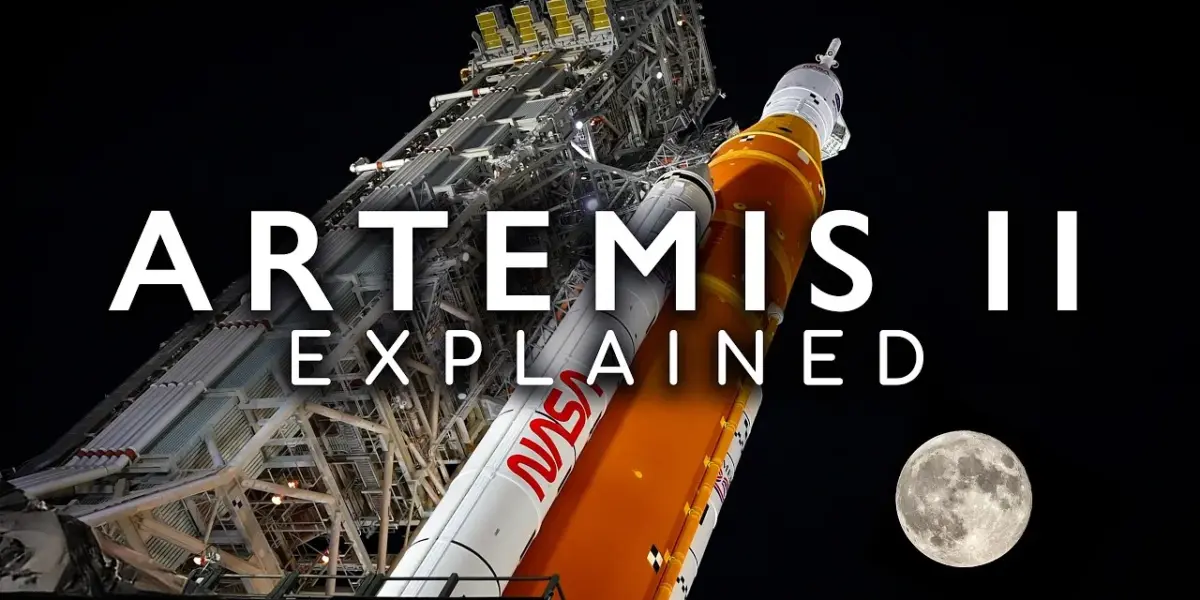
NASA's Artemis II mission, intended to send astronauts around the Moon, has been delayed to September 2025 due to technical issues with the SLS rocket. The program's first lunar landing, Artemis III, has been redefined as an Earth-orbit test, pushing the actual Moon landing to no earlier than 2026. Future missions targeting the lunar South Pole are now set for 2028.

Artemis II Launch Delayed, Moon Landing Shifts to 2028
NASA’s ambitious Artemis program, aiming to return humans to the Moon and establish a lasting presence, faces significant delays and strategic shifts. The Artemis II mission, intended to carry astronauts around the Moon, has been pushed back from an early April 2024 target to no earlier than September 2025. This delay, coupled with a major restructuring of Artemis III, pushes the first human lunar landing of the program to no earlier than 2026, with subsequent missions now targeting the lunar South Pole in 2028.
Technical Hurdles Ground Artemis II
The immediate focus for NASA remains Artemis II, the first crewed mission of the program. Originally slated for an early February 2024 launch, the mission has encountered a series of technical challenges.
The primary obstacle involves issues with the Space Launch System (SLS) rocket’s Interim Cryogenic Propulsion Stage (ICPS). During a critical “Wet Dress Rehearsal” – a test simulating fueling and countdown procedures – engineers discovered a leak in the liquid hydrogen system.
Hydrogen, the lightest element, is extremely difficult to contain at the cryogenic temperatures needed for spaceflight, around -252°C. While leaks were not entirely unexpected, the severity of the issue required extensive repairs.
Further complicating matters, a subsequent test revealed a problem with helium flow within the ICPS, crucial for maintaining fuel tank pressure and purging engine lines. These issues necessitated rolling the massive 98-meter-tall rocket stack back to NASA’s Vehicle Assembly Building for repairs, a complex and time-consuming process.
A Question of Practice and Risk
These recurring technical glitches highlight a broader concern within NASA: the infrequent launch cadence of the SLS rocket. Unlike the Apollo program, which saw its Saturn V rocket fly multiple times in quick succession, the SLS has had only one flight, Artemis I, in November 2022.
NASA Administrator Bill Nelson has noted that launching such a complex rocket only once every few years leads to a decline in workforce skills and experience. This “skill atrophy” can result in mistakes, as seen with the recent component failures.
To combat this, NASA aims to increase launch frequency to roughly every ten months, a goal that hinges on successfully launching Artemis II and subsequent missions. Beyond the technical aspects, there’s an inherent understanding of the immense risk involved.
It has been over 50 years since humans last traveled to the Moon, and the tolerance for potential disaster is far lower today. The Artemis program is introducing new software, new contractors, and a rocket that has flown only once, making every anomaly a critical concern.
Artemis I’s Heat Shield Surprise
The Artemis I mission, which successfully launched on November 16, 2022, and completed its 25-day journey, provided valuable data but also revealed unexpected issues. While the mission proved the capability of the SLS rocket and Orion spacecraft to travel to the Moon and return, post-flight inspections showed significant erosion of Orion’s heat shield. The ablative material, known as Avcoat, chipped and broke away in over a hundred locations during re-entry, a phenomenon not observed during the Apollo missions.
An investigation found that gases generated during re-entry were becoming trapped within the Avcoat material due to its lack of permeability. This internal pressure buildup caused the shield to crack. To mitigate this risk for Artemis II, NASA will alter the re-entry profile.
Instead of a “skip-entry” maneuver, which uses the atmosphere to slow the capsule down in stages and was found to exacerbate the heat shield issue, Orion will perform a steeper, more direct re-entry. This is harder on the astronauts but considered safer for the spacecraft’s integrity.
Artemis III’s Mission Redefined
Perhaps the most significant strategic shift involves Artemis III, originally planned as the mission to land astronauts on the lunar surface. As of early 2024, this plan has been scrapped.
Instead, Artemis III will now serve as a 30-day test mission in low-Earth orbit, similar to how Apollo 9 tested the Lunar Module before its lunar journey. This decision was driven by safety concerns and the immense complexity of the original plan.
The initial Artemis III concept required the Orion capsule to dock with SpaceX’s Starship Human Landing System in a specific lunar orbit. This involved numerous firsts: the first crewed docking in lunar orbit, the first cryogenic fuel transfer for Starship, and the use of new spacesuits.
An independent safety panel warned of a “compounded level of technical risk” with so many untested elements occurring simultaneously. By moving the test to Earth orbit, NASA can verify life support, communications, and docking procedures without the life-or-death stakes of being nearly 390,000 kilometers from home.
A New Path for Lunar Landings
This redefinition of Artemis III also impacts the future of the SLS rocket. NASA has canceled plans for the more powerful Block 1B and Block 2 upgrades, which included the development of a new Exploration Upper Stage (EUS).
Instead, starting with Artemis IV, the SLS will utilize the United Launch Alliance’s (ULA) Centaur V as its upper stage. The Centaur V is already used on ULA’s Vulcan rocket and offers a “near-drop-in” replacement, allowing NASA to abandon the costly EUS development.
The Centaur V carries roughly twice the fuel of the current ICPS and is compatible with existing ground infrastructure. This standardization is key to achieving NASA’s goal of launching rockets more frequently, moving away from the multi-year gaps between missions. The new target for Artemis IV is now early 2028, which will include the first landing at the Moon’s South Pole.
The Allure of the Lunar South Pole
The shift in focus to the lunar South Pole is driven by compelling scientific and strategic reasons. Unlike the equatorial regions visited by the Apollo missions, the Moon’s poles feature Permanently Shadowed Regions (PSRs).
These areas, located in deep craters, remain in perpetual darkness due to the Moon’s minimal axial tilt. Temperatures in these PSRs can plummet to nearly -240°C, making them colder than the surface of Pluto.
These frigid, dark craters are believed to act as natural “cold traps,” preserving water ice deposited by comets and asteroids over billions of years. This ice is not just a scientific curiosity; it is a critical strategic resource. If harvested, water can be split into oxygen for breathing and hydrogen for rocket fuel, effectively turning the Moon into a “deep-space gas station.” This capability is essential for future deep-space exploration, including missions to Mars.
Advanced Science and New Gear
Artemis IV will carry advanced scientific payloads to investigate this unique environment. The Dust and Plasma Environment Surveyor (DUSTER), mounted on a rover named MAPP, will study the behavior of lunar dust.
This dust is not like Earth dust; it consists of sharp, electrostatically charged glass shards that can damage equipment and are toxic if inhaled. DUSTER will observe how dust interacts with landers and astronauts.
Also on board will be the South Pole Seismic Station (SPSS), a seismometer designed to monitor moonquakes and meteorite impacts. Astronauts will use a “thumper” device to create seismic waves, helping to map the subsurface structure and identify potential ice deposits. Shackleton Crater, a 21km wide and 4km deep impact site with extremely steep walls, is a prime target for these investigations.
Next-Generation Spacesuits
Exploring these extreme conditions will require new spacesuits. The Axiom Extravehicular Mobility Unit (AxEMU), developed in partnership with Axiom Space and even fashion house Prada, represents a significant upgrade from the Apollo-era suits.
The old suits were notoriously stiff, limiting astronaut mobility. The AxEMU uses a hybrid design of hard shell components and advanced fabric joints, offering unprecedented freedom of movement.
Each AxEMU suit is a self-contained spacecraft, featuring a life support system capable of operating in the extreme cold for at least two hours. They include advanced communication systems developed with Nokia and high-tech visors from Oakley.
Crucially, these suits are designed with seals and materials specifically engineered to prevent abrasive lunar dust from entering critical joints and airlocks. Artemis III will be the first opportunity to test these suits in the vacuum of space before they are relied upon for lunar landings.
Geopolitical Motivations
Beyond scientific discovery, the Artemis program is also influenced by geopolitical considerations. NASA’s urgency to return to the Moon is partly driven by “credible competition” from China, which has its own lunar exploration ambitions, including a crewed landing by 2030. U.S. Officials are concerned about China potentially establishing a presence at the resource-rich lunar South Pole and claiming it, which could jeopardize future NASA missions, including those to Mars.
This has transformed Artemis from a purely scientific endeavor into a strategic necessity. The race to secure potential lunar resources and establish a foothold on the Moon is as much about national security and future space dominance as it is about exploration. The Moon’s South Pole, with its potential water ice and strategic location, is seen as the gateway to the solar system.
A Sustainable Future on the Moon
The journey back to the Moon is a story of adaptation and learning. The transition to a standardized SLS with the Centaur V stage, the low-Earth orbit test of Artemis III, and the detailed scientific investigations planned for Artemis IV represent a move towards a sustainable and repeatable presence on the lunar surface. Simply landing humans on the Moon again is not enough; the goal is to build an economy and establish a foundation for future exploration.
The Moon’s South Pole holds immense scientific value, preserving clues to our planet’s history and offering the resources needed for humanity’s future in space. While the path to 2028 is proving more complex and longer than initially anticipated, the groundwork being laid is intended to support a lunar presence for the next century, not just the next decade.
On March 12, 2024, NASA gave the official go-ahead for crew preparations for Artemis II, with a launch target of April 1, 2024. With the astronauts in quarantine and the rocket back on the launchpad, the world watches with hope for a successful liftoff. Despite technical setbacks, budget challenges, and shifting geopolitical landscapes, the prospect of another human journey to the Moon remains a powerful draw for a new generation.
Source: Is Artemis II Finally Launching? (YouTube)

Related Articles


Artemis II Astronauts Train for Risky Lunar Mission
The Artemis II crew is undergoing intensive training for their upcoming lunar fly-around mission. Astronauts are preparing for every possible scenario in space, a dangerous environment where system failures can occur. Ground crews will provide constant support, monitoring the spacecraft and communicating with the crew throughout the historic journey.

Apollo 14 Astronauts Miss Moon Target by 20 Meters
Apollo 14 astronauts Alan Shepard and Edgar Mitchell narrowly missed their main mission target, Cone Crater, turning back just 20 meters away due to challenging terrain and low oxygen. High-resolution images from the Lunar Reconnaissance Orbiter later revealed how close they were to collecting vital lunar samples from the crater's rim.

NASA’s Mega Rocket Aims for Deep Space Milestone
NASA's new Space Launch System (SLS) rocket is set to send astronauts farther into space than ever before. Standing taller than the Statue of Liberty, the SLS can lift 7 million pounds, carrying the Orion capsule and its four-person crew. The mission aims to reach 280,000 miles from Earth, setting a new human distance record and paving the way for future lunar bases.