Supreme Court Strikes Down Colorado Conversion Therapy Ban
The Supreme Court has overturned Colorado's ban on conversion therapy for LGBTQ youth in an 8-1 decision. The justices ruled that the state's law violated the First Amendment's free speech protections. This decision allows licensed therapists to continue practicing conversion therapy, sparking concern among LGBTQ advocates.

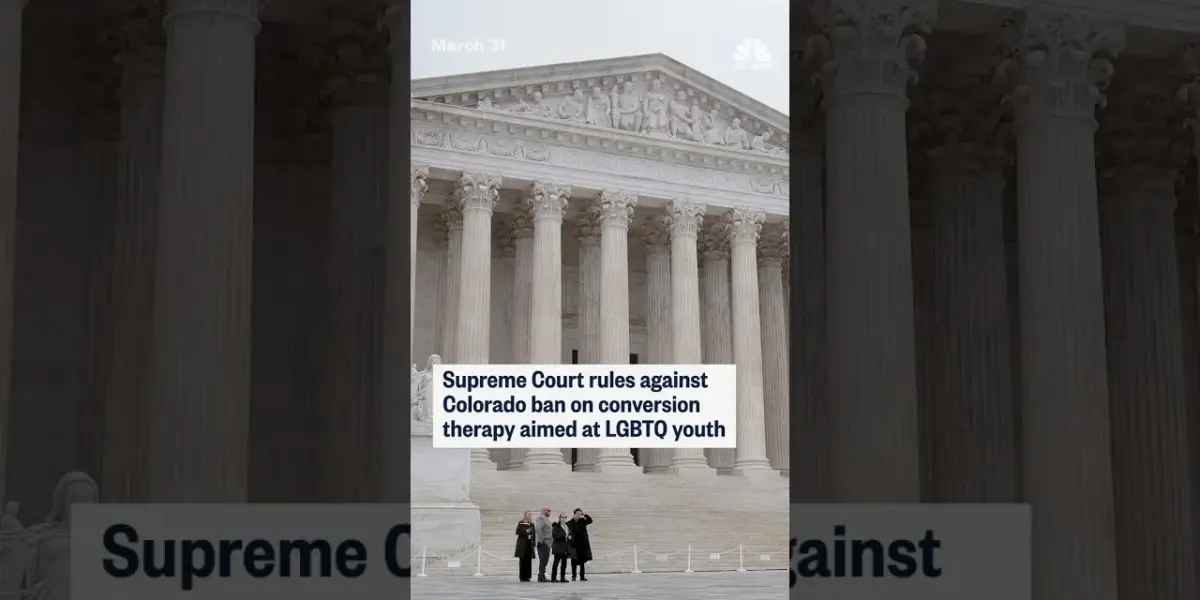
Supreme Court Overturns Colorado Conversion Therapy Ban
In a sweeping 8-1 decision, the Supreme Court has struck down Colorado’s ban on conversion therapy for LGBTQ youth. The ruling, delivered on [Date of ruling, if available in transcript, otherwise omit], found that the state’s law violated the free speech rights guaranteed by the First Amendment. This decision effectively allows licensed therapists to continue practicing conversion therapy, a controversial approach aimed at changing a person’s sexual orientation or gender identity.
What is Conversion Therapy?
Conversion therapy is a set of practices that seek to change an individual’s sexual orientation or gender identity. These practices are often rooted in the belief that being LGBTQ is a mental disorder or a sin. For LGBTQ youth, conversion therapy can involve talk therapy, prayer, hypnosis, or even more extreme methods.
Many medical and mental health organizations, including the American Medical Association and the American Psychological Association, have condemned conversion therapy. They state that it is not only ineffective but also harmful, leading to increased rates of depression, anxiety, and suicidal thoughts among those subjected to it. These organizations advocate for affirming care, which supports an individual’s identity rather than attempting to change it.
The Colorado Law and the Legal Challenge
Colorado enacted its ban on conversion therapy in 2017, prohibiting licensed mental health professionals from engaging in the practice with minors. The law was intended to protect vulnerable LGBTQ youth from harmful and discredited treatments.
However, the law faced a legal challenge from a practicing Christian talk therapist. The therapist argued that the ban prevented them from providing a full range of therapeutic services to clients who sought help with their sexual orientation or gender identity, based on their religious beliefs.
The core of the legal argument centered on free speech. The therapist’s legal team contended that the Colorado law censored specific viewpoints and conversations between a therapist and client. They argued that by prohibiting discussions aimed at changing sexual orientation or gender identity, the state was infringing upon the therapist’s right to express themselves and their clients’ right to receive such counseling.
The Supreme Court’s Reasoning
The Supreme Court’s majority opinion, authored by Justice [Justice’s name, if available, otherwise omit], sided with the therapist. The justices concluded that Colorado’s law, by prohibiting certain types of speech based on its content and viewpoint, violated the First Amendment’s free speech clause. The court determined that the state was essentially attempting to regulate and restrict specific ideas and messages being communicated in therapy sessions.
The majority viewed the law as a restriction on the therapist’s ability to speak about certain topics and a limitation on the client’s ability to hear and explore different perspectives. This reasoning suggests that even in a therapeutic context, the government cannot broadly ban speech simply because it disapproves of the message or the viewpoint it expresses. The ruling emphasized that the First Amendment protects a wide range of expression, even when that expression is unpopular or controversial.
Dissenting Voice and Broader Implications
Justice [Dissenting Justice’s name, if available, otherwise omit] was the sole dissenter in the case. In their dissenting opinion, they likely argued that the state has a compelling interest in protecting children from harmful practices.
The dissent may have emphasized that conversion therapy is not simply a matter of opinion but a practice recognized as harmful by major medical and psychological organizations. Protecting vulnerable youth from such harm, the dissent would argue, outweighs the free speech claims in this specific context.
This Supreme Court decision has significant implications for LGBTQ rights and mental health care. Critics of the ruling express deep concern that it could weaken existing or future bans on conversion therapy across the country.
They fear that this could lead to a resurgence of these harmful practices, particularly targeting LGBTQ youth in states with less protective laws. The ruling may also encourage legal challenges to other laws that regulate professional speech or practices deemed harmful.
What’s Next?
The Supreme Court’s decision means Colorado’s ban on conversion therapy is no longer in effect. Advocates for LGBTQ rights are now focused on working with lawmakers to find new ways to protect youth.
They may seek to pass laws that are more narrowly tailored to address the harms of conversion therapy while being more resilient to free speech challenges. Attention will also be on how other states and professional organizations respond to this ruling and what steps they take to safeguard LGBTQ individuals.
Source: Supreme Court rules against Colorado ban on conversion therapy aimed at LGBTQ youth (YouTube)

Related Articles

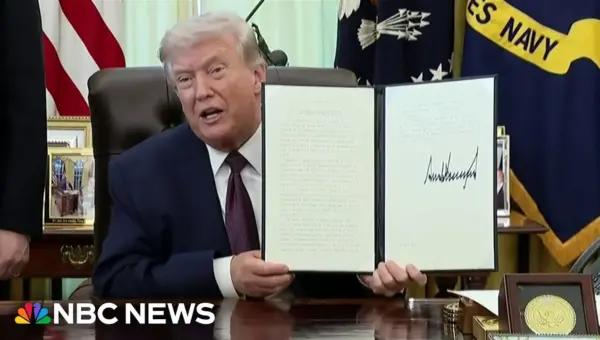
Trump Weighs Birthright Citizenship, Mail-In Voting EO
President Trump signaled his intent to attend Supreme Court arguments on birthright citizenship, a move considered highly unusual for a sitting president. Simultaneously, he signed an executive order aiming to alter mail-in ballot procedures through the Postal Service, an action expected to face legal challenges. The order targets voter verification for mail-in ballots, reflecting ongoing concerns about election integrity.


Mass Protests Signal Deep Discontent With Trump Administration
Millions of Americans have taken to the streets, signaling deep discontent with the Trump administration. This widespread public outcry, coupled with a surge in legal challenges and shifts in special election results, indicates a strong demand for change. A key legal battle over birthright citizenship at the Supreme Court is also set to define American identity.

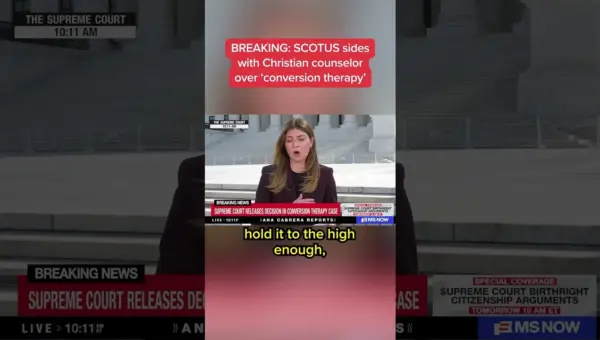
SCOTUS Protects Christian Counselor’s Speech in ‘Conversion Therapy’ Case
The Supreme Court ruled 8-1 in favor of a Christian counselor challenging Colorado's ban on 'conversion therapy' for minors. Justice Neil Gorsuch stated the state's law improperly targets speech based on viewpoint, violating First Amendment principles. The decision emphasizes the protection of speech against government-enforced orthodoxy.