Intelligence Chiefs Detail Global Threats, Border Security
Top intelligence officials detailed global threats, including rising missile capabilities from Russia and China, and persistent terrorist activities. The hearing also addressed significant decreases in illegal immigration and fentanyl deaths, while raising concerns about election interference and the potential misuse of intelligence powers.


Intelligence Chiefs Detail Global Threats, Border Security
The nation’s top intelligence leaders recently gathered for a crucial hearing to assess worldwide threats. Director of National Intelligence Tulsi Gabbard, CIA Director John Ratcliffe, FBI Director Cash Patel, and others presented their findings.
They highlighted significant progress in countering specific threats while also warning of evolving dangers. The hearing emphasized the critical role of intelligence agencies in keeping Americans safe both at home and abroad.
Homeland Defense and Border Security Highlighted
Director Gabbard opened by commending the dedication of intelligence professionals. She noted that thanks to their efforts and President Trump’s leadership, the world is less dangerous for Americans than a year ago. A key point was the significant impact on Iran, which has been put on the defensive.
The transcript detailed successful operations that crippled Iran’s nuclear facilities, eliminated its leadership, and damaged its military capabilities. These actions, it was stated, left Iran’s economy reeling and its military on its back foot.
The hearing addressed improvements in the Western Hemisphere. The report mentioned the apprehension of Venezuela’s leader, Nicolas Maduro, who was described as rotting in a New York prison.
These complex military and intelligence operations were achieved without the loss of a single American life. This success was attributed to timely, accurate intelligence gathered by the agencies.
Declining Illegal Immigration and Fentanyl Deaths
Director Gabbard also presented data on border security and drug trafficking. She stated that strict enforcement of U.S. Policies at the border has drastically reduced illegal immigration.
According to Customs and Border Patrol data, monthly encounters in January 2026 were down 83.8% compared to January 2025. Encounters also declined 79% compared to 2024.
The intelligence community also reported a significant decrease in fentanyl overdose deaths. From September 2024 to September 2025, these deaths fell by 30%.
This was linked to President Trump’s aggressive efforts to target transnational criminal organizations and disrupt the flow of fentanyl precursor chemicals. The potency of fentanyl has also reportedly decreased, likely due to disruptions in the production supply chain.
Evolving Terrorist Threats
The assessment also covered the persistent threat of Islamist terrorist actors. While groups like al-Qaeda and ISIS are currently weaker, the spread of their ideology remains a fundamental threat.
These groups use ideology for recruitment, financial support, and to advance political objectives. U.S. Counterterrorism efforts in Iraq, Somalia, Yemen, and Syria in 2025 were instrumental in degrading these groups’ abilities to plan large-scale attacks.
Despite these efforts, the report noted that Islamist terrorist groups are shifting towards information operations to spread propaganda and inspire individuals in the West. In 2025, there were at least three Islamist terrorist attacks in the U.S., with law enforcement disrupting at least 15 plotters. Online contact with foreign terrorist organizations was a common factor in these disrupted plots.
Concerns Over Election Interference and Misuse of Power
A significant portion of the hearing, particularly from Vice Chairman Warner, focused on concerns regarding election integrity and the potential misuse of intelligence powers. He raised alarms about the elimination of the foreign malign influence center within the Office of the Director of National Intelligence. This center was created by Congress to coordinate responses to foreign election interference.
Warner also questioned Director Gabbard’s personal involvement in a law enforcement raid in Fulton County, Georgia, aimed at seizing election ballots and voting machine records. He stated that the warrant for the raid showed no foreign connection and was based on debunked conspiracy theories. This involvement, along with other actions, raised serious questions about whether national security powers were being misused to interfere in domestic politics.
Concerns were also voiced about politically motivated purges at the FBI, leading to the reassignment of agents from key national security areas. Budget cuts at the FBI and the reassignment of highly trained agents for non-security related tasks were also highlighted. The hearing also touched upon leadership vacuums at the National Security Agency and the Defense Intelligence Agency, as well as significant personnel losses at CISA.
State Actors and Emerging Technologies Pose Risks
The intelligence assessment also detailed threats from state actors and emerging technologies. Russia, China, North Korea, Iran, and Pakistan are researching and developing advanced missile systems capable of reaching the U.S. Homeland. The intelligence community (IC) assesses that threats to the homeland will expand to more than 16,000 missiles by 2035, up from over 3,000 currently.
In the cyber domain, China, Russia, Iran, and North Korea, along with non-state ransomware groups, are expected to continue efforts to compromise U.S. Networks. China and Russia present the most persistent threats. North Korea’s cyber program is sophisticated, with cryptocurrency heists in 2025 alone reportedly stealing $2 billion to fund its weapons programs.
Artificial intelligence (AI) and quantum computing were identified as rapidly advancing technologies that will shape future threats. AI can accelerate cyber operations and has been used in recent conflicts for targeting and decision-making. Quantum computing could give countries a significant advantage in processing national security information and breaking current encryption methods.
Geopolitical Competition and Space Domain Threats
The hearing also addressed increasing geopolitical competition. Russia and China are expanding their presence in the Arctic through increased trade, resource extraction, and military activity. The IC assesses that China is the most capable competitor in AI development.
The space domain is also becoming increasingly contested, with China and Russia developing capabilities to challenge U.S. Space efforts. The threat of nuclear proliferation and the advancement of chemical and biological warfare capabilities continue to grow, contributing to a complex and volatile global security landscape.
Conclusion of the Assessment
Director Gabbard concluded by stating that the intelligence community’s assessment reflects the priorities laid out in the president’s national security strategy. The focus remained on threats to the homeland and global risks.
The hearing concluded with a reminder of the ongoing need for vigilance and resources to address the complex threats facing the nation. The next annual threat assessment is expected in 2027.
Source: WATCH LIVE: Tulsi Gabbard testifies in hearing to examine 'worldwide threats' (YouTube)

Related Articles


Senator Faces DHS Chief Hearing
Senator Markwayne Mullin faced scrutiny during his confirmation hearing to lead the Department of Homeland Security. Key discussions revolved around border security and immigration policies. Investor sentiment on related sectors could be influenced by the nominee's stated priorities.
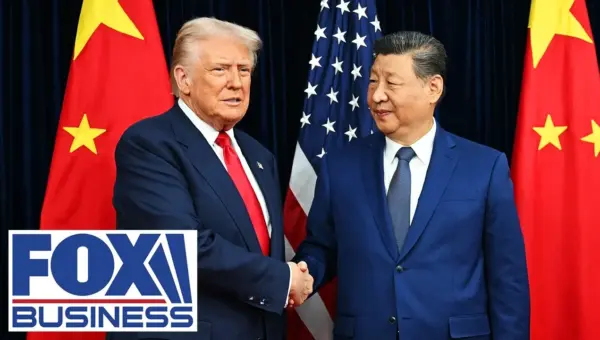
Trump Claims Xi Letter Acknowledged Halt to Weapon Sales
Former President Donald Trump revealed that Chinese President Xi Jinping sent him a letter acknowledging a halt to weapon sales. Trump also discussed his tough trade policies against China, including significant tariffs on cars and other goods. These trade actions and ongoing geopolitical tensions can create market uncertainty for investors.

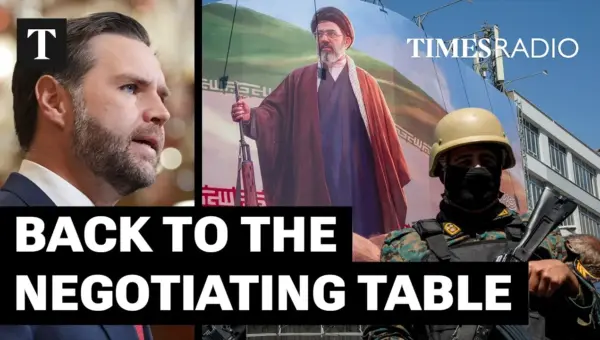
US and Iran Near Talks: Nuclear Deal Isn’t Enough
Reports indicate the US and Iran are nearing a second round of nuclear talks in Pakistan. However, former Bush advisor Jamal Jaffer warns that a deal must address more than just Iran's nuclear program, including its support for terrorist groups. The deep divisions on these issues pose a significant challenge to reaching a lasting agreement.