Trump’s Tax Plan Backfires: Approval Rating Plummets
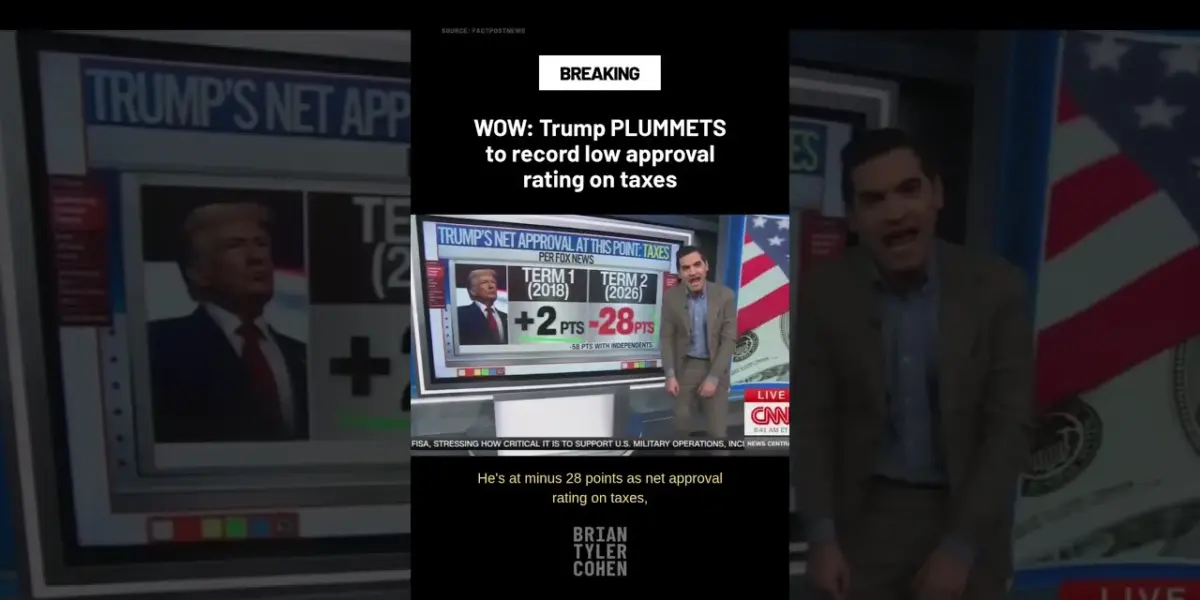
Donald Trump's approval rating on taxes has fallen 30 points since his first term, reaching a new low of minus 28. This sharp decline, particularly among independent voters who are 58 points underwater, suggests the public does not credit him for tax cuts.

Trump’s Tax Plan Backfires: Approval Rating Plummets
The Trump administration celebrated a major tax cut bill, calling it a “big beautiful bill.” However, new data shows the public isn’t happy. Donald Trump’s approval rating on taxes has dropped significantly since his first term. This suggests the benefits of the tax cuts are not reaching the American people in a way that earns him support.
A Dramatic Decline
In 2018, shortly after the tax cuts were passed, Trump’s net approval rating on taxes was a positive two points. This meant more people approved of his tax policies than disapproved. Fast forward to today, and that number has fallen dramatically. His net approval rating on taxes is now at minus 28 points. That’s a drop of 30 points from his first term.
This sharp decline is surprising. Even if people are benefiting from the tax cuts, they are not giving Donald Trump the credit. The public’s perception seems to be very different from the administration’s claims of success.
Independents Are Particularly Unhappy
The numbers are even more stark when looking at independent voters. These are voters who don’t strongly identify with either the Democratic or Republican party. Among independents, Trump’s approval rating on taxes is a staggering 58 points underwater. This means a vast majority of independents disapprove of his tax policies.
This finding is quite stunning. Trump has often claimed he cut taxes for everyone. Yet, a huge portion of independent voters feel the opposite. It’s like saying you fixed a leaky faucet, but the person whose sink is overflowing doesn’t believe you.
Why This Matters
This significant drop in approval ratings on a key policy issue like taxes is a major concern for any politician. Taxes affect everyone’s wallet, so public opinion here is crucial. It shows a disconnect between the intended outcomes of a policy and how it’s perceived by the voters.
For Trump, this isn’t just about one policy. It speaks to his overall connection with the average American. If people don’t feel his signature tax cuts are helping them, it raises questions about his economic leadership. It could also signal trouble for his political future, as economic issues often drive voter decisions.
Historical Context and Trends
Historically, presidents often get a boost when they pass significant tax legislation. The idea is to stimulate the economy and put more money in people’s pockets. However, the public’s reaction can depend on many factors. These include how the cuts are structured, who benefits most, and the overall economic climate.
In the past, tax cuts have sometimes been popular, and sometimes not. For example, the Reagan tax cuts of the 1980s were seen by many as beneficial. However, critics argued they mainly helped the wealthy and increased the national debt. The perception of tax policy is often complex and can change over time.
The current situation suggests that the Trump tax cuts, despite being touted as a major success, have not translated into popular support for the president. The data points to a clear trend: a significant and growing dissatisfaction with his tax policies, especially among a critical voting bloc like independents.
Implications, Trends, and Future Outlook
The implications of these low approval ratings are far-reaching. Firstly, it weakens Trump’s argument that his economic policies are a success. If the public doesn’t feel the benefits, it’s hard to claim victory. Secondly, it could hurt him in future elections. Voters often consider economic performance when deciding who to support.
The trend of declining approval on taxes suggests that the initial positive reception, however small, has completely faded. This could indicate that the long-term effects or the details of the tax law are not as favorable as claimed. Or, it could mean that other economic factors are overshadowing any perceived benefits.
Looking ahead, this data presents a challenge for Trump and his allies. They will need to find ways to better communicate the benefits of the tax cuts or address the public’s concerns. If they cannot, this negative perception could continue to grow. It might also influence future debates about tax policy, making lawmakers more cautious about passing similar legislation without clear public backing.
The disconnect between the administration’s narrative and public sentiment is a key takeaway. It highlights the importance of not just passing laws, but ensuring they resonate with the people they are meant to serve. The numbers don’t lie, and right now, they show a clear disapproval of Trump’s tax record.
Source: WOW: Trump PLUMMETS to record low approval rating on taxes (YouTube)

Related Articles


Trump’s Jesus Image Backfires, Staged Delivery Fails
Donald Trump's attempt to control the narrative after posting a Jesus-like image backfired spectacularly. A staged DoorDash delivery event meant to highlight economic policy instead drew scrutiny due to its implausibility and the exaggerated savings claimed.

GOP Touts Tax Cuts: ‘Bigger Refunds’ for Working Families
House Republicans are highlighting the "Working Families Tax Cuts" on the first Tax Day since its implementation, claiming it's delivering "bigger refunds" and financial relief to everyday Americans. They contrasted these benefits with "Bidenomics," asserting that Democrats voted against the cuts and for tax increases.

Trump’s Late-Night Posts Spark Stability Concerns
Donald Trump's recent late-night social media activity, featuring attacks on historical figures and political rivals, has sparked renewed debate about his stability. This analysis explores the erratic rhetoric, the role of allies, and the broader context of global and domestic anxieties.