WWII Allies Clashed Over Self-Interest, Not Just Hitler
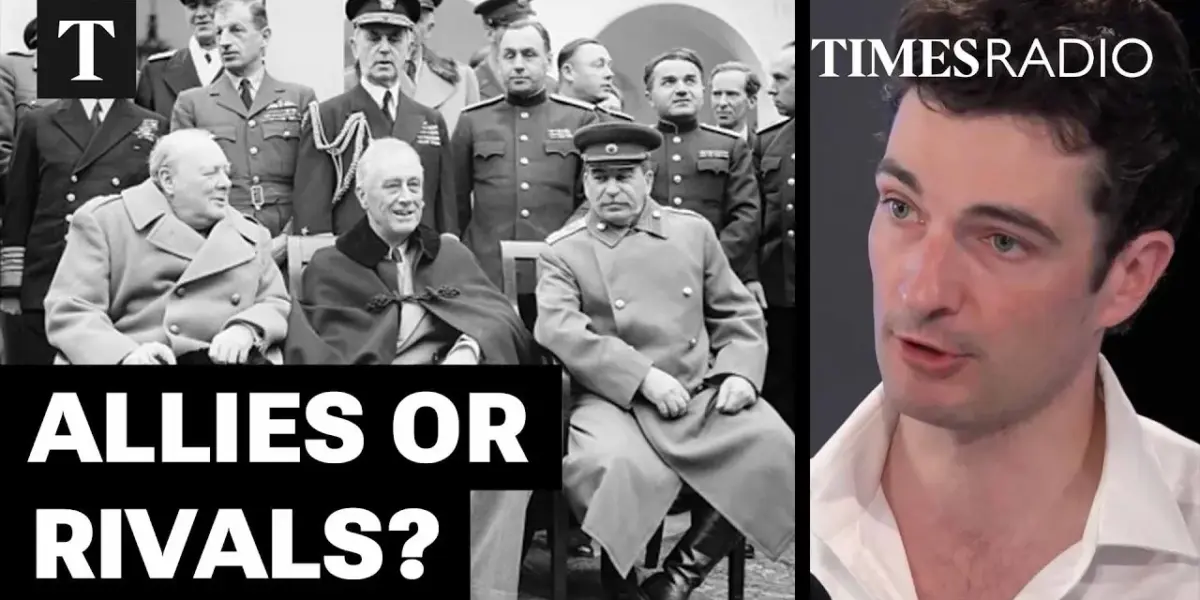
World War II Allies, including the US, Britain, and the Soviet Union, were driven by self-interest and conflicting post-war visions, not just a shared goal of defeating Hitler. President Roosevelt deliberately undermined Churchill to build ties with Stalin, revealing deep-seated rivalries that shaped the war's outcome and offer lessons for today's diplomacy.

WWII Allies Clashed Over Self-Interest, Not Just Hitler
World War II is often remembered as a united front against tyranny, but newly revealed insights show that the Allied powers, including the United States, Britain, and the Soviet Union, were deeply divided by self-interest and clashing goals, even as they fought a common enemy. Award-winning author Tim Bouverie’s book, “Allies at War,” highlights how these internal rivalries shaped the war’s outcome and continue to influence international relations today.
A Common Goal, Different Visions
While the primary objective for the Allies was clear – defeating Adolf Hitler and Japanese militarism – their visions for the post-war world were starkly different. “They had one common goal, which was to defeat Adolf Hitler and to defeat Japanese militarism in Asia,” Bouverie explained. “But apart from that, they had wildly different goals about how to achieve that victory.” These differences extended beyond military strategy to the very shape of the world they wanted to build after the fighting stopped.
Sacrifice and Moral Compromises
The war demanded immense sacrifice from all involved, not just in terms of economic and human cost, but also moral compromise. Bouverie pointed to the discovery of mass graves near Smolensk in 1943, where thousands of Polish prisoners of war were found to have been executed by the Soviets. Despite knowing the truth, the British and Americans went along with the Soviet lie that Germany was responsible. “They decided it was in the greater good for the alliance, for the world that the alliance stuck together to defeat Hitlerism,” Bouverie stated. This decision highlights the complex moral calculus leaders faced, allying with a totalitarian regime like Soviet Russia to defeat a greater immediate threat.
Roosevelt’s Strategy: Undermining Churchill
A key dynamic revealed in “Allies at War” is President Franklin D. Roosevelt’s deliberate strategy to cultivate a direct relationship with Soviet leader Joseph Stalin, often at the expense of British Prime Minister Winston Churchill. Roosevelt sought to “forge an independent relationship with Joseph Stalin,” Bouverie noted. His method involved “flaunt[ing] his differences with Churchill, to undermine Churchill, to belittle him, to tease him and poke fun at him.” This approach led to secret diplomacy between Roosevelt and Stalin at key conferences like Tehran and Yalta. The result was a pervasive feeling among the British that the Americans were closer to the Soviets than to their fellow democratic allies.
France: Ally or Adversary?
The situation with France presented another complex challenge. After France fell to Germany, the Vichy government collaborated with the Nazis, even aiding German attacks against the British. French air facilities were used to bomb British forces in Iraq, and North African ports operated by the French were opened to resupply German troops. The British even bombed the French fleet. Bouverie clarified, “Had the British bombed the French fleet. That is not because they were considered enemies, but because they couldn’t be trusted.” Britain feared the French fleet could fall into German hands, significantly increasing the risk of a German invasion.
Post-War Tensions Loomed
Even during the war, the seeds of post-war tensions, like those that led to the Cold War, were present. Bouverie described these underlying rivalries as a “constant subtext.” He cited Roosevelt’s attempts to interfere in Britain’s relationship with India and pressure Churchill for premature independence. Churchill, in a firm stance, indicated he would rather resign than be pushed around on the issue of the British Empire. Bouverie added that while decolonization was seen as morally right, the dismantling of the British Empire also presented a lucrative opportunity for America to expand its economic influence.
Lessons for Today’s Diplomacy
Bouverie draws two major lessons from his research for contemporary international relations. Firstly, he emphasizes that allies, while essential, can be difficult and driven by self-interest. “Allies will always think about their own self-interest. They can be time consuming. Uh they can be irassable,” he said. However, he echoed Churchill’s sentiment: “There is only one thing worse than fighting with allies, and that is fighting without them.” Secondly, Bouverie stresses the importance of identifying the primary threat. He argued that while other regimes may be insidious, Nazi Germany was the paramount threat during WWII. Looking at the world today, he believes the focus should be on identifying the main enemy to Western liberal democracy, which he identifies as the Russian Federation.
Britain’s Reliance on America
The war underscored Britain’s profound reliance on American resources and military might. While Britain’s survival was initially secured by its naval supremacy and the Battle of Britain, victory in the wider war was impossible without American intervention. “Without American resources and finance, uh Britain could have never won the Second World War and probably couldn’t have won the Second World War just with those resources,” Bouverie stated. However, this aid came at a significant cost, including the dismantling of the British Empire’s protective tariffs and a debt that Britain only fully repaid in the 21st century. America’s goals were not purely altruistic; they included ending European empires and making the world safe for its own economic interests.
Looking Ahead
Bouverie’s work challenges simplistic narratives of wartime unity, revealing a complex web of ambition, self-interest, and strategic maneuvering among the Allies. As international relations continue to be shaped by shifting alliances and national interests, understanding these historical dynamics offers crucial insights into the enduring challenges of global cooperation and the constant need to balance shared goals with individual ambitions.
Source: Why Roosevelt Belittled Churchill To Strengthen Ties With Stalin | Tim Bouverie (YouTube)

Related Articles

US Imposes Iran Port Blockade; Peace Talks Loom Amid Tensions
U.S. forces have fully implemented a blockade on Iranian ports, halting trade amid escalating Middle East tensions. Peace talks between the U.S. and Iran are reportedly on the horizon, though Iran's nuclear program remains a key obstacle. Meanwhile, historic direct talks between Israel and Lebanon took place in Washington, marking a significant diplomatic step.


US Blockade Tightens on Iran; Peace Talks Show Glimmers of Hope
The United States military has implemented a three-day blockade of Iranian ports as part of an economic pressure campaign. While official reports indicate success in turning away ships, some vessels have reportedly tested the waters. Meanwhile, diplomatic efforts are underway, with President Trump suggesting the conflict is nearing an end, though significant hurdles remain.


Hezbollah Fighters Surrender Amid Escalating Israel-Lebanon Conflict
Three Hezbollah fighters surrendered to Israeli troops amid escalating conflict and diplomatic talks between Israel and Lebanon. The event occurs alongside Holocaust Remembrance Day observances in Israel, drawing historical parallels to current threats.