German Words Shape American Speech: Beyond the Pretzel
Beyond common words like 'kindergarten,' over 150 specialized German terms are used in American academic and intellectual circles. These words, like 'Ersatz' (inferior substitute) and 'Weltschmerz' (world-weariness), fill unique linguistic gaps, offering precision for complex concepts.

German Words Shape American Speech: Beyond the Pretzel
Many Americans think of German influence on their language as limited to words like “kindergarten” or “angst.” However, a deeper look reveals a hidden lexicon of German words used in specialized American circles. These terms, often from philosophy, academia, and strategy, fill gaps in English vocabulary, allowing for more precise expression of complex ideas.
The Hidden Lexicon
While English is a Germanic language, it has borrowed words from German for centuries. Beyond the commonly known, over 150 highly specific German words are actively used by American academics, critics, and analysts. These words are not just for show; they articulate concepts that English struggles to capture with the same exactitude.
Words for the Modern Age
Let’s explore some of these fascinating terms and how they’re used:
- Ersatz: This means an inferior substitute or an artificial replacement. Originally used during World War II for replacement goods like coffee, it now describes anything fake, derivative, or lacking genuine quality. Think of it as a step below “generic,” carrying a stronger sense of being a poor imitation.
- Zutvang: Borrowed from chess, this describes a situation where being forced to make a move is a serious disadvantage. American political and business strategists use it for no-win scenarios where any action taken leads to a negative outcome. It captures that feeling of being trapped with no good options.
- Weltschmerz: Meaning “world-weariness,” this term perfectly describes the feeling of melancholy and disillusionment one might experience from constantly consuming negative news. It’s a sentiment many can relate to in today’s fast-paced, often overwhelming information age.
- Wunderkammer: Translates to a “cabinet of curiosities.” American art historians use this term to describe an eclectic, uncurated collection of fascinating objects or ideas. It evokes a sense of wonder and the unexpected.
- Festschrift: This is a book honoring a respected academic, presented during their lifetime. It’s a high-level university term used to celebrate scholarly achievement in a formal way.
- Bildungsroman: While Americans commonly say “coming-of-age story,” this German term refers to a literary genre focused on the moral and psychological growth of the protagonist. Using “Bildungsroman” can add a sophisticated academic flair.
- Echt: Meaning authentic, genuine, or typical, this is the opposite of “Ersatz.” It’s used in elite cultural criticism to describe something truly representative of a place or culture, like “Echt New York” for the genuine local experience.
- Schadenfreude: This is the pleasure derived from another person’s misfortune. While perhaps not as academic, it’s a widely understood German loanword that expresses a very specific human emotion.
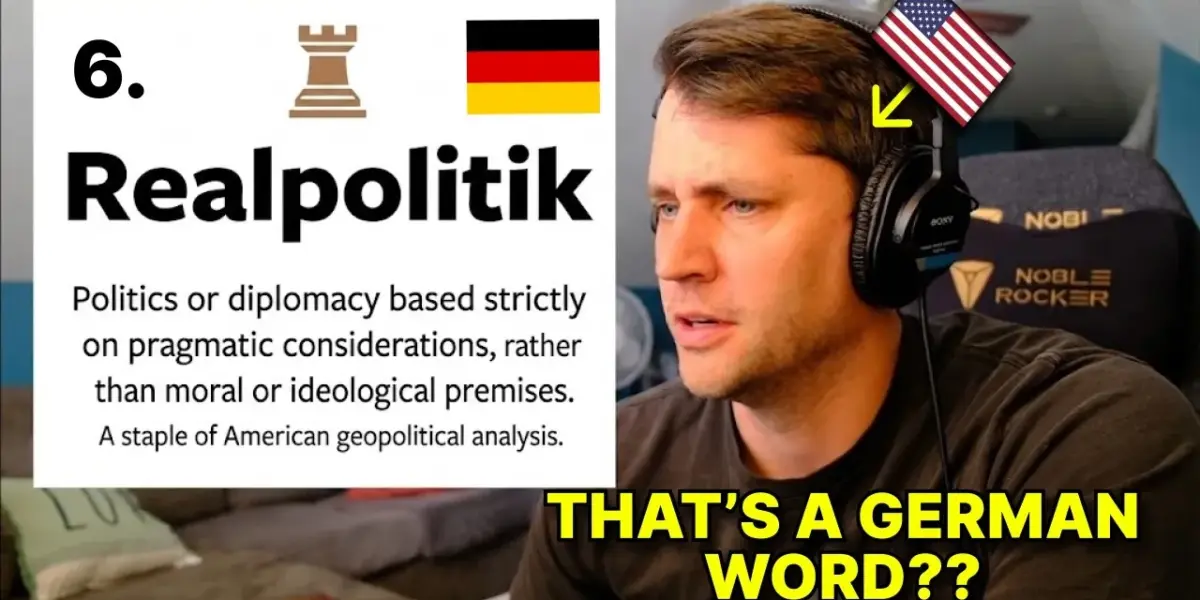
- Realpolitik: A staple in American geopolitical analysis, this refers to politics or diplomacy based strictly on practical, pragmatic considerations rather than moral or ideological principles. It’s about what works, not necessarily what’s right.
- Sturm und Drang: Literally “storm and stress,” this was an 18th-century German literary movement. Today, it’s used to describe any period of intense emotional turmoil or violent upheaval, capturing moments of dramatic change and intensity.
Why This Matters
The adoption of these German words highlights how language evolves to meet new expressive needs. It shows that even in a globalized world, specialized fields develop their own precise vocabularies.
These terms aren’t just jargon; they offer a more nuanced way to discuss complex psychological, philosophical, and strategic concepts. Their use by American intellectuals suggests a desire for greater precision and a willingness to borrow from other languages to achieve it.
Implications and Future Outlook
The trend of using specialized German loanwords points to a broader pattern in language: the constant search for the perfect word. As fields like philosophy, sociology, and international relations become more complex, the need for precise terminology will only grow.
We might see more such borrowings, or perhaps new English words will emerge to fill these conceptual spaces. The ongoing use of these German terms suggests they offer a unique clarity that current English alternatives lack.
Historical Context
German immigration to the United States has a long history, bringing with it cultural and linguistic influences. While “kindergarten” and “angst” became common, many other German words remained in more specialized use.
This phenomenon is not unique to German; English has borrowed from Latin, French, and countless other languages throughout its history. The current use of these specific German words reflects a particular intellectual and academic exchange that continues to shape niche areas of American discourse.
Source: American reacts to 12 Obscure German Words that Americans Use (YouTube)

Related Articles

Gen Z Slang Has Deep Roots in Black Culture
Gen Z slang terms like 'cap,' 'riz,' and 'unc' have deep roots in African American Vernacular English (AAVE), a language born from centuries of Black culture and history. Experts emphasize that understanding the origin and attribution of these words is crucial for cultural appreciation and to avoid erasing the contributions of the Black community.

Beyond the Laughs: German Memes Reveal Cultural Quirks
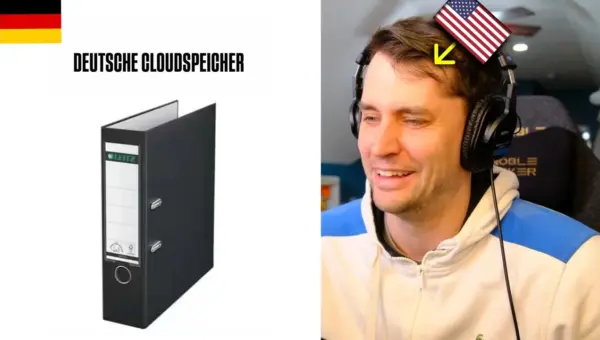
A humorous dive into German internet memes reveals cultural insights on everything from car reliability and linguistic quirks to economic realities and everyday anxieties. These digital jokes offer a unique window into the German psyche.


German Numbers: The Brain-Bending Linguistic Puzzle
A viral video reveals the baffling German method of pronouncing numbers, where '21' is 'one-and-twenty,' sparking global fascination. Despite its linguistic complexity and challenges for learners, the tradition faces strong public resistance to reform, even as Germany boasts numerous world-changing innovations.