Royal Navy’s Weakness Becomes Global Joking Point
Britain's Royal Navy faces criticism for its depleted fleet, with breakdowns leading to public jokes and concerns about national security. A former NATO chief warns of "corrosive complacency" as defense funding lags behind strategic reviews. Experts suggest a shift towards cheaper, more effective weapon systems is needed to counter modern threats.

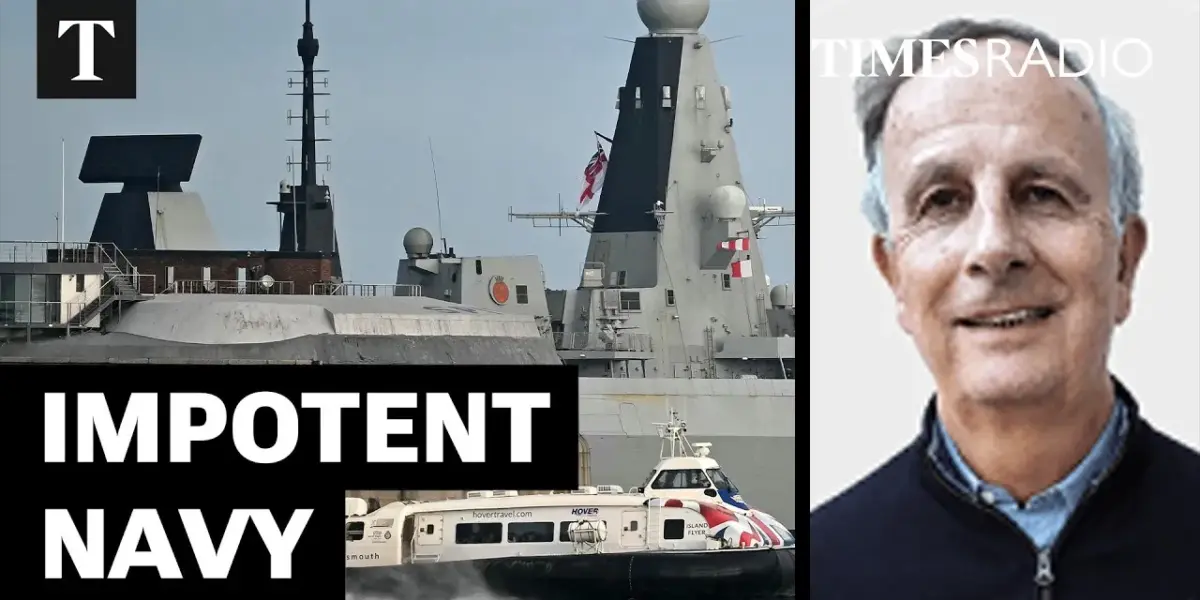
Navy’s Small Fleet Sparks Global Embarrassment
Britain’s Royal Navy is facing serious criticism for its depleted state, with a former NATO chief warning that the nation’s security is at risk. Lord Robertson, a Labour peer, is set to accuse the government of “corrosive complacency” regarding defense spending. This comes as the Royal Navy’s limited number of available warships means breakdowns in war zones can become a public spectacle, leading to jokes about its capabilities.
Strategic Review Lacks Funding
Michael Evans, former defense editor of The Times, highlighted the disconnect between defense planning and actual investment. He noted that a strategic defense review, produced by Lord Robertson’s panel last year, correctly identified threats, particularly from Russia. However, the necessary funding, outlined in a defense investment plan, has not materialized. This lack of financial commitment leaves both the armed forces and defense companies in uncertainty, hindering the procurement of needed equipment.
Outdated Equipment and Drone Warfare Concerns
The idea that Britain’s armed forces are small but excellent is stretched thin, according to Evans. He pointed out that the army is significantly smaller than in the past, with plans to increase its numbers to around 76,000 soldiers. While modern equipment is crucial, especially for drone warfare, current spending is insufficient. The navy and army need substantial investment in drones, effective counter-drone systems, and anti-missile capabilities, which are currently lacking.
HMS Dragon Breakdown Highlights Fleet Issues
The recent incident involving HMS Dragon, which reportedly broke down after a long journey to the Middle East, has brought the state of Britain’s armed forces into sharp focus. While HMS Dragon is a capable ship with advanced weaponry like the Sea Viper missile, its breakdown underscores a larger problem: the scarcity of available warships. When one of the few deployed vessels fails, it projects an image of weakness rather than power, leading to public jokes and a stark realization that the navy is not what it once was. The reality is that Britain simply cannot maintain a large naval presence in multiple areas simultaneously.
Rethinking Defense Spending: Cheap vs. Expensive
There is a growing argument to move away from relying solely on expensive, large-scale assets like warships and fighter jets. Military experts have long advocated for acquiring more affordable, off-the-shelf solutions, a strategy increasingly adopted by the United States. However, Britain’s procurement process often involves ordering costly, long-lead-time projects, like submarines. By the time these are delivered, their intended roles may even be questioned. Evans suggests that with a smaller armed force, more money should be allocated to cheaper, yet highly effective, weapon systems, a lesson reinforced by conflicts in Ukraine and between Iran and the United States.
Welfare Budget vs. Defense: A Political Dilemma
Lord Robertson explicitly links Britain’s inability to defend itself to an ever-expanding welfare budget. This presents a stark political choice between social spending and national security. While the government has committed to increasing defense spending as a percentage of GDP, the sheer size of the welfare budget poses a significant obstacle. The welfare budget consumes over 10% of GDP, amounting to roughly 322 billion pounds, while defense spending is around 2.3-2.4% of GDP, or about 66 billion pounds. This imbalance is politically challenging, with strong opposition from Labour backbenchers who insist the welfare budget must be protected, if not increased. This political reality has prevented the current government from rebalancing resources towards defense as promised.
Future Outlook
The coming months will be critical in determining whether the government can address the funding gap highlighted by the strategic defense review. Watch for any announcements regarding the defense investment plan and whether tangible steps are taken to acquire modern, cost-effective defense systems. The ongoing debate between welfare spending and national security will likely continue to shape defense policy and Britain’s place on the global stage.
Source: Depleted State Of The Royal Navy Risks Becoming A Laughing Matter | Michael Evans (YouTube)

Related Articles


Labour Faces “No-Win” Defense Spending Dilemma
Lord Robertson has launched a strong attack on UK leaders over defense spending, calling it "corrosive complacency." Political Editor Steve Swinford explains Labour faces a "no-win scenario," needing to balance increased defense investment with economic realities and the cost of living crisis.


Health Minister Defends NHS Reforms Amid Defense Criticism
Health Minister Karen Smith announced new community diagnostic centers to boost NHS testing capacity and cut wait times. The move aims to bring care closer to patients and improve survival rates. The minister also defended the government's defense spending plans amid sharp criticism from a former NATO chief.


Nvidia Chips Smuggled: China Gains AI Edge?
An investigation into alleged smuggling of $92 million in Nvidia AI chips to China raises national security concerns. U.S. authorities are scrutinizing how advanced technology bypassed export controls, potentially boosting China's military AI capabilities.