Israel, Lebanon Hold Historic Talks in Washington
Israeli and Lebanese officials held unprecedented direct talks in Washington D.C., aiming to establish conditions for a ceasefire. The discussions, occurring at the ambassadorial level, highlight significant diplomatic progress but face deep-rooted challenges, including Lebanon's limited leverage over Hezbollah and concerns over civilian casualties.

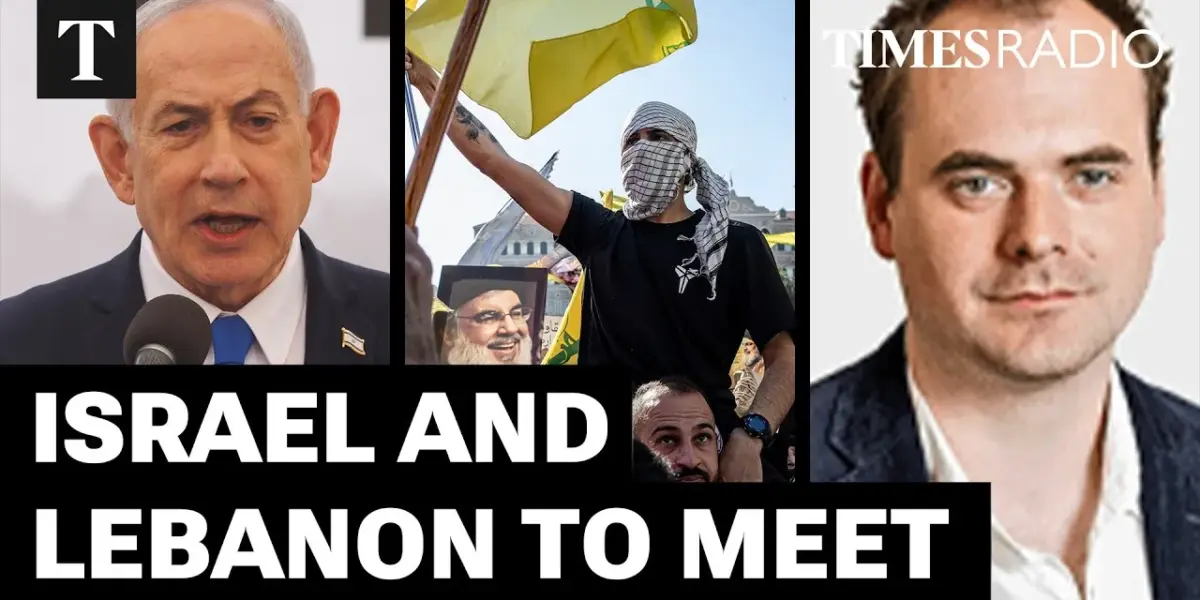
Historic Summit Aims for Lebanon-Israel Ceasefire
In a significant diplomatic move, Israeli and Lebanese officials met publicly in Washington D.C. for the first time since the 1980s. U.S. diplomats were also present at these crucial talks, which aim to establish conditions for a ceasefire between the two nations. This meeting marks a major moment in the complex relationship between Israel and Lebanon, though optimism about immediate breakthroughs remains cautious.
Direct Talks: A Step Forward, But With Hurdles
Jack Clover, the assistant foreign editor for The Times, speaking from Beirut, highlighted the historic nature of these direct discussions. “They’re significant because purely it’s it’s a major moment that they’re talking directly for the first time since the early 80s,” Clover stated. The talks are being conducted at the ambassadorial level, a decision influenced by internal Lebanese politics.
Internal Lebanese Politics Complicate Negotiations
A key challenge is the lack of full consent from Lebanon’s Shia community for these negotiations. “In Lebanon there isn’t consent from the the the the full Shia community for these negotiations,” Clover explained. This means a member of the Shia community could not be included in the Lebanese delegation. Furthermore, the Lebanese state has limited power to pressure Hezbollah, the group actively engaged in conflict with Israel.
Hezbollah: A State Within a State
Clover emphasized that Israel is not at war with the Lebanese state itself, but rather with Hezbollah. However, the Lebanese government’s ability to influence Hezbollah is minimal, largely to avoid sparking a potential civil war within Lebanon. Hezbollah is deeply integrated into Lebanese society, holding political representation, but it operates as a separate entity from the Lebanese government.
“Even if the Lebanese government could come to an accommodation with Israel, they can’t enforce that on Hezbollah, can they?” The answer, according to experts, is largely no.
Fear of Civil War Prevents Government Action
While anger towards Hezbollah exists among certain Lebanese communities, including Christian, Sunni, and some Shia groups, there is a strong reluctance to support the government in an armed confrontation with the powerful militant group. Disarming Hezbollah by force within Lebanon would be an immense challenge, potentially requiring the Lebanese army to conduct house-to-house searches in Hezbollah strongholds. Such actions would likely be seen as an invitation to civil war, a devastating experience Lebanon endured for over 15 years until 1990. “They don’t want to go there,” Clover noted.
Concerns Over Israeli Intentions and Civilian Casualties
Despite the diplomatic engagement, concerns linger among the Lebanese about Israel’s true intentions. Some fear that Israel might aim to occupy southern Lebanon. These worries are amplified by the significant civilian casualties reported during the recent conflict. Clover cited a death toll of 255 in Lebanon so far, including over a hundred women and dozens of children. Paramedics and Lebanese soldiers, who are not combatants, have also been killed, such as 13 individuals attending a funeral in Sidon.
Civilian Deaths Undermine Israeli Claims
The argument that Israel is solely targeting Hezbollah is being questioned due to the high number of civilian deaths. “The argument that Israel is just killing Hezbollah does not really hold much credence here, nor does it seem to be true,” Clover observed. While whether Israel is intentionally targeting civilians is debatable, the reality of hundreds of non-combatant deaths has fueled anger in Lebanon. This anger is felt even by Lebanese political parties and state elements who oppose Hezbollah, as they are also frustrated with Israel’s actions impacting their cities.
A Complicated Path Forward
The situation is undeniably complex, explaining the muted optimism surrounding the Washington talks. Nevertheless, the very fact that direct discussions are occurring is seen as a step forward. “It is a significant moment nonetheless,” Clover concluded.
What’s Next for Lebanon and Israel?
The immediate future will likely involve continued diplomatic efforts, with a focus on de-escalation and finding a path toward a stable ceasefire. The ability of the Lebanese government to influence Hezbollah, and the international community’s role in mediating these complex dynamics, will be crucial. Observers will be watching closely to see if these initial diplomatic steps can translate into lasting peace or if the underlying tensions continue to dominate the region.
Source: Israel And Lebanon Meeting In Washington Is A ‘Major Moment’ In Their Relations | Jack Clover (YouTube)

Related Articles
US Brokers Israel-Lebanon Ceasefire Talks Amidst Tensions
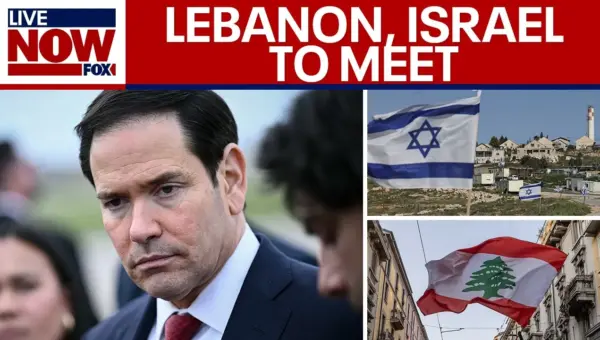
US Secretary of State Marco Rubio is mediating crucial ceasefire talks between Israel and Lebanon in Washington D.C. The negotiations aim to de-escalate ongoing conflict, which has exhausted residents and displaced over a million people. A central challenge is the disarmament of Hezbollah, an Iranian-backed group deeply entrenched in Lebanon's political and social fabric.

Israel Unleashes Barrage, Striking 150 Hezbollah Sites Daily
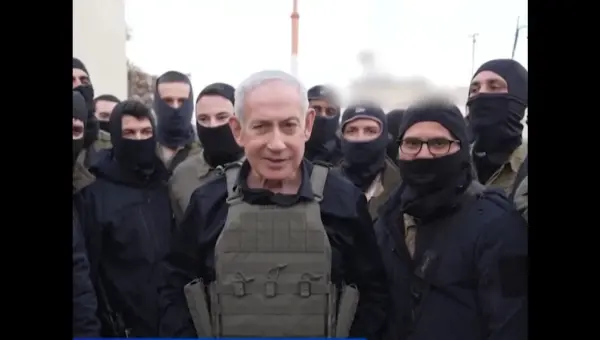
Israel has dramatically increased strikes against Hezbollah, hitting 150 targets in 24 hours. This escalation occurs just before crucial talks in Washington, where Lebanon seeks a ceasefire, but Israel remains firm. Hezbollah's tactics are increasingly mirroring those of Hamas, raising grave concerns.
Netanyahu’s ‘Never Again’ Vow Echoes Past and Present Threats
Israeli Prime Minister Benjamin Netanyahu met with Holocaust survivors, vowing 'never again' as he drew parallels between past atrocities and current threats. He highlighted Israel's military strength and international alliances as crucial safeguards against annihilation.