Hungary Ousts Orban: Authoritarian Model Crumbles Amid Corruption Claims
Hungary has ousted Prime Minister Viktor Orban after 16 years, signaling a blow to authoritarianism. The election follows revelations of corruption, including a streetlight scheme enriching his son-in-law, who has reportedly fled the country.

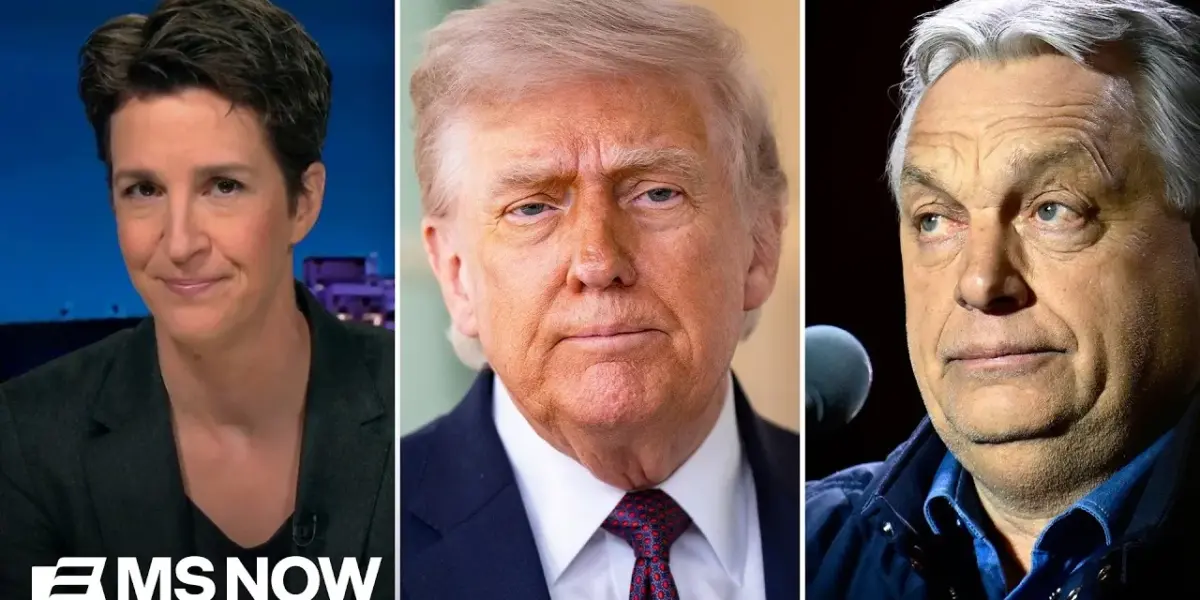
Hungary Rejects Orban’s Rule, Son-in-Law Flees Amid Corruption Probe
In a stunning political upheaval, Hungarian voters have ousted Prime Minister Viktor Orban after 16 years in power. The election results signal a significant blow to the authoritarian model Orban championed, a model that has been seen as an inspiration by some on the American far-right, including former President Donald Trump. The ouster comes as Orban’s son-in-law, who has amassed a fortune through alleged corrupt schemes, has reportedly fled the country.
Orban’s Rise: A Tale of Corruption and Cronyism
The downfall of Viktor Orban is closely tied to allegations of widespread corruption and cronyism that enriched his inner circle. One particularly illustrative example involved a European Union-funded project to install streetlights in Hungarian towns. Small towns were required to hire a specific consulting company to assess their needs.
This company, it turned out, was owned by a business partner of Orban’s son-in-law. The company’s sole recommendation was to purchase streetlights from a firm co-owned by the son-in-law and his associate. Despite lacking expertise and being a new entity, this company became the exclusive supplier of streetlights, funded by the EU. When the EU investigated, they discovered the project had become a vehicle for personal enrichment, leading them to pull funding.
Orban’s response was to declare that Hungary would fund the project itself, effectively directing public money to his son-in-law. This marked the beginning of his son-in-law’s ascent to becoming one of Hungary’s wealthiest individuals, with business interests spanning streetlights to luxury hotels.
Son-in-Law’s Fortune and Alleged Exploitation
Viktor Orban’s son-in-law, Istvan Tiborcz, has reportedly amassed a fortune estimated to be worth hundreds of millions of euros. His business dealings have frequently intersected with the government, often to his significant financial benefit.
During Hungary’s six-month presidency of the European Union a few years ago, official delegations from other European countries regularly visited Budapest. Investigative reports revealed that these delegations often found their hotel bookings mysteriously canceled and rebooked into hotels owned by Tiborcz. This practice suggests a pattern of leveraging state influence for personal gain.
In the lead-up to the recent election, as Orban’s political future became uncertain, Tiborcz reportedly left Hungary and relocated to the United States. His departure comes amid mounting pressure and potential investigations into corruption and theft of public assets.
Orbanism: A Model for Authoritarianism
Viktor Orban’s leadership style has been widely described as authoritarian. His government has exerted tight control over the country’s institutions, media, and judiciary. This approach has not gone unnoticed by political movements in other countries.
The Heritage Foundation, a conservative think tank in the U.S., has openly cited Viktor Orban as a model for how conservatives should approach gaining and wielding power. Project 2025, an initiative by the foundation, outlines plans for a potential future conservative administration, drawing heavily on Orban’s playbook.
This admiration for Orban’s methods stems from his ability to consolidate power and implement his agenda, often by sidestepping democratic norms. Supporters see him as a strong leader who can enact decisive change.
The Fragility of Authoritarian Rule
Despite the appearance of unshakeable power, the election results in Hungary demonstrate the inherent fragility of authoritarian regimes. Orban’s supposedly solid base of support crumbled when faced with a credible challenge.
The individual who defeated Orban is a former member of Orban’s own party, indicating a shift in political sentiment from within. The article suggests that people often support autocrats out of a belief that they are permanent fixtures of power, seeking to align themselves for personal benefit. However, when that perceived permanence is challenged, support can evaporate quickly.
The narrative of authoritarianism often relies on creating a sense of inevitability, suggesting that resistance is futile and that the leader is there to stay. The events in Hungary serve as a powerful counter-narrative, proving that even long-entrenched leaders can be removed by the will of the people.
Fear and Desperation in the Face of Defeat
The article draws a parallel between the situation in Hungary and the political climate surrounding Donald Trump in the United States. It suggests that Trump’s increasingly erratic behavior and pronouncements are driven by a palpable fear of losing power.
The author points to Trump’s online posts, his attacks on the Pope, and his handling of foreign policy as signs of desperation. The economic stagnation in other countries, which has led to the overthrow of authoritarian leaders, is also noted as a parallel to the current economic climate under Trump’s influence.
The article argues that the core strategy of authoritarians like Orban and Trump is to create a false sense of permanence. They aim to convince their supporters and the public that they are invincible and cannot be ousted. However, the outcome in Hungary provides a beacon of hope, illustrating that such leaders are not permanently in power and can be defeated.
Looking Ahead: The End of an Era?
The rejection of Viktor Orban in Hungary marks a significant moment, potentially signaling the end of an era of authoritarian consolidation in the country. The focus now shifts to the implications of this electoral defeat for Orban’s political future and the potential for accountability regarding corruption allegations.
The departure of his son-in-law, coupled with potential prosecution for corruption, suggests a reckoning may be at hand. Furthermore, the collapse of Orban’s support base serves as a potent reminder that even seemingly unshakeable leaders can be vulnerable. The success of the resistance in Hungary offers a message of hope: that no would-be strongman is immune to the will of the people, and that change is possible, even against entrenched power.
Source: Maddow: Trump's fear is palpable as authoritarian peer Orbán is resoundingly rejected in Hungary (YouTube)

Related Articles


Hungary Ousts Orban, Unblocks EU Aid to Ukraine
Hungary's election of Peter Magyar marks a significant geopolitical shift, ending Viktor Orban's 16-year rule and immediately unblocking crucial EU aid to Ukraine. Magyar's pragmatic approach blends national identity with European cooperation, offering a potential model to challenge entrenched nationalist leaders.


Hungary Ousts Orban: Vote Shows Illiberalism Isn’t Doomed
Hungary has voted out longtime authoritarian leader Victor Orban after 16 years in power, with the opposition securing a significant majority. The election results signal a potential shift for Hungary's role in Europe and demonstrate that illiberalism is not an inevitable outcome for nations. The outcome also highlights concerns about Orban's close ties to Russia and his impact on democratic institutions.

Hungary’s New Leader May Unlock EU Funds for Ukraine
A recent election in Hungary has removed Viktor Orbán, who blocked a crucial 90 billion euro loan for Ukraine. The incoming leadership is expected to release these funds, which are vital for Ukraine's economy and state operations. This shift is seen as a significant positive development for Ukraine amidst its ongoing conflict.