Daytime TV’s Darkest Moments: Unsettling Interviews Revealed
Daytime television has a dark side, marked by interviews that left audiences disturbed and guests in distress. From Mariah Carey's forced pregnancy reveal on Ellen to the tragic consequences on The Jenny Jones Show and The Jeremy Kyle Show, these unsettling moments reveal the potential for exploitation and harm in broadcast media.

Daytime Television’s Most Disturbing Interviews Unearthed
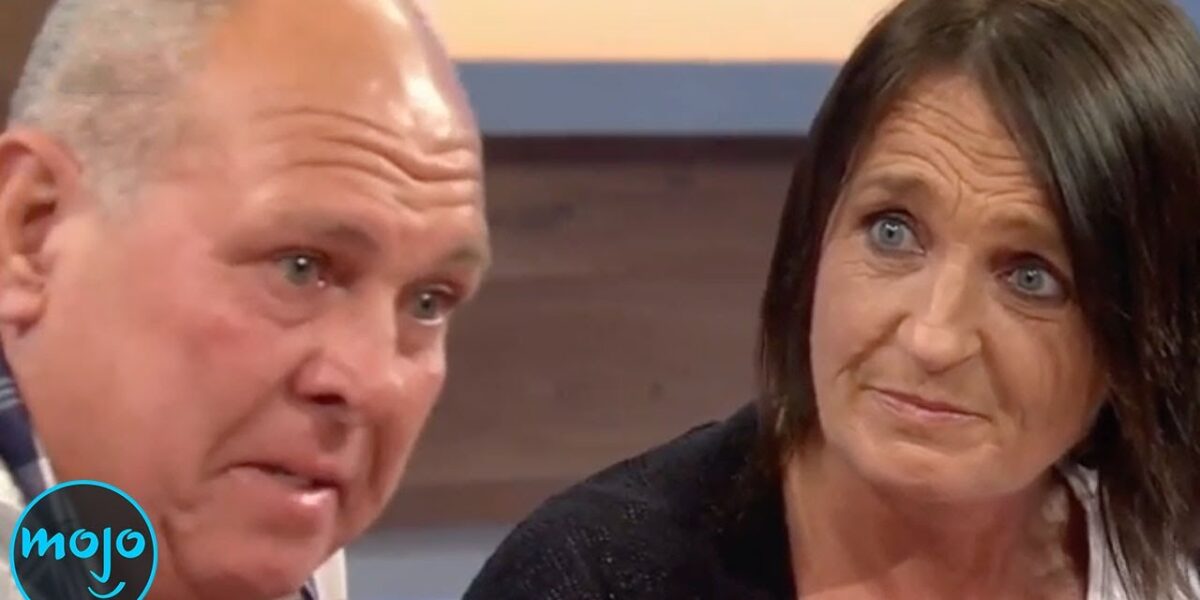
Daytime talk shows, often a source of comfort and lighthearted conversation, have also been the stage for some of the most unsettling and disturbing interviews in television history. From intrusive questioning to confrontations that turned tragic, these moments have left viewers reeling and questioning the ethics of broadcast journalism. Watch Mojo’s recent deep dive into “10 Most Disturbing Interviews in Daytime TV History” highlights a series of interviews that pushed the boundaries of decency and decorum, often with devastating consequences for the guests involved.
Mariah Carey on Ellen: A Pregnancy Reveal Under Duress
One of the most talked-about moments involved pop icon Mariah Carey on The Ellen DeGeneres Show in 2008. During a segment where DeGeneres was addressing rumors of Carey’s pregnancy, the host pressed the singer relentlessly with champagne, despite Carey’s clear discomfort and reluctance to confirm the news.
The interview, which viewers now see as particularly cruel in light of the later revelations about toxicity on DeGeneres’s show, forced Carey into an announcement she wasn’t ready to make. Years later, Carey revealed that a previous miscarriage made the pressure even more agonizing, adding a layer of profound sadness to this intrusive on-air moment.
Corey Feldman’s Fight for Justice on The Today Show
Actor Corey Feldman, on a mission to expose predators in Hollywood, appeared on The Today Show to promote his crowdfunded film project. Host Matt Lauer’s skeptical questioning of Feldman’s ambitious $10 million budget for distribution and legal protection, while understandable from a journalistic standpoint, came across as harsh and dismissive, especially given Feldman’s stated goal of protecting children. The context of Lauer’s own later downfall due to abuse allegations only amplifies the discomfort of this interview, where Feldman sought to share his truth about systemic abuse.
Fred Phelps on Ricki Lake: A Confrontation of Hate
A truly watershed moment occurred on The Ricki Lake Show when controversial figure Fred Phelps of the Westboro Baptist Church appeared alongside Charles Hawinbarger to spew hateful rhetoric about the LGBTQ+ community during the height of the AIDS crisis. The interview became a stark display of bigotry, met with fierce denunciation from gay audience members and allies.
The confrontation escalated, with Phelps and his companion eventually leaving the stage, only to return later. While difficult to watch, this episode is remembered as a moment where a marginalized community powerfully stood up against hate speech on national television.
Carrie Katona’s Meltdown on This Morning
In 2008, a highly publicized interview with former Atomic Kitten singer Kerry Katona on the British show This Morning became a painful spectacle. Katona, promoting a reality show about her plastic surgery, appeared visibly unwell and struggled to form coherent sentences, admitting to taking medication and continuing to smoke despite post-operative risks.
The interview, characterized by her slurred speech and apparent intoxication, was seen by many as an exploitation of her vulnerability. Katona has since spoken openly about her struggles with mental health and addiction, making this interview a tragic cautionary tale.
Haraldo Rivera and the White Aryan Resistance
Early in his career, Geraldo Rivera hosted a confrontational interview with members of the White Aryan Resistance youth. The segment, already delayed by a gang brawl outside the studio, quickly devolved into a chilling display of hate rhetoric and audience confrontation.
The tension peaked with the arrival of Roy Innis, chairman of the Congress of Racial Equality, leading to a violent standoff that saw the white supremacist group escorted out. Despite sustaining injuries, Rivera completed the show, proving his point the hard way and contributing to the discrediting of white supremacy while also highlighting the rise of sensationalist talk TV.
R. Kelly’s Downfall on CBS This Morning
The R&B singer R. Kelly faced numerous allegations of abuse, and his response on CBS This Morning in 2019, following the Lifetime docu-series “Surviving R. Kelly,” proved to be a key moment in his public downfall.
In a pre-taped conversation, Kelly presented himself as a victim, making outlandish claims and outbursts about his career being destroyed. His defense was unconvincing, and his claims of being victimized were deeply unsettling, especially in light of the overwhelming evidence against him. Shortly after, he was charged and subsequently convicted of racketeering and multiple sex crimes.
The Jenny Jones Show: A Deadly Secret Admirer
Perhaps one of the most infamous and tragic incidents in daytime TV history occurred on The Jenny Jones Show. An episode involving a secret admirer confession took a deadly turn when a man named Jonathan Schmidtz discovered his admirer was a male coworker, Scott Amager. Schmidz, who was straight, was deeply disappointed.
Three weeks after the taping, Schmidz murdered Amager. His defense citing “gay panic” was a landmark moment in discrediting such claims as a criminal defense, serving as a grim reminder of the potential consequences when talk shows exploit personal lives for sensationalism.
Steve Diamond on The Jeremy Kyle Show: A Tragic Meltdown
The UK’s tabloid talk show, The Jeremy Kyle Show, featured a guest named Steve Diamond who, during a polygraph test to prove his fidelity, failed and subsequently had a horrific on-camera meltdown with his partner, Jane Caligan. Jeremy Kyle’s aggressive interrogation and labeling of Diamond as a liar exacerbated the situation.
Tragically, Steve Diamond took his own life just one week later. The scandal surrounding his death led to the immediate cancellation of the episode and ultimately contributed to the show’s demise after 14 years on air, serving as a grim warning about the human cost of sensationalist television.
Corey Davis on Dr. Phil: A Chilling Confession
Dr. Phil McGraw, known for psychoanalyzing troubled individuals, was visibly unsettled by Zachary Davis, a teenager on trial for his mother’s murder. In a direct and chilling confession, Davis admitted to bludgeoning his mother to death in her sleep, even detailing his lack of remorse and a disturbing laugh during the act.
The interview, shared by Dr. Phil, horrified his guests and the studio audience, and underscored the court’s assessment that Davis posed a significant threat to society, leading to his conviction and sentencing. This case sparked debate about the line between raising awareness of mental illness and exploiting graphic confessions for ratings.
The Jerry Springer Show: KKK vs. JDL Confrontation
The Jerry Springer Show, synonymous with “trash TV,” reached a new level of controversy in 1997 with an episode brokering a dialogue between members of the Ku Klux Klan and the Jewish Defense League. The deliberately engineered confrontation between two extremist groups on issues of race was a dangerous proposition.
As expected, the segment devolved into violence, with guests coming to blows. This incident not only highlighted the extreme nature of tabloid talk shows but also marked a turning point in how daytime television could represent volatile political and social conflicts, often with explosive results.
These interviews, while deeply disturbing, serve as clear reminders of the power and potential pitfalls of daytime television, prompting ongoing discussions about media ethics, guest welfare, and the responsibility of broadcasters in handling sensitive and potentially harmful content.
Source: 10 Most Disturbing Interviews in Daytime TV History (YouTube)

Related Articles

Beyoncé’s VMA Kiss Broke the Internet, Not Just the Stage
Before social media dominated, certain music moments shook the internet. From SNL skits to VMA performances and iconic dresses, these events captured global attention and even shaped online platforms. Relive the top 10 viral music moments that broke the internet before algorithms.


TV Co-Presenter Myth Shattered by Employment Tribunal
A looming employment tribunal between TV presenters Dan Walker and Claudia Liza Vanderpoo is challenging the myth of on-screen co-presenter harmony. Vanderpoo has accused Walker and ITN of a toxic work environment, allegations ITN denies. The case highlights public fascination with behind-the-scenes drama.

Songs That Started Hated But Now Rule
Some songs face harsh criticism or confusion upon release, only to become beloved classics years later. WatchMojo's list highlights 20 tracks, from Madonna's "Like a Prayer" to Bob Dylan's "Like a Rolling Stone," that transformed from mocked tunes to celebrated anthems, proving that time and evolving tastes can redefine musical legacy.