New Hope for Planet Nine Discovery in Distant Solar System
Astronomers may have found the first evidence of the elusive Planet Nine, a massive hypothetical world in the outer solar system. New analysis of decades-old infrared data reveals a single candidate object, but further observation is needed for confirmation.


Distant Orbits Hint at Hidden World
In the frigid, uncharted territories of our solar system, far beyond the orbit of Neptune, a gravitational anomaly has long puzzled astronomers. The peculiar orbits of dozens of icy bodies, known as Trans-Neptunian Objects (TNOs), suggest they are being subtly influenced by an unseen celestial body. The leading hypothesis for this cosmic choreography is the existence of a massive, undiscovered planet, tentatively dubbed “Planet Nine,” lurking in the solar system’s outer reaches on a vast, elongated orbit. This hypothetical world could be up to ten times the mass of Earth, yet its elusive nature has made it a phantom, evading detection for decades.
A Century-Long Search
The quest for Planet Nine is not a new one; astronomers have been searching for this missing member of our solar system for over a century. Despite increasingly sophisticated telescopes and comprehensive sky surveys, every attempt to pinpoint this massive object has come up empty. This enduring mystery is particularly striking in an era where humanity can capture images of exoplanets orbiting distant stars light-years away and glimpse the universe’s earliest galaxies. The idea that such a significant object could remain hidden in our own cosmic backyard is both perplexing and exhilarating.
Unusual Orbits Spark a Hypothesis
The story of Planet Nine truly began to take shape in 2003 when a team of scientists, led by Professor Mike Brown of Caltech, began intensely studying the outer solar system. Their exploration led to the discovery of Sedna, a dwarf planet with an orbit that defied conventional understanding. Sedna’s highly elliptical and inclined path, far from the relatively flat, circular orbits of the inner planets, sparked a wave of research. As more TNOs with similarly strange orbital characteristics were found—some crossing Neptune’s path, others moving in retrograde directions, and many with high inclinations—the need for a unifying explanation became critical.
The Lidov-Kozai Mechanism and Gravitational Tugs
The most compelling explanation for these clustered, peculiar orbits is a phenomenon in celestial mechanics known as the Lidov-Kozai mechanism. This process describes how a distant, massive perturber can dramatically alter the orbits of smaller bodies. For this to occur, three gravitational players are needed: the Sun, the TNO, and the unseen perturber. Mike Brown and his colleague Dr. Konstantin Batygin modeled the orbits of seventeen TNOs and calculated that the probability of their observed alignments being purely coincidental was infinitesimally small—just 0.00006%. Their simulations strongly suggested that these TNOs were being gravitationally nudged by a massive, unseen object: Planet Nine.
The Challenge of Direct Observation
While theoretical models provide compelling evidence, the ultimate proof of Planet Nine’s existence lies in direct observation. However, detecting such a distant and potentially dim object presents immense challenges. The brightness of a planet in visible light decreases dramatically with distance, not just by the square of the distance, but by the fourth power, due to the faintness of reflected sunlight. Despite years of dedicated searches by powerful observatories like the Zwicky Transient Facility, the Dark Energy Survey, and Pan-STARRS-1, no definitive candidate for Planet Nine has emerged in optical surveys.
Infrared Eyes Scan the Darkness
Recognizing the limitations of optical searches, a new team of astronomers, led by Professor Tomo Goto and PhD student Terry Phan from Taiwan, turned their attention to the infrared spectrum. Planets, even cold ones, emit their own thermal radiation. They decided to leverage data from two significant infrared sky surveys: the Infrared Astronomical Satellite (IRAS), launched in 1983, and the AKARI infrared satellite, which operated in 2006. IRAS provided the first comprehensive infrared map of the entire sky from orbit, detecting hundreds of thousands of sources. AKARI, building on this, offered improved resolution and sensitivity at longer infrared wavelengths. By combining these vast datasets, spanning over two decades and containing millions of celestial objects, Phan and Goto sought to identify a moving object consistent with Planet Nine’s predicted characteristics.
A Promising Candidate Emerges
Their meticulous analysis focused on objects moving in ways predicted by Planet Nine’s orbital models. They specifically looked for a planet with a mass between 7 and 17 times that of Earth, with an orbit stretching from approximately 280 Astronomical Units (AU) at its closest approach (perihelion) to as far as 1120 AU at its farthest (aphelion). Crucially, they focused their search on regions between 500 and 700 AU, where Planet Nine was expected to spend significant time due to its slow movement at aphelion. After filtering through millions of data points, comparing positions across the IRAS and AKARI surveys, and painstakingly eliminating false positives, they were left with just one compelling candidate. This candidate appeared as a cluster of warmer pixels in the IRAS data and had visibly shifted its position in the AKARI images taken 23 years later—a movement of about one and a half full moons across the sky. This observation, while subtle, could represent the first visual evidence of Planet Nine.
Verification and Future Prospects
While this candidate is highly promising and fits many of Planet Nine’s predicted traits, some astronomers, including Mike Brown and Konstantin Batygin, have noted potential discrepancies, particularly concerning the inclination of the object’s orbit. However, the next phase of verification is already underway. The Vera C. Rubin Observatory, set to become operational with its massive 3.2-gigapixel camera, is poised to revolutionize sky surveys. Its 10-year Legacy Survey of Space and Time (LSST) will scan the entire visible sky repeatedly, generating an unprecedented amount of data and significantly increasing our catalog of solar system objects. Scientists believe the Rubin Observatory has the potential to either confirm the existence of Planet Nine or provide the most robust evidence for its presence, or absence. Professor Goto’s team is not waiting idly; they have already identified two additional possible candidates by analyzing the AKARI data for predicted parallax shifts.
Alternative Explanations
The scientific community is also exploring alternative hypotheses should Planet Nine not materialize. One possibility is a “Zderic-Madigan (ZM) belt,” a theoretical configuration of numerous smaller objects in clustered elliptical orbits that collectively exert a gravitational influence mimicking that of a single large planet. This scenario is analogous to the dynamics observed in the central regions of barred spiral galaxies. Another intriguing, albeit more speculative, explanation involves transient gravitational events. This could include the past gravitational encounter with a passing star or, even more exotically, the capture of a primordial black hole—a relic from the early universe that could possess planetary mass but be incredibly small and difficult to detect. Finally, some researchers propose that our understanding of gravity itself might need revision, pointing to Modified Newtonian Dynamics (MOND) as a framework that could potentially explain the observed TNO orbits without invoking a hidden planet.
The Ongoing Cosmic Detective Story
Regardless of the ultimate discovery, the hunt for Planet Nine represents a profound scientific endeavor. It pushes the boundaries of our observational capabilities and challenges our understanding of the solar system’s formation and evolution. The Vera Rubin Observatory, with its unparalleled power, promises to bring us closer to an answer within the next few years. Whether we confirm the existence of a ninth planet, uncover a novel orbital phenomenon, or even revise our understanding of fundamental physics, the ongoing exploration of our solar system’s distant frontier continues to inspire wonder and expand the frontiers of human knowledge.
Source: Is the Hunt For Planet Nine Finally Over? (YouTube)

Related Articles
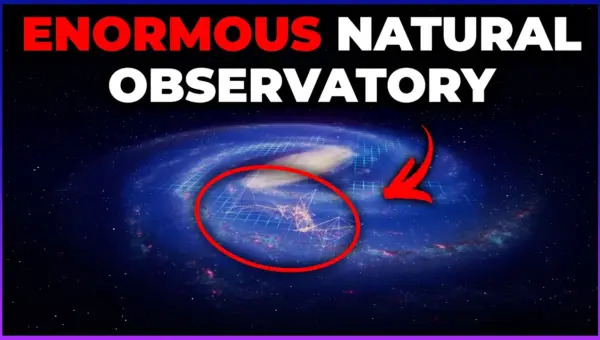
Cosmic Hum Hints at Gigantic Black Hole Mergers
Astronomers are using networks of rapidly spinning pulsars, nature's precise cosmic clocks, to detect the faint hum of merging supermassive black holes. New research is now focusing on pinpointing individual merger events, moving beyond the general background noise to understand these colossal cosmic collisions.

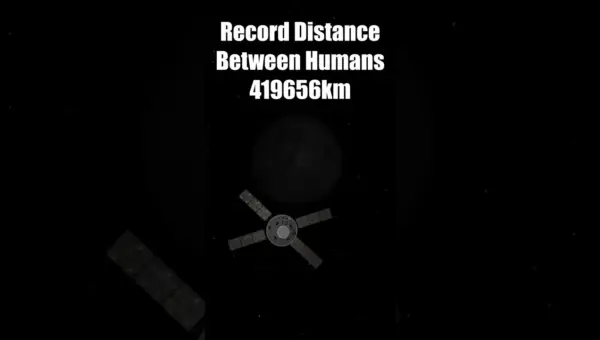
Artemis II Astronauts Set New Human Distance Record
The Artemis II mission set a new human distance record, reaching 413,145 km from Earth. The mission also established a record for the greatest distance between two groups of humans, with astronauts on China's Tiangong space station being 419,656 km away from the Artemis II crew.
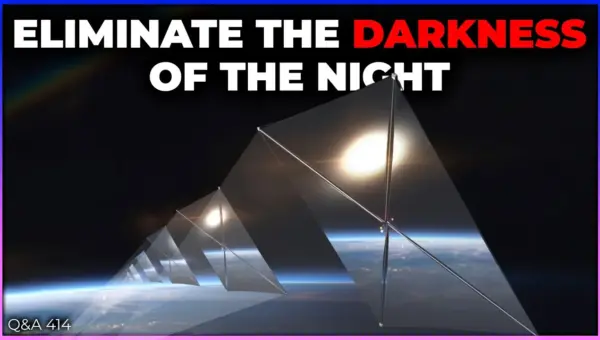
Orbital Mirrors Could Light Up Nights, Voyager’s Power Fades
Scientists explore using orbital mirrors to light up the night, while the aging Voyager probes near the end of their journey. The James Webb Space Telescope continues its search for habitable exoplanets, facing challenges in detecting atmospheres.