Rocket Garden Tour: A Journey Through Spaceflight History
Explore the iconic rockets at Kennedy Space Center Visitor Complex, from the early Atlas and Redstone to the mighty Saturn V. Discover the engineering marvels and historical significance of these spacecraft that defined the space age.

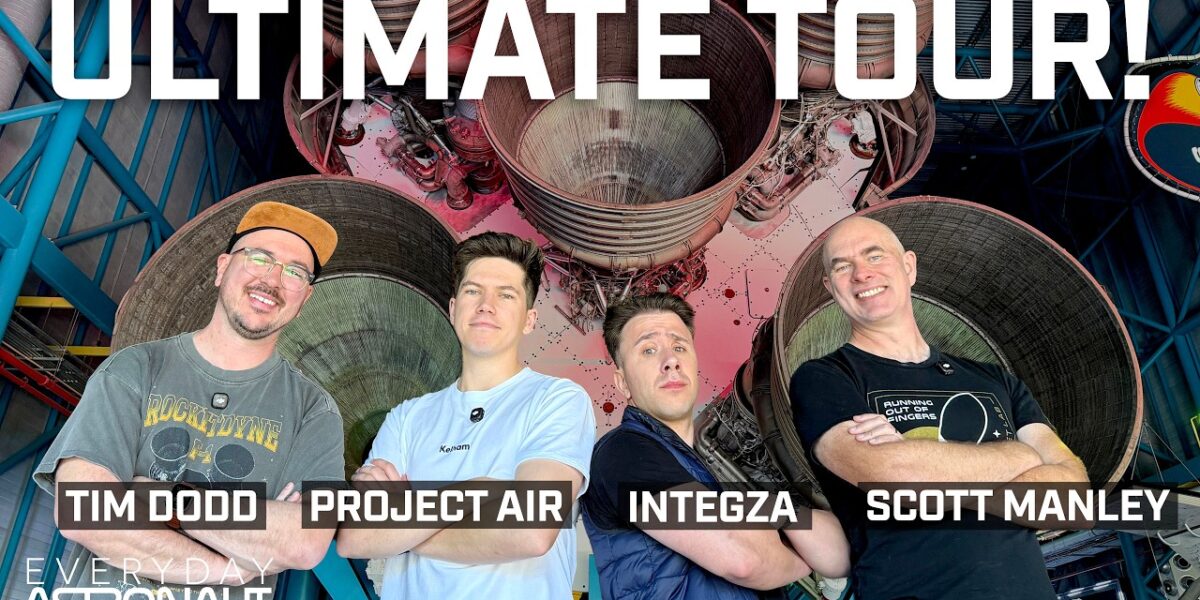
Kennedy Space Center Visitor Complex Showcases Iconic Rockets
The Kennedy Space Center Visitor Complex is a treasure trove for spaceflight enthusiasts, offering a tangible connection to humanity’s journey beyond Earth. Recently, a group of notable figures from the space community—Tim Dodd of ‘Everyday Astronaut,’ Scott Manley, and others—took a deep dive into the complex’s renowned Rocket Garden, exploring the evolution of American rocketry and the ingenious engineering behind these magnificent machines.
The Atlas: A Pioneer of the Space Age
Dominating the early part of the tour was the Atlas rocket, a cornerstone of early American space exploration. The speakers highlighted its unique design, particularly its ‘balloon tank’ construction.
Unlike traditional rockets with rigid structures, the Atlas relied on internal pressure to maintain its shape. This innovative approach, while efficient, famously led to instances of ‘implosion’ rather than explosion, a phenomenon captured in dramatic footage where the rocket structure visibly collapsed inward.
“So it doesn’t really have like a rigid structure. It’s basically held on by like a balloon,” explained one of the guides, highlighting the delicate balance of pressure that kept the massive rocket intact. This design choice meant that museum exhibits sometimes require compressors to keep the tanks inflated, proof of the thinness and reliance on internal pressure.
The Atlas also played a key role in launching early American spacecraft, including the Mercury capsules. It was the Atlas rocket that first carried an American into orbit, a monumental achievement.
The tour also touched upon the Atlas-Agena, an upper stage that was essentially a full spacecraft bus with its own attitude control and guidance systems, a necessity in an era before sophisticated onboard computers. Ground-based guidance was the norm, leading to fascinating anecdotes, like the early Venus mission that went awry due to a subtle coding error—a ‘missing minus sign’—which proved to be an incredibly expensive programming mistake at the time.
From Redstone to Gemini: The Evolution of Launch Vehicles
The discussion then shifted to other foundational rockets. The Redstone, essentially a rebranded V-2, was highlighted as the vehicle that launched America’s first astronaut, Alan Shepard. Its design, a direct continuation of Wernher von Braun’s work, utilized an alcohol-oxygen engine, famously described as being fueled by ‘high-grade vodka.’
The tour also explored the evolution of crewed spacecraft, referencing the Mercury capsule, which was so small it was described as something one ‘wears’ rather than flies in. The Gemini capsule, which followed Mercury, introduced ejection seats for crew escape, a stark contrast to the launch escape systems of later missions.
The Thor and Delta Family: Workhorses of Spaceflight
The Thor rocket, initially an intermediate-range ballistic missile, was another significant focus. NASA adopted the Thor as a launch vehicle, renaming it Delta to distance it from its military origins.
The Delta family became a highly successful and long-serving line of rockets, with the Delta II being the final iteration. These rockets were known for their reliability and versatility, often employing clusters of solid rocket boosters to augment their thrust.
The Delta II, for instance, was famously used to launch NASA’s Mars Exploration Rovers, Spirit and Opportunity. The tour detailed how different configurations of Delta II rockets, with varying numbers of boosters (3, 4, or 9), were used depending on the mission’s payload requirements. The impressive statistic of over 100 successful Delta II launches underscored its legacy as a workhorse of space exploration.
The Titan: A Robust and Versatile Rocket
A significant portion of the tour was dedicated to the Titan rocket family, particularly the Titan II. Unlike the cryogenic fuels of earlier rockets, the Titan II used hypergolic propellants—nitrogen tetroxide and UDMH (unsymmetrical dimethylhydrazine)—which are highly corrosive but offer storability, making them suitable for military missile silos. This choice of fuel came with inherent risks, as a rocket explosion would expose the crew to toxic substances.
The Titan II’s engines, the LR87s, were noted for their unique sound, often described as a ‘supercharger’ whine, attributed to a gear reduction system between the turbine and pumps. The Gemini program famously utilized the Titan II as its launch vehicle, employing ejection seats for crew safety instead of a traditional launch escape tower.
The evolution continued with the Titan III, which incorporated solid rocket motors, and the Titan Centaur upper stage, which was instrumental in launching the Voyager probes. The Titan rockets demonstrated remarkable adaptability, with their combustion chambers being experimented with for various propellants, including hydrogen, kerosene, and even methalox.
Saturn Rockets: The Giants of Apollo
No discussion of spaceflight history at Kennedy Space Center would be complete without mentioning the Saturn rockets. The Saturn I, notable for its unique clustered first stage tanks (a design born from necessity, essentially ‘slapping together’ available tanks), served as a testbed for new technologies, including the J2 engine destined for the Saturn V. The Saturn IB variant, with its S-IVB upper stage, was used for early Apollo missions and Skylab launches.
The sheer scale of the F-1 engine, the powerhouse of the Saturn V’s first stage, was emphasized. Its immense size is proof of the power required to send humans to the Moon. The tour also touched upon the Apollo Command Module, explaining the heat-reflective properties of its silver exterior, designed to manage re-entry temperatures.
Modern Era and Future Prospects
The tour concluded by looking towards more recent advancements. The Delta 4, though barely related to the Delta II, represented another step in launch vehicle design. The presence of a Delta 4 rocket, the final Delta II launch vehicle, marked a significant addition to the garden, commemorating its last flight in 2018.
The visitors also saw a Falcon Heavy booster, a powerful symbol of the current commercial spaceflight era. The discussion around its aluminum fins and recovered stages highlighted the ongoing innovations in reusability and recovery techniques. The tour served as a powerful reminder of the decades of innovation, courage, and scientific endeavor that have propelled humanity into the cosmos, with each rocket in the garden telling a unique chapter of this ongoing story.
A Glimpse into the Future
Beyond the Rocket Garden, the complex offers glimpses into the future of space exploration. The presence of a Falcon Heavy booster and discussions about upcoming vehicles like the Vulcan Centaur signal a dynamic and evolving landscape.
The tour participants also shared personal anecdotes about their presence at the Kennedy Space Center, including attending the Reinvented Magazine’s Space Gala fundraiser and looking forward to the Astro Awards show in Austin, Texas. These events highlight the vibrant community surrounding space exploration, bringing together enthusiasts, creators, and experts to celebrate and advance humanity’s reach for the stars.
Source: Tour Kennedy Space Center Visitor's Complex w/ guests! (YouTube)

Related Articles

Alien Life Could Travel Between Stars, Scientists Say
Scientists are exploring the scientific concept of panspermia, where life could travel between star systems on asteroids or comets. Evidence shows life's resilience and the movement of material between planets, making this a credible hypothesis. The search for extraterrestrial life is now focusing on when and where we might find it.
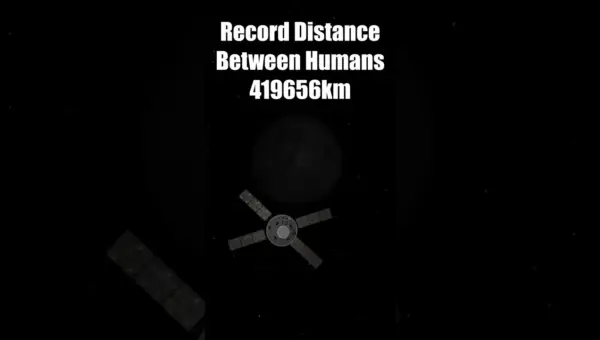
Artemis II Astronauts Set New Human Distance Record
The Artemis II mission set a new human distance record, reaching 413,145 km from Earth. The mission also established a record for the greatest distance between two groups of humans, with astronauts on China's Tiangong space station being 419,656 km away from the Artemis II crew.
Mars Rover Detects Mysterious Lightning Signals
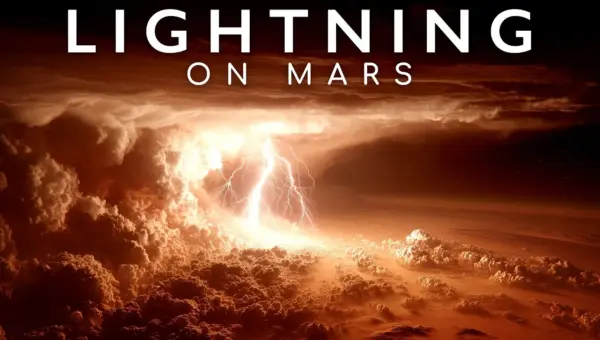
NASA's Perseverance rover has detected mysterious crackling sounds, providing the first tantalizing evidence of lightning on Mars. This discovery, along with a faint whistler wave detected by the MAVEN spacecraft, suggests that electrical discharges occur in Martian dust storms, impacting atmospheric chemistry and posing new challenges for future human exploration.