UK’s EV Mandate Under Fire: Are Carmakers Making Excuses?
UK car manufacturers are facing scrutiny over their response to the ZEV mandate, with data suggesting many are meeting targets while others cite unviability. Meanwhile, Australia grapples with tax policies favoring large utes over EVs, and BYD continues its impressive global expansion.


UK’s ZEV Mandate Faces Scrutiny Amidst Carmaker Pushback
The automotive industry is in a state of flux, and the UK’s Zero Emission Vehicle (ZEV) mandate, designed to accelerate the adoption of electric vehicles (EVs), is finding itself at the center of a heated debate. While the mandate sets ambitious targets for EV sales – 80% by 2030 and 100% by 2035 – a chorus of voices from within the industry is calling for its weakening, citing unviability and unachievability. However, a closer look at sales data suggests that many manufacturers are not only meeting these targets but are exceeding them, leading to accusations of excuse-making from a select few.
The ZEV mandate, introduced to encourage the transition away from internal combustion engine vehicles, has been tweaked since its inception. Initially aiming for a ban on new petrol and diesel car sales by 2030, it was later adjusted to include mild hybrids in the phase-out period until 2035, with a strict battery-electric-only rule from that year. This flexibility, however, has not appeased some manufacturers, who continue to lobby for further concessions.
Misinformation and Market Manipulation
The podcast hosts posit that a significant factor contributing to the need for subsidies and mandates is the pervasive misinformation surrounding EVs. They argue that a concerted, industrial-scale campaign of disinformation, particularly since the 2023 Shanghai Motor Show, has created a climate of doubt and fear, necessitating costly efforts to educate consumers and incentivize EV adoption. This misinformation, they contend, has a tangible financial cost, requiring substantial investment in marketing and education to counter the negative narratives.
Who’s Meeting the Targets and Who’s Not?
Data analyzed by New Automotive reveals a stark contrast in manufacturer performance against the ZEV targets. While nine original equipment manufacturers (OEMs) are reportedly overachieving, and several others are within two percentage points of their goals, a significant portion are lagging considerably. Companies like Tesla and BYD are highlighted as strong performers, with BYD, in particular, seeing nearly 60% of its sales as battery EVs. Other notable performers include Polestar, Volvo, BMW, and Renault, all of whom are meeting or exceeding their targets.
Conversely, the likes of Jaguar Land Rover (JLR), along with many Japanese manufacturers including Nissan, Toyota, and Honda, are found at the bottom of the list. The discussion points out the irony that Toyota, while lobbying against stricter EV targets in the UK, sees about half of its new car sales in Norway as battery EVs, suggesting that meeting targets is achievable with commitment.
The Cost of Weakening Mandates
The implications of weakening the ZEV mandate are significant. It’s estimated that the previous adjustments, which allowed mild hybrids back into the phase-out period, cost the UK an estimated 2 million potential car sales by 2030, translating to a staggering £70 billion in lost revenue. Further dilution of the mandate could have severe consequences for the burgeoning EV industry in the UK, potentially leading to the demise of several companies.
The ‘Ute Lunacy’ Down Under
The conversation then shifts to Australia, where a different, yet equally concerning, policy is impacting EV adoption. The country’s fringe benefits tax (FBT) system offers significant tax breaks for purchasing ‘utes’ – essentially pickup trucks. This has led to a surge in the popularity of large, often unnecessary, vehicles, with tax deductions effectively subsidizing their purchase. This policy is seen as a counterproductive measure, effectively a reverse carbon price, that incentivizes the use of high-emission vehicles while hindering the growth of the nascent EV market, which is currently less than 1 in 10 car sales.
Despite Australia’s vast solar potential and a growing interest in renewable energy, the FBT loophole for utes is diverting attention and resources away from more sustainable transport solutions. The argument is made that governments should consider the broader implications of vehicle size, road infrastructure, and carbon emissions, rather than solely focusing on immediate budget adjustments that undermine long-term environmental goals.
BYD’s Global Ambitions
The final segment of the discussion turns to the meteoric rise of BYD. The Chinese automotive giant is not just a player but a dominant force, with ambitions to become the world’s number one car maker. In 2023, BYD sold over 2.26 million battery EVs globally, with more than a million of those sales occurring outside of China. Their success is particularly evident in markets like Brazil, Thailand, Australia, and Israel, and they are making significant inroads into Europe, including the UK.
In Australia, BYD dominated the January EV sales charts, securing six of the top ten spots with models like the Sealine, Atto 3, Seal, and Dolphin. Notably, no European or Japanese manufacturers featured in this top ten, underscoring BYD’s competitive edge. The company’s expansive product range, from budget-friendly models like the Seagull (known as the Dolphin Surf in the UK) to high-performance vehicles like the Yangwang U8 and U9, demonstrates a strategy that spans the entire market spectrum. BYD’s recent sponsorship of Manchester City Football Club further signals their global ambitions and commitment to establishing a strong brand presence worldwide.
The overarching sentiment from the podcast is one of frustration with manufacturers who seem to be making excuses rather than embracing the EV transition. While acknowledging the complexities of market shifts and consumer behavior, the hosts emphasize that the targets are in place for a reason and that commitment and innovation, rather than resistance, are key to navigating the future of the automotive industry.
Source: Losers' Lame Excuses? Ute Lunacy! The BYD Supremacy? (YouTube)

Related Articles

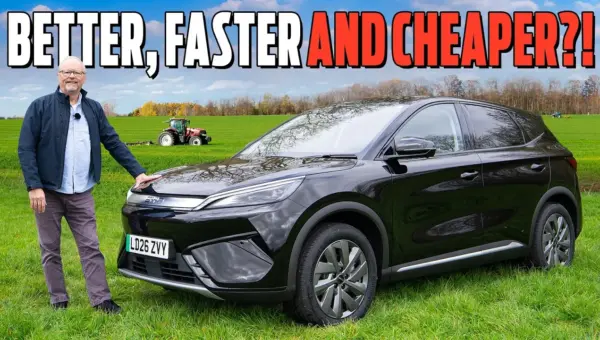
BYD Atto 3 Evo: Faster Charging, Bigger Battery, Lower Price
The updated BYD Atto 3 Evo electric SUV boasts a larger battery, significantly faster 800V charging, increased boot space, and a new frunk, all while being £700 cheaper than its predecessor. This makes it a highly competitive and value-packed option in the EV market.


Chinese Brands Storm UK Market, Shaking Up Auto Industry
Chinese EV manufacturers like BYD and Chery Group are rapidly taking market share in the UK, outperforming established brands and challenging traditional perceptions. Their aggressive marketing and competitive products are reshaping the automotive landscape.


Porsche Patents a Manual for Electric Cars
Porsche has filed a patent for a manual transmission system designed for electric vehicles. This innovative system would allow drivers to choose between automatic mode and a traditional H-pattern manual shifter, offering an engaging driving experience for EV enthusiasts.