EV Regen on Ice: Is It Dangerous? We Tested!
We put RWD, FWD, and AWD EVs to the test on a frozen track to determine if regenerative braking is dangerous on ice. The results show modern EVs handle it with surprising capability, making manual adjustments often unnecessary.

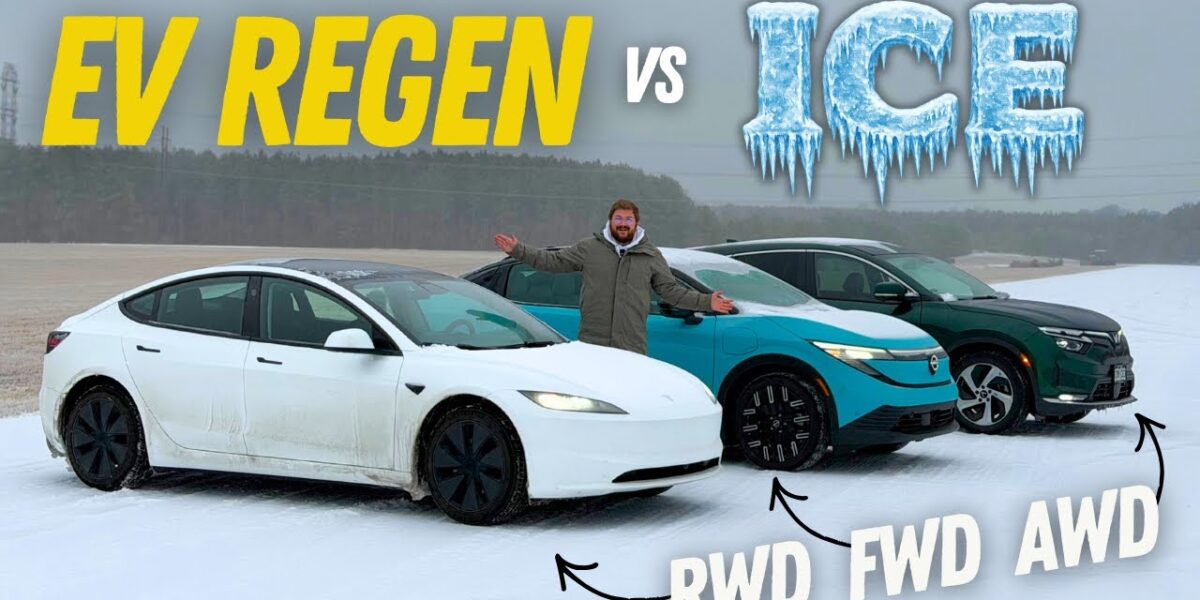
EV Regen on Ice: Is It Dangerous? We Tested!
The age-old question for electric vehicle (EV) owners driving in slippery conditions has been: is regenerative braking, or ‘regen,’ a safety hazard on ice and snow? Many enthusiasts recommend reducing regen settings to prevent potential wheel lock-up and loss of control. To settle this debate, we took a rear-wheel-drive (RWD), front-wheel-drive (FWD), and all-wheel-drive (AWD) EV to a frozen track to put modern regen systems to the ultimate test.
The results might surprise you. While older EVs with less sophisticated systems can indeed present challenges, most modern EVs, particularly those with advanced powertrain management, handle regen on ice with remarkable composure. The key takeaway is that in the vast majority of current electric cars, you likely don’t need to worry about turning down your regen settings; the car’s built-in safety systems are designed to manage it effectively, even on the slickest surfaces.
Understanding Regen and Its Challenges
Regenerative braking is a cornerstone of EV efficiency, allowing the electric motor to act as a generator during deceleration, capturing energy and sending it back to the battery. This not only boosts range but also significantly reduces wear on traditional friction brakes. However, on low-traction surfaces like ice, this deceleration force, if applied too aggressively, can mimic braking to the point of locking the driven wheels. This is where ‘regen drag control’ comes into play – a system designed to modulate the regen force to prevent wheel lock-up.
The Contenders: RWD, FWD, and AWD EVs
We lined up three distinct EV configurations:
- Rear-Wheel Drive (RWD): Represented by the Tesla Model 3 Long Range. In a RWD EV, aggressive regen can potentially lock the rear wheels, leading to oversteer and a loss of control, especially on ice.
- Front-Wheel Drive (FWD): Modeled by the Nissan Leaf. Here, the front wheels handle both acceleration and regen. While weight transfer to the front under braking aids traction, locking the front wheels can lead to understeer and a loss of steering control.
- All-Wheel Drive (AWD): Featured in the VinFast VF8. AWD EVs have the most complex challenge, as regen needs to be managed across both front and rear axles simultaneously.
Testing the Limits on Ice
Our testing took place on a specially prepared icy track, simulating the most challenging conditions imaginable. We focused on how each vehicle’s regen system behaved when lifting off the accelerator pedal at speed, particularly when combined with steering inputs.
Rear-Wheel Drive: Tesla Model 3 Long Range
The Tesla Model 3 Long Range, equipped with advanced powertrain management and what is widely considered class-leading regen drag control, performed exceptionally well. When lifting off the accelerator on ice, the system seamlessly modulated regen force. Instead of locking the rear wheels, it kept them at the threshold of maximum deceleration without losing traction. Crucially, the system responded with extreme speed, far exceeding the capabilities of traditional ABS. Even when intentionally inducing a slide or cornering aggressively, the regen would back off instantly or shut off completely, allowing the driver to maintain control. The feeling from the driver’s seat was one of stability and confidence, with no perceived risk of the rear wheels locking or the car becoming unstable due to regen.
Front-Wheel Drive: Nissan Leaf
The Nissan Leaf presented a more mixed experience. While FWD EVs generally benefit from weight transfer to the front during deceleration, the Leaf’s regen system appeared less sophisticated than the Tesla’s. In aggressive maneuvers, the car’s system tended to shut off regen almost entirely, perhaps as a failsafe. While this prevented any significant understeer caused by regen lock-up, it also meant less energy recuperation. The car felt less confident and somewhat ‘fighting’ itself, a stark contrast to the Tesla’s planted feel. Turning regen down to its lowest setting provided a more predictable feel, though the brake pedal still blended in some regenerative braking before engaging friction brakes.
All-Wheel Drive: VinFast VF8
The VinFast VF8, an AWD EV, faced the most complex task. Surprisingly, VinFast’s tuning for regen drag control on this model proved to be quite good. The system managed to modulate regen across both axles effectively, providing a stable experience during deceleration and cornering. The regen was gentle on the loose surface, and the car felt composed. However, this positive outcome was juxtaposed with a poorly tuned electronic stability control (ESC) system, which struggled to deliver power effectively and seemed slow to react. Despite the ESC flaws, the regen drag control itself was a highlight, offering good efficiency and safety on the ice.
The Old Guard: BMW i3 (RWD)
To illustrate the evolution of EV technology, we also tested an older BMW i3, a RWD EV known for its early, less refined regen system. This car served as a cautionary tale. On ice, lifting off the accelerator pedal resulted in a noticeable and sometimes severe lock-up of the rear wheels. This could easily cause the car to step out, requiring significant counter-steering. For inexperienced drivers, this behavior was described as ‘extremely scary,’ and it was easy to see how it could lead to a loss of control. Unlike many modern EVs, the i3 did not offer adjustable regen settings, forcing drivers to contend with its potentially hazardous behavior in slippery conditions. In a special ‘roller mode’ designed for drifting, regen was completely disabled, allowing for controlled slides.
Who Is This For?
This analysis is crucial for any EV owner or prospective buyer concerned about winter driving. For those living in regions with frequent snow and ice, understanding how an EV’s specific regen system behaves is vital. While the older BMW i3 highlights the risks associated with less advanced systems, modern EVs like the Tesla Model 3 demonstrate that regen can be a safe and even beneficial feature in slippery conditions when managed by sophisticated software.
Verdict: Modern EVs Have Regen Under Control
The consensus from our icy track test is clear: for most modern EVs, you can leave your regen settings on full. The engineering advancements in traction control, stability control, and particularly regen drag control have made these systems highly effective at managing deceleration on low-grip surfaces. The sophisticated algorithms in cars like the Tesla Model 3 ensure that the driven wheels are kept at the optimal point for deceleration without locking up, providing a safe and stable driving experience. While some FWD and AWD systems might not be as polished as the best in class, they still offer a level of safety that makes manually reducing regen largely unnecessary for the average driver. Only in older EVs with known issues, like the BMW i3, should drivers consider reducing regen if such an option is available, or exercise extreme caution.
The takeaway is to trust the engineers who have spent years refining these complex systems. In most cases, the car knows best, and letting the advanced software manage regen on ice will provide the safest and most efficient drive.
Special thanks to Out of Spec Reviews for providing the testing grounds and vehicles. For more in-depth EV testing and reviews, visit their channel.
Source: Is Electric Car Regen Dangerous On Ice? I Brought A RWD, FWD, & AWD EV To A Snowy Track To Find Out (YouTube)

Related Articles

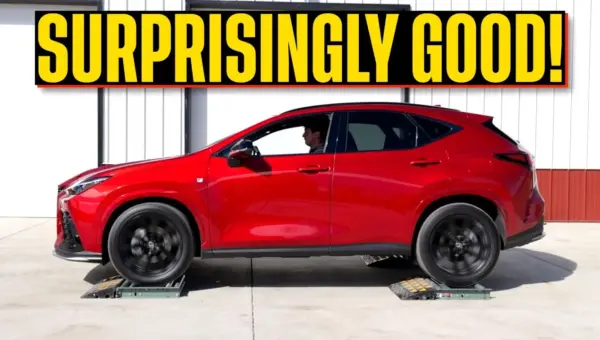
Lexus NX350h AWD: Does Hybrid Power Conquer Snow?
The 2026 Lexus NX350h AWD hybrid SUV was put to the test in extreme winter conditions. While it excels in comfort and fuel efficiency, its all-wheel-drive system showed limitations in severe traction scenarios, though it performed well on a challenging real-world course.
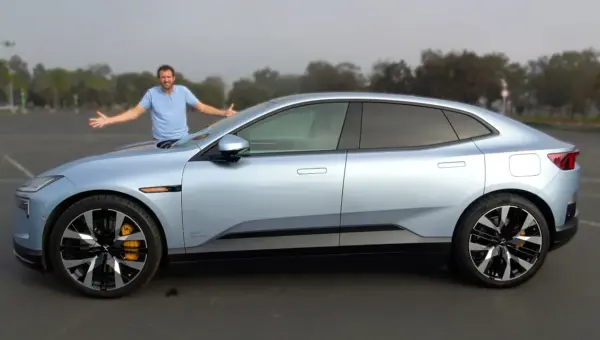
Polestar 4 Ditches Rear Window for Futuristic EV SUV
The 2026 Polestar 4 arrives as a bold electric SUV-coupe, ditching its rear window for a futuristic design and enhanced interior space. With impressive performance, a minimalist luxury cabin, and unique features like planetary-themed ambient lighting, it challenges traditional automotive norms. While its unconventional approach might not appeal to everyone, the Polestar 4 offers a compelling, albeit pricey, glimpse into the future of electric vehicles.
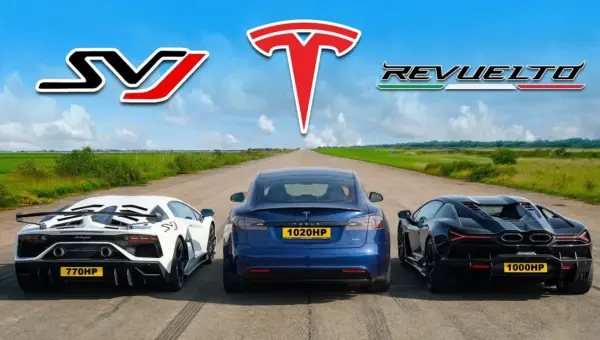
Electric Powerhouse Dominates Supercars in Thrilling Drag Race
In a thrilling series of drag races, the Tesla Model S Plaid proved that electric cars can outperform even the most potent Italian supercars. The electric sedan consistently delivered brutal acceleration, outclassing Lamborghinis like the Huracan Performante, Aventador SVJ, and even the hybrid Revuelto in most head-to-head matchups.