Obsession’s Deadly Grip: The Google Trail of a Killer
An obsessive fixation turned deadly during lockdown when Gerissa Gordon murdered and dismembered Phoenix Nets. Her elaborate cover-up, however, was undone by a trail of damning Google searches and surveillance footage.

A Lockdown Night and a Troubling Discovery
May 12th, 2020. England was steeped in the eerie silence of lockdown. Roads, usually bustling, were now desolate. In this hushed landscape, a local resident in the Forest of Dean noticed an unusual sight: a car, not just passing through, but seemingly circling a narrow road near Culford. Its presence, so far from its registered address in Wolverhampton, nearly 80 miles away, was enough to pique concern and prompt a call to the police. Officers intercepted the driver, who appeared anxious, claiming to be waiting for a friend. Reminded of the strict lockdown regulations, they issued a warning and sent him on his way. Yet, a nagging unease lingered.
Less than an hour later, drawn back by a gut feeling, the same officers returned to the same stretch of road. This time, headlights illuminated a strange silhouette at the entrance to Stooffield Quarry. It was the same car, engine off, and beside it, a lone woman stood by two large suitcases. Bodycam footage captured her increasingly erratic behavior as officers approached, desperate to conceal the contents of the luggage. The officers’ suspicion that she might be hiding a body proved tragically accurate.
Unveiling Gerissa and Phoenix
The woman was Gerissa Konita Gordon, a 28-year-old Jamaican national. Her early life had been marked by a jarring uprooting from Jamaica to England at the age of seven, followed by a difficult adjustment and family fragmentation. Later, she became entangled in an exploitative relationship that forced her into sex work, leaving her with a personality disorder characterized by a low tolerance for rejection. By 2020, seeking stability, Gerissa had found refuge in a women’s shelter in Lozells, West Birmingham.
It was within this refuge that she met Phoenix Nets. Phoenix, an only child from South London, was described by her parents as loving and supportive. A bright student with a passion for drama and dreams of becoming a paramedic, her path had taken a detour due to struggles with depression, drug use, and the pressures of life. Despite these challenges, she maintained a strong bond with her parents. After leaving university, Phoenix eventually found herself in the same Birmingham refuge, a temporary haven as she planned to return to her parents once pandemic restrictions eased.
Obsession Turns Deadly
As both women resided in neighboring rooms within the refuge, they began to interact. Their connection, initially born of proximity, took a disturbing turn by February 2020. Phoenix confided in friends about Gerissa’s persistent, unwanted sexual advances, describing it as an obsessive fixation rather than affection. Gerissa’s behavior grew increasingly volatile, while Phoenix, trying to maintain peace, became increasingly fearful. The UK’s strict lockdown further exacerbated the situation, trapping Phoenix with her tormentor, separated only by thin walls.
In the early hours of April 16th, 2020, the tension culminated. After a phone call with a friend where Phoenix reiterated her desire to return home, Gerissa barged into her room and stabbed her four times in the chest. Phoenix was left to die, unable to call for help as Gerissa had stolen her phone. For hours, other residents heard noises from Phoenix’s room – banging, scraping, and faint cries of “Help me.” During this agonizing period, Gerissa used Phoenix’s phone to conduct a series of desperate Google searches: “how to fix a punctured lung,” “internal bleeding,” and “can someone recover from getting stabbed.”
A Calculated Cover-Up and a Trail of Errors
By the morning of April 17th, Gerissa was deep into a cover-up. Surveillance footage revealed her purchasing a circular saw, which was delivered to the refuge. Shortly before 11:00 a.m., she began dismembering Phoenix’s body. Phoenix’s room was stripped bare – mattress, bed frame, carpet, and underlay vanished, the floor scrubbed with bleach. Hired individuals, unaware of the grim reality, removed the debris, believing it to be ordinary waste.
Gerissa then escalated her deception, impersonating Phoenix online. She used Phoenix’s phone to send texts to her support manager, friends, and parents, mimicking her language and style so convincingly that most believed Phoenix was fine. She even downloaded a voice-editing app to create audio messages in Phoenix’s voice from old recordings, further blurring the lines of reality. Meanwhile, Phoenix’s remains were packed into two suitcases.
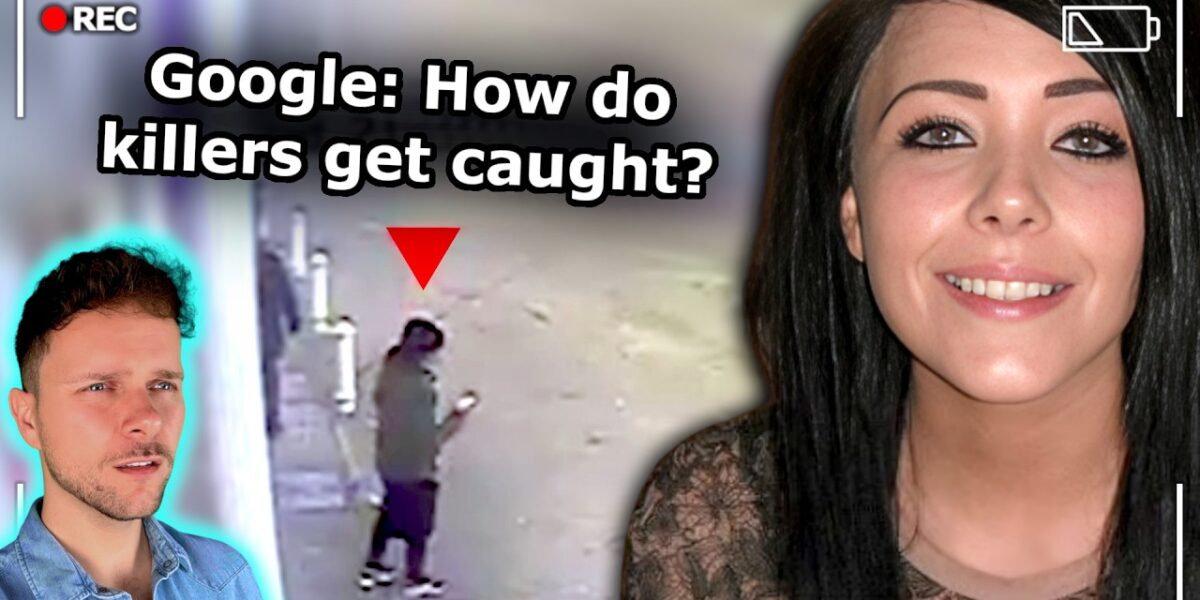
Gerissa’s movements became increasingly erratic and were captured by surveillance cameras across Birmingham. She was seen cycling with a suitcase, visiting a police station claiming her phone needed charging, and later purchasing cleaning supplies and a sleeping bag from a discount store. A taxi driver, sensing her unease, eventually abandoned her. In a moment of profound misjudgment, Gerissa called the police, claiming the driver had stolen her bag, then backtracking when asked about its contents. Her subsequent journey by train to Culford in the Forest of Dean was also recorded. There, she made more incriminating Google searches on Phoenix’s phone: “How do killers get caught?”, “Can bodies burn to ashes with petrol?”, and “What happens when you burn a body with petrol?” She camped by the suitcases for days, unable to complete her plan to bury or burn the remains.
Justice and Lingering Questions
Her journey back towards Birmingham involved refilling jerry cans with fuel. She then hired Mahesh Soretier, a man found via Gumtree, to drive her back to the Forest of Dean. At the quarry entrance, she asked him to wait while she retrieved something, never returning. Concerned, Mahesh began searching for her, leading to the fateful call by a neighbor that brought the police back to the quarry. The discovery of the human remains in the suitcases led to the arrest of both Gerissa and Mahesh.
During questioning, Gerissa’s story was a tangle of contradictions. Mahesh, however, quickly established his innocence as merely a hired driver. The investigation unearthed further damning evidence: a blood-stained hacksaw in Gerissa’s refuge room and the extensive digital trail of her Google searches and online impersonation. In April 2021, Gerissa’s trial began. The prosecution presented the overwhelming evidence, highlighting that Phoenix could have survived for up to 12 hours had she received medical attention. Gerissa’s defense focused on her history of trauma, mental health struggles, and exploitation, not denying her actions but seeking to explain them.
Phoenix’s family delivered heartbreaking victim impact statements, their lives irrevocably shattered. The judge deemed Gerissa a “very dangerous woman” and described the crime as “callous, calculating, and evil.” She was sentenced to life in prison with a minimum term of 23 years and six months.
The case prompted a review of safeguarding procedures in Birmingham’s housing providers and charities. It also underscored the critical need for better communication between mental health services and housing providers. Phoenix’s death, preventable at multiple stages, stands as a tragic testament to the devastating consequences of unchecked obsession and systemic failures. The refuge, intended as a sanctuary, became the scene of her final, desperate hours, a stark reminder of how easily vulnerability can be exploited when safety nets fail.
Source: Nation's Dumbest Killer Exposes Her Crimes Through Google (YouTube)

Related Articles

TV Stars’ Dark Secrets: Shocking Crimes Revealed!
Beloved TV stars have been involved in shocking real-life crimes, from sexual assault and fraud to murder. This article explores the disturbing cases of figures like Bill Cosby, Danny Masterson, and the Chrisley family. These scandals shattered public illusions and brought severe legal consequences.


Teens Planned Horrific Ritual Sacrifice To Resurrect Killer
Two Florida high school students, Isabelle Valdez and Lois Liippard, were arrested for allegedly plotting a ritual sacrifice to resurrect mass killer Adam Lanza. An anonymous tip to Fortify Florida exposed their disturbing obsessions and a detailed murder plan targeting a fellow student.


Shoe Print Unmasks Killer in Brutal Highway Murder
A chilling discovery on a secluded North Carolina road led investigators down a path of obsession and brutal violence. A single shoe print on a victim's sweatshirt became the key to unlocking the truth behind Kim Medlin's murder.