Iran Strikes Gulf, Israel Amid New Leader’s Rise; Oil Prices Surge
Iran's escalating conflict with Israel and Gulf neighbors, coinciding with the rise of its new Supreme Leader, has sent shockwaves through global markets. Oil prices surged as the Strait of Hormuz became a focal point of tension, while U.S. markets reacted to mixed signals from President Trump regarding the war's duration. Economic concerns mount as fears of stagflation grow.

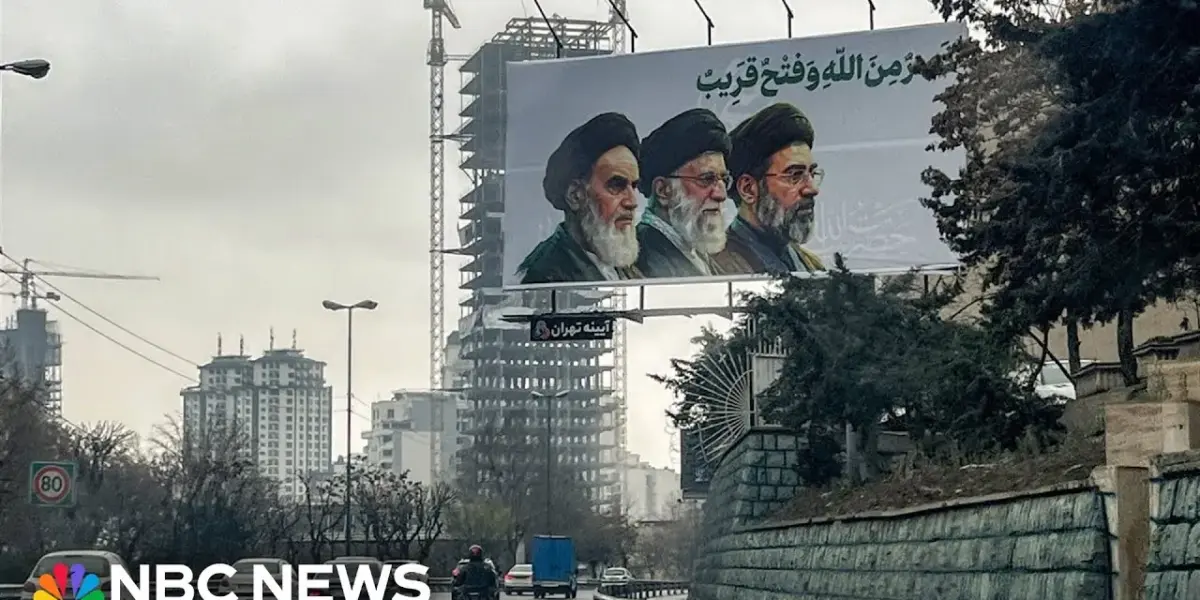
Middle East Conflict Escalates Amidst Leadership Transition
The ongoing conflict in the Middle East intensified this Tuesday morning, marked by Iran’s missile and drone strikes on critical infrastructure in neighboring Gulf states and Israel. These actions coincide with celebrations in Iran for its new Supreme Leader, Mojtaba Khamenei, son of the recently assassinated Ayatollah Ali Khamenei. The strikes targeted vital civilian locations including power plants, hotels, airports, and data centers, signaling a broader regional destabilization.
US Mourns Fallen Soldier, Oil Prices Spike
Back in the United States, Vice President J.D. Vance attended the solemn Dignified Transfer ceremony for Sergeant Benjamin N. Pennington, the seventh U.S. Service member killed in the escalating conflict with Iran.
Sergeant Pennington, a member of the Army’s 1st Space Battalion and 1st Space Brigade, hailed from Glendale, Kentucky, and died at Prince Sultan Air Base in Saudi Arabia. The conflict’s economic repercussions were starkly felt as crude oil prices surpassed $100 a barrel for the first time since 2022. While prices saw a slight pullback after President Trump’s remarks suggesting an imminent end to the war, mixed signals from the administration have kept markets on edge.
Israel Faces Renewed Attacks, Cautious Stabilization
From Israel, NBC correspondent Matt Bradley reported a situation that, while somewhat stabilizing, remains fraught with the realities of war. “What we’re seeing here now is a somewhat stabilizing situation, but one that’s still surrounded by war,” Bradley stated. “We saw that there were actually two deaths yesterday here in Israel from Iranian ballistic missiles and projectiles.
Those are the first deaths we’ve seen in more than a week.” He noted that while alerts continue, the ferocity and number of missiles per salvo have decreased, making evasion of Israel’s air defenses easier. Injuries, however, remain in the hundreds, with the majority occurring while people rushed to shelters, experiencing panic attacks, heart conditions, or motor vehicle accidents triggered by the sirens.
New Supreme Leader’s Ascent and International Reaction
The appointment of Mojtaba Khamenei as Iran’s new Supreme Leader has drawn international attention, though Israel has remained largely quiet on the matter. “This was something that was widely anticipated even long before October 7th, and the attacks on Iran,” explained Bradley. “Over the past couple of years, Mojtaba Khamenei was the heir apparent.” The appointment is ideologically contentious, as Iran’s constitution expressly forbids inherited succession, a direct reaction to the regime that ousted the Shah’s father-son rule.
President Trump has expressed his displeasure, stating, “I’m not happy. He’s also said that, you know, this is something that he was against.” Experts had warned that the rise of a hardliner close to the Iranian Revolutionary Guard Corps, like Mojtaba Khamenei, could hinder any potential overtures toward the West or curb Iran’s nuclear program.
Gulf States Under Pressure, Disrupting Global Travel
Raf Sanchez, reporting from London, highlighted the impact of Iran’s strikes on its Gulf Arab neighbors. “The most obvious impact is just this worldwide travel chaos that you’re seeing. Hundreds of flights canceled, thousands and thousands of passengers, including Americans, stranded, unable to get where they’re trying to go,” Sanchez said.
Dubai, the world’s busiest international airport, has seen significant disruptions. Iran’s strategy appears aimed at creating chaos for its neighbors, countries like the UAE, Bahrain, Qatar, and Saudi Arabia, which have largely been insulated from regional violence.
“This seems to be a deliberate Iranian strategy, whether it is an effective strategy. The jury is still out,” Sanchez observed, suggesting Iran hopes to pressure Washington into ending the war by targeting civilian infrastructure and utilizing low-cost drones that have proven difficult for air defenses to counter.
Strait of Hormuz Standoff and Oil Market Volatility
The conflict’s potential to disrupt global oil supplies, particularly through the Strait of Hormuz, remains a critical concern. Iran has threatened to block oil exports if attacks continue, a move President Trump has warned against. “So we saw oil prices yesterday spiking to nearly $120 a barrel.
They came back down. They’re now a little bit below 90,” Sanchez reported. “And that is in response to President Trump indicating that the war may be close to concluding.” However, the mixed signals from the President have left the market uncertain.
Caleb Silver, Editor-in-Chief of Investopedia, elaborated on the market’s reaction: “It’s all about headline risk. And the stock market is moving with these headlines or whatever the the President says or doesn’t say, and so do oil prices.” Silver explained that oil prices trade on future expectations, and any perceived continuation of chaos in the Strait of Hormuz could send prices soaring again. He noted that for every dollar move in oil, gasoline prices see a 2 to 3 cent change, and gas prices are already up approximately 30% from a month ago.
Stagflation Fears Mount as Economy Faces Headwinds
The escalating geopolitical tensions and rising oil prices are fueling concerns about stagflation – a combination of high inflation, slow economic growth, and rising unemployment. “Stagflation… Is where you have higher inflation, rising prices, slower growth and slowing employment,” Silver explained.
He pointed to the recent loss of 92,000 jobs in the U.S. and rising prices, exacerbated by oil’s critical role in supply chains and derivative products like plastics and fertilizers. Diesel prices, in particular, have impacted farmers, truckers, and airlines, all heavily reliant on this fuel.
Federal Reserve in a Tight Spot
The current economic climate places the Federal Reserve in a difficult position. “They’re stuck in a hard place because the labor market is one thing that they’re super concerned about. And that has been slowing, undeniably,” Silver noted.
Lowering interest rates to stimulate growth could exacerbate inflation, already a concern due to rising oil prices. Consequently, the Fed is likely to maintain its current stance, awaiting more secure data and clarity on the war’s trajectory.
President Trump’s Shifting Stance on the Conflict
Sahil Kapur, Senior National Political Reporter for NBC News, analyzed President Trump’s seemingly inconsistent statements regarding the war. “Mixed messages and inconsistent statements. The President did not put a timeline on this war in terms of when it will end, and those watching the speech for clues will probably come away more confused after watching it,” Kapur observed.
While Trump called the war a “short-term excursion” and suggested it was nearing completion, he also issued threats of intensifying strikes, particularly if Iran threatened the Strait of Hormuz. His statement, “I think you could say both,” in response to whether the conflict was ending soon or just beginning, highlights the ambiguity.
Unsubstantiated Claims Regarding School Bombing
President Trump has also faced backlash for repeatedly making an unsubstantiated claim that Iran was responsible for bombing a school, resulting in over 170 deaths, including children, on the first day of the war. Experts suggest evidence points to a U.S. Tomahawk missile strike. When questioned, Trump stated, “I haven’t seen it.
And I will say that the Tomahawk… Is used by, you know, sold and used by other countries.” However, Senator John Kennedy of Louisiana acknowledged, “It was terrible. We made a mistake.
Other countries do that sort of thing intentionally, like Russia. We would never do that.” Other senators are calling for a full investigation.
Congressional Oversight and Legal Questions
The Senate Armed Services Committee is expected to hold a closed-door briefing on the ongoing situation in Iran. Senators have publicly expressed a need for clarity on the war’s plan, strategy, and duration. Key questions include the potential need for additional funding from Congress and the legality of the military actions, particularly concerning the President’s authority to initiate such operations without explicit congressional approval.
Spring Break Travel Disruptions Amid Government Shutdown
Separately, the start of the spring break travel season is being hampered by significant disruptions at airports nationwide. A partial government shutdown has led to TSA officers working without pay, resulting in a surge of unscheduled absences.
“They’re just political footballs, basically, that are used as leverage points for political battles that they have nothing to do with,” commented one TSA officer. With many working paycheck to paycheck, the missed paychecks are creating financial hardship and impacting the availability of essential personnel.
ISIS-Inspired Attack Thwarted in New York City
In New York City, authorities successfully thwarted an attempted bombing outside the residence of Mayor Zohran Mamdani. Two teenagers from Pennsylvania, who allegedly pledged allegiance to ISIS, were arrested and now face federal terrorism and weapons charges. “This was not random violence.
This was a planned attack motivated by extremist ideology,” stated the FBI. The suspects are accused of igniting two improvised explosive devices (IEDs) intended to detonate in a crowd.
One suspect allegedly wrote a message declaring, “I pledge my allegiance to the Islamic State. Die in your rage.” The NYPD has stated there is no current information linking this incident to the conflict in Iran.
Severe Storms Threaten Large Swaths of the US
Weather forecasts indicate a significant risk of severe storms across a large portion of the United States. “We’ve got the chance for some of those stronger storms to develop, and it’s for a good chunk of the country,” reported meteorologist Angie Lassman.
An enhanced risk of severe weather, including the potential for strong tornadoes, hail, and damaging wind gusts, covers areas from the Southern Plains to the Ohio Valley, impacting major cities like Chicago, St. Louis, and Dallas. The threat is expected to continue into the coming days, with potential for heavy rain and flooding, and even a lingering possibility of wintry mix in some regions.
Source: This Morning’s Top Headlines – March 10 | Morning News NOW (YouTube)

Related Articles
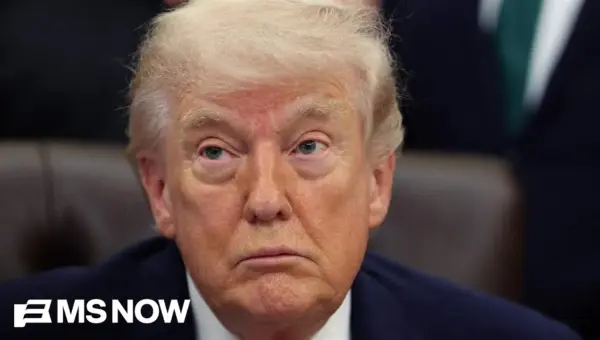
Trump Claims Iran Lacks Clear Leadership Amid War
President Trump claims Iran lacks clear leadership amid ongoing war, a statement disputed by experts. Meanwhile, economic pressures mount globally and domestically, creating a complex situation for the White House. The effectiveness of current strategies and the president's focus remain subjects of debate.

Oil Prices Surge as Iran Seizes Ships, Disrupts Trade
Tensions in the Strait of Hormuz have escalated, with Iran seizing commercial vessels and the U.S. blockading oil exports. This dual pressure is driving oil prices above $103 per barrel and threatening global supply chains. Despite rising risks, stock markets remain surprisingly resilient, buoyed by AI optimism and expectations of a swift resolution.
US Mulls Iran Uranium Removal: Military Options Risky, Diplomacy Key
The U.S. faces a difficult choice regarding Iran's enriched uranium stockpile, with military options for removal or destruction posing significant safety and security risks. Diplomacy is highlighted as the safest path, though Iran's insistence on its right to peaceful enrichment and perceived international double standards complicate negotiations.