Oil Price Shock Looms as Strait of Hormuz Closure Threatens Global Economy
The closure of the Strait of Hormuz has sent oil prices soaring, triggering fears of a global recession and highlighting the UK's economic vulnerability. Meanwhile, debates continue over jury trials and civil service accountability.

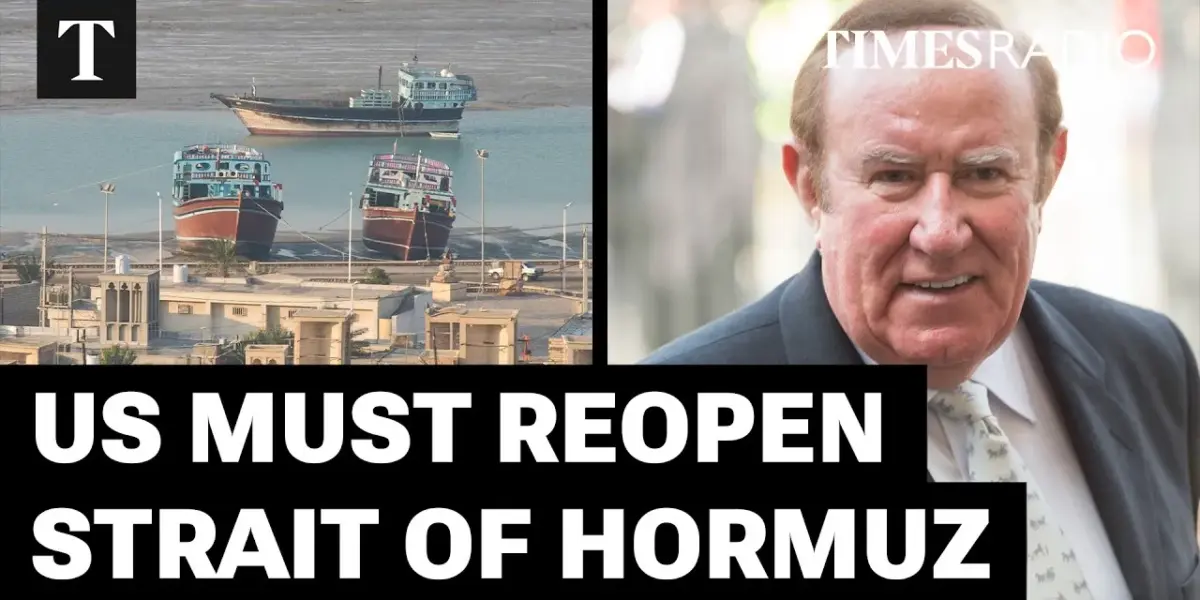
Global Markets Brace for Impact as Oil Prices Surge Amid Strait of Hormuz Blockade
The global economy is facing significant headwinds as oil and gas prices skyrocket, primarily due to the ongoing conflict and the unprecedented closure of the Strait of Hormuz. The situation, now in its second week, has raised serious concerns about long-term economic stability, with potential ramifications including rising interest rates and the risk of recession, echoing historical crises of the 1970s.
Trump’s ‘Peace Bid’ and the Economic Gamble
While U.S. President Donald Trump has characterized the current situation as a short-term bid for peace, the rising cost of energy is a price many economists and analysts believe is too high to pay, especially with no clear end in sight. Andrew Neil, in a recent discussion, expressed skepticism about the duration of the crisis, stating, “The problem is we don’t know if it’s going to be short-term or not. I mean, this does seem at the moment war without end.” He highlighted that the longer oil and gas prices remain elevated, the greater the danger to Western and Asian economies.
The core of the issue lies in the potential for prolonged economic disruption. “The danger is will be seen in higher prices which will translate into higher interest rates which then runs the risk as it happened in ’73 and ’79 of recession,” Neil explained, referencing past economic downturns triggered by oil shocks.
Iran’s Resilience and the Strait of Hormuz Conundrum
Despite facing significant pressure, the Iranian regime appears to be entrenched, with no signs of internal uprising or a shift in its foreign policy. The appointment of a new leader, who reportedly has closer ties to the Islamic Revolutionary Guard Corps (IRGC), suggests a continuation of the current stance. “There is nothing to suggest that Iran will change its tune anytime soon,” Neil observed.
The closure of the Strait of Hormuz, a vital chokepoint for global oil transport, marks a significant escalation. “This is the first time it’s ever been closed. It wasn’t closed in previous Gulf Wars.
It wasn’t even closed in the Iran-Iraq war,” Neil pointed out. This move has created a backlog of approximately a thousand ships laden with oil and gas, unable to proceed, a situation that has caught American strategists off guard.
The Missing American Plan and Britain’s Vulnerability
A critical flaw in the U.S. Strategy appears to be the lack of a clear plan to reopen the Strait of Hormuz. “Where is the American plan to get that straight open?
After all, we have a massive armada, the Americans there. Why are they not using that to get the straight open?” Neil questioned, emphasizing the significant naval presence that seems underutilized in resolving the blockade.
The United Kingdom, in particular, is deemed more vulnerable than many other Western economies to the economic fallout. Neil elaborated on Britain’s precarious position: “Our problem is that if two things are an issue here.
One, if we’re thrown into a recession and we’re not that far away from that. And secondly, if the government has to spend tens of billions of pounds shoring up our gas bills again, our fiscal position is very weak and basically not strong enough to survive either of these two things.” He expressed concern that the bond markets are already scrutinizing vulnerable fiscal positions, potentially driving up the cost of debt.
Energy Security Concerns and Government Preparedness
Concerns have been raised about the UK’s energy reserves, with comparisons drawn to China’s extensive oil and gas stockpiles. While the government disputes claims of having only two days of gas supply, the reality is that the UK’s reserves are significantly lower than those of many other nations. Neil cautioned, “We have two days of gas supplies.
Now, we do get gas in by pipeline. We can get more that way.”
The increased reliance on imported Liquefied Natural Gas (LNG) from regions like Qatar, due to Europe’s broader energy needs following the conflict in Ukraine, further exacerbates the situation. “We are more dependent on that region than we were before,” Neil stated. He expressed doubt about the government’s foresight in securing alternative energy sources should gas supplies from the Gulf become jeopardized, estimating a “50% chance that they are going to be in jeopardy for the foreseeable future.”
The King’s Visit and Diplomatic Nuances
Amidst these geopolitical tensions, the planned state visit of the British King to Washington has become a point of contention. While some, like the Liberal Democrats, have called for its cancellation, Neil argues for its continuation. “If we were to cancel now, it would be almost a declaration of diplomatic war against the United States with unfathomable consequences,” he warned.
Neil believes the monarchy’s soft power could be instrumental in navigating the difficult Anglo-American relationship. “Rather than cutting it off, the knee-jerk reaction…
Perhaps we should use the power, the soft power of the monarchy, particularly in Donald Trump’s eyes, and use it to keep the show on the road and to show that even where there are disagreements… Anglo-American relations, even in a time of disagreement can continue to function well and we can remain friends.” The King’s visit, he suggests, can serve as a symbol of this enduring alliance.
Debate Over Jury Trials and the Future of Justice
A separate, yet significant, debate is unfolding regarding the potential reform of jury trials in the UK. Critics argue that the current system can be flawed, citing instances of jurors lacking understanding of legal concepts like reasonable doubt or rushing to judgment due to external pressures.
One message shared during the discussion read, “The cases were fairly clear-cut. However, one of the deliberations started after lunch and one member of the jury said, ‘Quick, let’s just decide they’re guilty so I can get on that earlier bus.'”
Conversely, proponents emphasize the historical and constitutional significance of jury trials. “The jury system has been part of this country for time immemorial. It is almost part of our constitution.
It’s what makes us different from other European countries,” Neil asserted. He stressed the need for a broad public debate on any potential changes, rather than implementing them as a means to address court backlogs.
The discussion also touched upon the unique ability of juries to deliver ‘not guilty’ verdicts even when the law might suggest otherwise, a power judges and magistrates do not possess. This, some argue, allows for a form of jury nullification, ensuring justice in cases where the law might be perceived as unfair or misapplied by the state.
Civil Service Efficiency and Public Sector Employment
Finally, the conversation addressed criticisms regarding the perceived inefficiency and job security within the civil service. Reports suggest that civil servants are significantly less likely to be sacked than to die in post, with dismissal procedures involving numerous steps and appeals. Neil acknowledged that it is indeed difficult to be fired from the civil service, noting that employees can often remain in their posts for extended periods, even if their performance is subpar, and may also take more sick days than their private sector counterparts.
The comparison was drawn to the French system, where joining the civil service is often seen as a highly desirable career path due to its job security, generous pensions, and decent pay. This perception raises questions about accountability and performance management within the public sector, suggesting a need for reforms to ensure greater efficiency and responsiveness.
Source: The 'Massive US Armada' Must Reopen Strait Of Hormuz | Andrew Neil (YouTube)

Related Articles

Russia’s Economy Shrinks 1.8% Amidst Sanctions
Russia's economy contracted by 1.8% in early 2026, driven by falling energy revenues and the impact of sanctions. While temporary oil waivers offer short-term relief, underlying structural issues in the energy sector and a widening budget deficit point to a challenging economic outlook for the country.

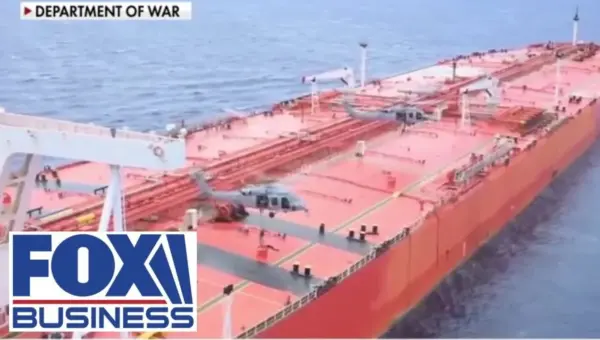
US Navy Seizes Sanctioned Oil Ship in Indian Ocean
The U.S. Navy seized a sanctioned oil tanker carrying 1.9 million barrels of crude in the Indian Ocean, adding tension to global oil markets. This occurs as a U.S.-Iran cease-fire is set to expire, keeping traders on edge.


Global Oil Shortage Hits Asia First, Fueling Price Shocks
Global oil supplies are dwindling, with mid-to-late April targeted as a critical point. Asia has been hit hardest, experiencing drastic delivery cuts and soaring fuel prices. Nations worldwide are implementing emergency measures to conserve fuel and manage shortages.