Patel’s Purge: Iran Experts Fired, National Security Compromised
Reports suggest Kash Patel fired an entire counterintelligence team specializing in Iran, allegedly due to mishandling classified documents evidence. However, the lack of evidence points to political motivations, potentially compromising national security and U.S. intelligence capabilities.

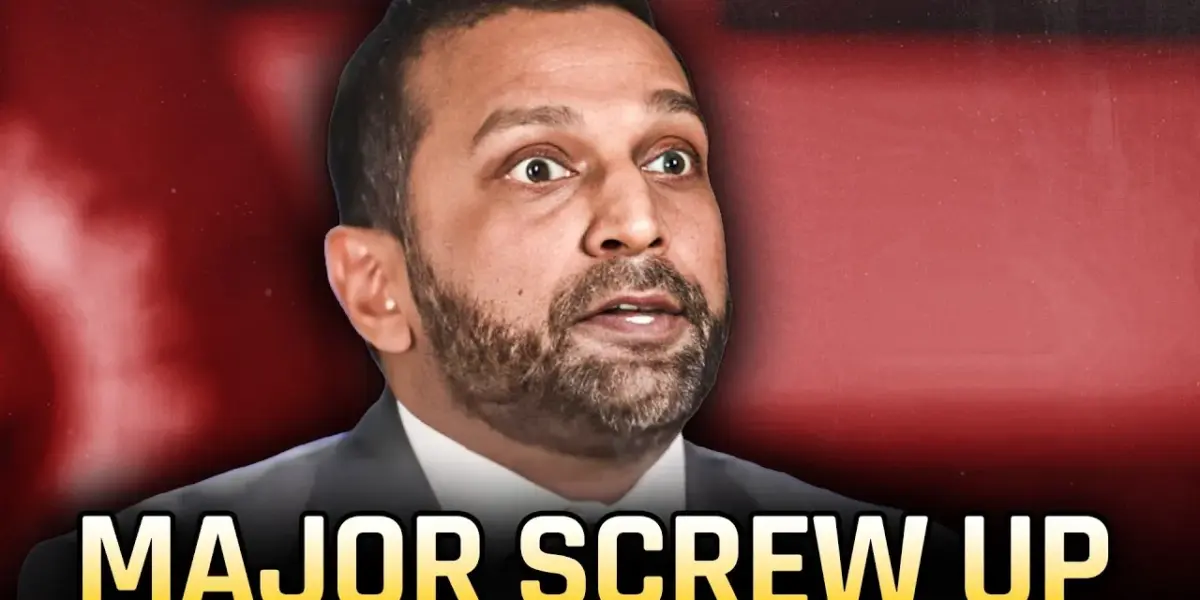
Patel’s Purge: Iran Experts Fired, National Security Compromised
The recent dismissal of an entire counterintelligence team specializing in Iran, reportedly orchestrated by Kash Patel, raises profound questions about national security, the politicization of federal agencies, and the personal motivations driving policy decisions. While the stated reason for the firings centers on alleged evidence mishandling in the investigation into Donald Trump’s retention of classified documents, the lack of substantiating evidence suggests a more politically charged motive: silencing or removing individuals perceived as a threat to Trump’s narrative.
The Allegations and the Fallout
According to reports, Kash Patel terminated the counterintelligence team tasked with handling the classified documents investigation. The justification provided was that these experts had mishandled evidence.
However, the transcript asserts that no evidence has been presented to support this claim. This absence of proof leads to a logical inference: the firings were not about procedural errors but about perceived disloyalty or actions that could potentially embarrass Donald Trump.
The individuals removed were not just any government employees; they were described as experts on Iran, possessing specialized knowledge crucial for understanding complex geopolitical situations. Their role in the classified documents investigation was specific and logical: the documents themselves pertained to counterintelligence initiatives, goals, plans, and operations, making a team with such expertise uniquely qualified to handle them.
A Pattern of Politicization?
This event is framed within a broader context of what the transcript suggests is a pattern of actions driven by Donald Trump’s personal insecurities and a desire to avoid humiliation. The argument presented is that Trump’s perceived need to manage his public image and avoid embarrassment leads to decisions that have far-reaching negative consequences, affecting not only the United States but the global community.
The transcript posits that Trump’s alleged history of humiliation, both in his adult life and particularly concerning the classified documents, has fueled these actions. The consequence, according to this view, is that the entire nation, and by extension the world, suffers. The dismissal of the Iran counterintelligence team is presented as a prime example of this, crippling the intelligence capabilities of the United States.
Historical Context and Counterintelligence
The importance of specialized counterintelligence teams is significant. These units are designed to protect national security by identifying and neutralizing threats, both foreign and domestic.
Their work often involves highly sensitive information and requires deep expertise in specific regions or operational areas. The team in question, with its focus on Iran, would have been invaluable in navigating the intricate geopolitical landscape of the Middle East.
The investigation into the mishandling of classified documents is inherently a counterintelligence matter. Documents containing sensitive national security information, especially those related to intelligence operations, are precisely the kind of material that requires careful handling and expert analysis to prevent compromise. The decision to remove the very experts best suited to assess these documents, based on unsubstantiated claims, is therefore seen as particularly damaging.
Why This Matters
The implications of this alleged purge are significant. Firstly, it raises serious concerns about the integrity of federal investigations and the potential for political interference. When personnel decisions are based on loyalty or the avoidance of personal embarrassment rather than objective criteria, the effectiveness and credibility of government institutions are undermined.
Secondly, the weakening of specialized intelligence expertise, particularly concerning a volatile region like Iran, leaves the U.S. government less equipped to make informed policy decisions. This can lead to miscalculations, increased risks, and a diminished capacity to respond to emerging threats.
Thirdly, it contributes to a broader trend of politicizing national security. When intelligence agencies and their operations become battlegrounds for political disputes, the fundamental mission of protecting the nation is compromised. This erosion of trust and capability can have long-lasting consequences.
Trends and Future Outlook
The situation described highlights a concerning trend of political figures leveraging their positions to influence or dismantle institutions that may hold them accountable or reveal inconvenient truths. The transcript suggests that this behavior, if unchecked, could lead to a further degradation of governmental competence and a rise in decisions driven by personal vendettas rather than national interest.
The future outlook depends heavily on whether accountability mechanisms are strengthened and whether political leaders prioritize institutional integrity over personal political gain. If such actions become normalized, the United States could face a future where its intelligence apparatus is hollowed out by internal political conflicts, leaving it vulnerable on the global stage.
Conclusion
The alleged dismissal of the Iran counterintelligence team by Kash Patel, as described in the transcript, represents a deeply troubling development. If true, it signifies a willingness to sacrifice critical national security functions for perceived political expediency and personal vindication. The lack of transparency and evidence supporting the official reason for the firings only deepens these concerns, suggesting that the pursuit of political advantage may have come at the direct expense of America’s ability to understand and navigate complex international challenges.
Source: Kash Patel Created a HUGE National Security Issue (YouTube)

Related Articles


Ex-MI6 Chief Slams “Scapegoat” Tactics in Mandelson Vetting Scandal
Former MI6 chief Sir Richard Dearlove has criticized the handling of Peter Mandelson's vetting process, suggesting Sir Oliver Robbins was made a scapegoat. Dearlove argued that national security concerns should have prevented the appointment, and Robbins should have refused to compromise.

Memo Reveals Secret Push for UFO Czar in Trump White House
A leaked memo from Luis Elizondo to President Trump reveals a proposal for a White House 'UFO Czar' to manage emerging technologies and UAP. The document highlights concerns over drones and the need for better government coordination. Despite bureaucratic hurdles, some within the government are reportedly taking these issues seriously.


Trump’s Iran Standoff Exposes Weakness, Kash Patel Lawsuit Falters
President Trump's foreign policy in Iran faces scrutiny amidst claims of unpredictable actions and hindered diplomacy. Meanwhile, Kash Patel's defamation lawsuit against The Atlantic encounters significant legal hurdles, raising questions about public figures and the media.