Sanders Declares Trump A Pathological Liar: A Deep Dive
Senator Bernie Sanders labels Donald Trump a "pathological liar," distinguishing him from traditional conservatives. Sanders argues Trump's rhetoric lacks consistency and is used to serve personal purposes, leading to a dangerous normalization of falsehoods that impacts policy and public trust.


Sanders Declares Trump A Pathological Liar: A Deep Dive
Senator Bernie Sanders, a prominent voice in progressive politics, has leveled a stark accusation against former President Donald Trump, labeling him a “pathological liar.” This characterization, delivered with uncharacteristic directness, goes beyond typical political hyperbole to suggest a deeper, more fundamental issue with Trump’s communication and its impact on the political landscape. While Sanders acknowledges that not all Republicans fall into this category, his specific focus on Trump highlights a perceived departure from conventional political discourse and a pattern of behavior that, in Sanders’ view, undermines trust and policy coherence.
Distinguishing Trump from Traditional Conservatism
Sanders’s assertion is carefully nuanced. He explicitly states that he does not apply this label to Republicans in general. He draws a distinction between conservatives, with whom he may disagree vehemently on policy but can respect their underlying beliefs, and Trump.
“They’re conservatives. They believe what they believe,” Sanders notes, implying a foundation of principle, however divergent from his own. This sets Trump apart, suggesting that his pronouncements are not rooted in a consistent ideology or set of convictions, but rather in immediate self-interest or expediency.
The senator’s core argument is that Trump “will say anything at any time to serve his own purposes.” This implies a fluidity and opportunism in Trump’s rhetoric that Sanders finds particularly alarming. Unlike politicians who may bend the truth or spin facts within a discernible ideological framework, Trump, according to Sanders, operates without such constraints, making his statements unreliable and unpredictable.
The Normalization of Extreme Rhetoric
A significant concern raised by Sanders is the societal impact of such constant, unmoored pronouncements. “Sadly, we get used to the crazy things that he says,” he observes.
This points to a dangerous trend of normalization, where extreme or demonstrably false statements become so frequent that they cease to shock or even register as problematic. This desensitization, in Sanders’s view, erodes the public’s capacity for critical evaluation and makes it harder to hold political figures accountable for their words and actions.
The implication is that this normalization serves the very purposes Sanders attributes to Trump’s lying – to distract, to confuse, and ultimately, to advance personal or political agendas without facing substantive opposition. When the outrageous becomes commonplace, the space for reasoned debate and fact-based policy discussion shrinks considerably.
The Disconnect Between Rhetoric and Reality
Sanders provides a concrete example to illustrate his point: Trump’s claims of supporting affordability versus his policy actions. “He says he’s for affordability, but he gives tax breaks to the rich and sees health care costs sore, groceries sore, gas prices sore, etc., for it.” This highlights a perceived hypocrisy and a fundamental disconnect between Trump’s stated intentions and the tangible outcomes of his policies. While Trump might claim to champion the common person, Sanders argues that his actions, such as tax cuts favoring the wealthy, disproportionately benefit those already well-off, while the cost of living rises for everyone else.
This critique taps into a broader debate about economic populism and the effectiveness of different policy approaches. Sanders, a lifelong advocate for policies aimed at reducing economic inequality and assisting working families, sees Trump’s economic agenda as fundamentally at odds with such goals, despite any populist rhetoric employed. The senator’s hope is that even his Republican colleagues will recognize this discrepancy and the unreliability of Trump’s pronouncements.
Why This Matters
The accusation of being a “pathological liar” is not merely an ad hominem attack; it strikes at the heart of democratic discourse. Trust in political leaders and institutions is a cornerstone of a functioning democracy.
When a significant portion of the electorate perceives a leader as fundamentally untrustworthy, it can lead to widespread cynicism, disengagement, and a fractured public sphere. Sanders’s concern about normalization suggests that this erosion of trust is not a temporary byproduct of a particular presidency but a potentially lasting damage to the political culture.
The ability to discern truth from falsehood is crucial for informed decision-making by voters. If a leader can consistently present a distorted reality, voters may make choices based on misinformation, leading to policies that do not serve their best interests, as Sanders argues is the case with Trump’s economic policies.
Historical Context and Future Outlook
The use of strong, accusatory language in politics is not new. Historical figures have often been accused of dishonesty or manipulation. However, the sheer volume and the perceived lack of adherence to any consistent narrative, as suggested by Sanders’s critique of Trump, may represent a shift.
The digital age, with its rapid dissemination of information and misinformation, has amplified the impact of such rhetoric. Social media platforms can create echo chambers where false narratives are reinforced, making it even more challenging to counter them with facts.
The future outlook hinges on the public’s and the media’s ability to resist the normalization of what Sanders terms “pathological lying.” It requires a renewed commitment to fact-checking, critical thinking, and holding politicians accountable for their words, regardless of their political affiliation. If the trend of accepting unsubstantiated claims continues, the quality of democratic debate and governance could be irrevocably damaged. Sanders’s direct challenge is a call to recognize and resist this dangerous normalization, urging a return to a political environment where truth and consistency, even amidst sharp disagreement, are valued.
Source: Bernie Sanders: "Trump is a pathological liar!" (YouTube)

Related Articles

Trump Risks Global Isolation Amid Economic Fears
As economic fears mount, the world may increasingly blame Donald Trump for potential global crises. Canada's move towards a more insular economy signals a potential global trend of nations seeking greater independence.
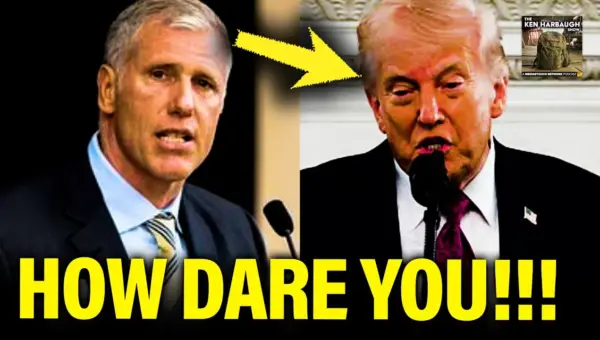
Trump Allies Misuse Faith, Offend Christian Base
Figures like Pete Hegseth and J.D. Vance, along with Donald Trump, are criticized for misusing religious language and symbols. Their actions, including a controversial prayer and lecturing the Pope, are seen as alienating Christian supporters and undermining faith traditions.

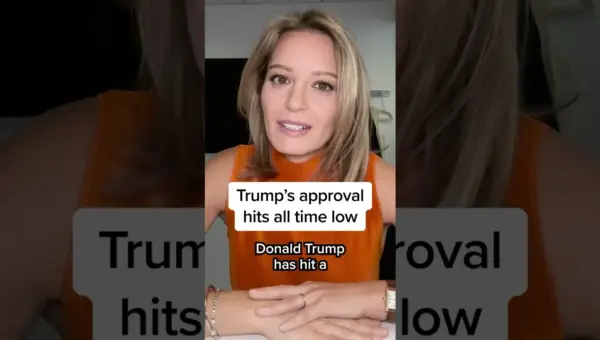
Trump Approval Plummets to Record Low Amid Voter Concerns
New polling data indicates Donald Trump's approval rating has fallen to its lowest point, hovering in the low-to-mid 30s. This decline is attributed to growing voter concerns over the economy, immigration, and foreign policy. The findings come at a critical time as the nation approaches the midterm elections.