Georgia Special Election: Can Democrats Flip GOP Seat?
Voters in Georgia's 14th Congressional District are participating in a special election to replace Marjorie Taylor Greene. A fractured Republican field and a strong Democratic contender, Sean Harris, raise the possibility of an upset in the traditionally conservative seat.

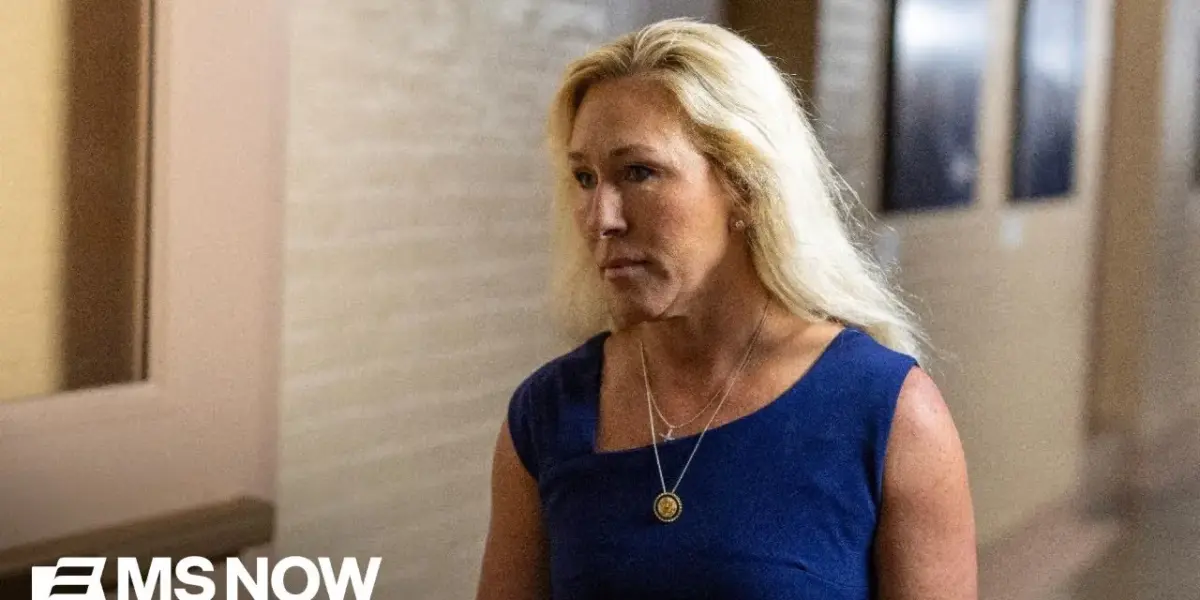
Georgia’s 14th District Faces Special Election Amidst GOP Divisions
Voters in Georgia’s 14th Congressional District are heading to the polls to select a replacement for firebrand Republican Marjorie Taylor Greene, a race that is proving to be more complex and potentially consequential than initially anticipated. With over a dozen candidates vying for the seat, the election is not only a critical test for the Republican party’s razor-thin House majority but also a significant indicator of shifting political landscapes in the state. A runoff is guaranteed if no candidate secures more than 50% of the vote, a scenario that analysts suggest could open the door for an unexpected Democratic victory.
Fractured GOP Field Fuels Democratic Hopes
Interviews with more than a dozen Republicans across the district reveal a party on edge, grappling with voter fatigue from fast-paced contests, lingering unease over former President Donald Trump’s influence, and, most significantly, a deeply fractured GOP field. This internal division, coupled with a strong Democratic contender, has raised concerns that even this heavily Republican-favored seat could be at risk.
Greg Blustein, senior political reporter for The Atlanta Journal-Constitution and an MSNBC political contributor, noted the palpable fear among Republicans in the district. “When you go to the 14th District, which is up in northwest Georgia, very conservative as you said, you hear it from activists saying Republicans have to mobilize or they could actually lose the seat,” Blustein stated. While former President Trump’s endorsement of Clay Fuller, a former prosecutor, has somewhat unified the Republican side, the special election dynamics remain inherently messy.
Unique Election Format and Democratic Contender
Georgia’s special elections are known for their unique format, which eschews traditional party primaries. Instead, approximately 20 candidates from all parties appear on a single ballot, competing for a spot in a runoff election. This open contest allows for considerable unpredictability.
In this particular race, the Democratic candidate, Sean Harris, a retired Brigadier General and cattle rancher, is anticipated to be the leading vote-getter in the initial tally. Harris previously ran against Marjorie Taylor Greene in 2020, securing over 30% of the vote, making it one of the most successful showings for a Democrat in the district’s recent history. He has maintained a consistent campaign presence, with signs and an office in the district’s center, and has refused entreaties to switch to the GOP, potentially appealing to swing voters with his own conservative streak.
“He’s already had, long before Marjorie Taylor Greene was going to step down, he had his campaign apparatus still going,” Blustein explained. “He has signs everywhere, a big office in the sort of center of the district in Rome, Georgia. So he is still out there.
He’s a retired U.S. Army officer who’s also refused entreaties to switch sides and switch to the G.O.P. So he has a sort of, you know, he has his own conservative streak that could appeal to swing voters.”
Harris is urging voters to give him a chance, promising to be accountable if they are unsatisfied after a few months in office.
Marjorie Taylor Greene’s Shifting Influence and 2028 Ambitions
Marjorie Taylor Greene has become a prominent, albeit controversial, voice within the MAGA movement, often highlighting internal party fractures and scrutinizing Trump’s adherence to his campaign promises. However, her influence among voters in her former district appears to be a mixed bag.
“Some voters, they’re loyal to her. They feel like she’s the future of politics in Georgia and beyond. And others feel betrayed.
They were stunned by her sudden decision last year to step down in January, and they’re angry. They feel like she betrayed Donald Trump,” Blustein observed. “So there’s a deep strain of Trump loyalty, but there’s also a desire for more of a maverick from some of the voters there.”
This dynamic makes the special election a crucial test of Donald Trump’s influence in Georgia, as his preferred candidate, Clay Fuller, faces an uncertain outcome. It also is an identity test for Republicans in Northwest Georgia: do they seek another maverick figure like Greene, or a more conventional representative?
Recent statements by Greene, including her public support for Tucker Carlson and criticism of Trump’s MAGA platform, have fueled speculation about her own political ambitions. “She tweeted, she posted, ‘I support Tucker. Trump doesn’t even know what MAGA is anymore and turned it into MIGA.
Trump is not America first. He’s donor first. Tucker would beat Trump if he ran for president and Trump tried to violate the Constitution and tried to run again for a third term,'” the transcript detailed.
Blustein commented on these moves, noting, “She’s been kind of across the map, right? She said things that have invigorated Democrats anti-Trump and she said things that would invigorate the far-right anti-Trump as well.” With her previous bids for governor and U.S. Senate being blocked, her 2028 ambitions remain a significant factor.
Broader Implications for Georgia and Midterms
The outcome of this special election could have broader implications for the upcoming midterm elections, particularly for vulnerable Democratic Senator Jon Ossoff, who is running for re-election in a state that Donald Trump won in 2020.
“The Democratic turnout is going to be essential. These are already low-profile, low-turnout affairs. It’s a special election.
There’s a lot of voters up in Northwest Georgia who don’t really know what’s even happening,” Blustein said. “There’s also a lot of Democratic turnout efforts.
This is a test, right? This is a sort of a litmus test for Democrats and see if their turnout machine can work.”
Ossoff, despite being considered one of the most vulnerable Democratic incumbents, has amassed a substantial war chest of $25 million and is benefiting from the fractured GOP field. Sean Harris, the Democratic candidate, is also hoping to leverage the consolidation of party elites and establishment support to achieve a strong showing.
What’s Next?
As the special election unfolds, all eyes will be on voter turnout, particularly among Democrats, and the extent to which the fractured Republican base can coalesce behind a single candidate. The results will offer crucial insights into the effectiveness of Trump’s endorsements, the internal dynamics of the MAGA movement, and the potential for Democratic inroads in traditionally Republican territory, setting a potential tone for the broader midterm elections in Georgia.
Source: An upset is ‘not out of the question’: Special election for MTG’s seat could flip blue (YouTube)

Related Articles
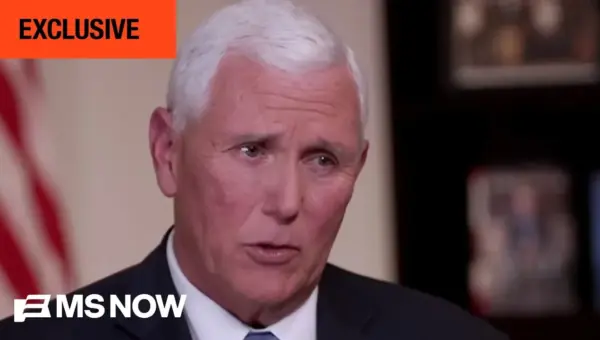
Pence: Vance Never Called; Criticizes Trump’s Tariffs
Former Vice President Mike Pence revealed he has never spoken with his successor, Senator J.D. Vance, in an exclusive interview. Pence also criticized former President Trump's use of tariffs, asserting that taxes and imposts must originate in Congress.

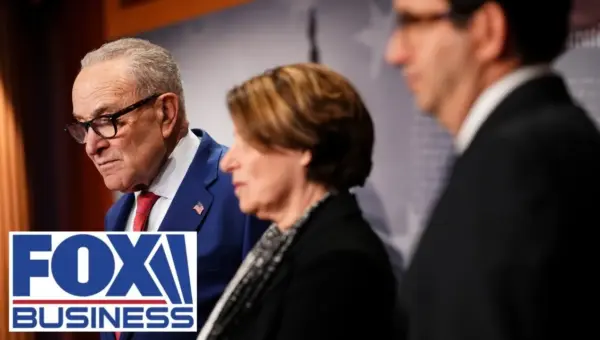
Democrats’ ‘Violent’ Anti-Israel Stance Dominates Policy, Polls Show
A growing number of Democrats are adopting a "violently anti-Israel" stance, which is seen as a key driver of party policy, according to analyst Liz Peek. Meanwhile, polls show widespread public support for voter ID reform, though it faces political hurdles in Congress. The Democratic party's platform appears largely focused on opposing Donald Trump, with approval ratings reflecting dissatisfaction.


Rand Paul Blasts War Powers Vote Blockade
Senator Rand Paul is criticizing Republican colleagues for blocking a War Powers Resolution aimed at limiting presidential military action. He argues that prolonged wars weaken the U.S. and that diplomacy, not force, is needed to achieve goals like preventing uranium enrichment. Paul also voiced concerns about aggressive redistricting practices potentially leading to political violence and a partisan government funding crisis.