Russia Blames US for Ukraine Peace Talk Failure
Russia is reportedly using Middle East conflicts to deflect blame for potential Ukraine peace talk failures, according to the Institute for the Study of War. Meanwhile, Ukraine is assisting the U.S. with drone defense, and controversy has arisen over the misrepresentation of Ukrainian drone technology on U.S. television.

Russia Leverages Middle East Tensions to Undermine Ukraine Peace Talks
The Kremlin is reportedly using the ongoing military operations in the Middle East, particularly involving the U.S. and Iran, as a strategic maneuver to lay the groundwork for blaming the United States should peace talks regarding Ukraine falter. According to a report by the Institute for the Study of War (ISW), Russian Foreign Minister Sergey Lavrov has sharply criticized U.S. Rhetoric and actions concerning operations against Iran.
Lavrov alleges that Washington is attempting to destabilize the Middle East and create divisions between Iran and Persian Gulf nations. He further expressed concern that the U.S. Conducts military operations against states with which it is simultaneously holding negotiations, citing strikes on Iran and Venezuela, and the potential for war between Israel and Iran in 2025.
Lavrov’s ‘Moderate’ Stance and Broader Kremlin Strategy
Analysts suggest that Lavrov’s seemingly moderate tone, while criticizing U.S. Actions, is a calculated message aimed at the Russian public and its allies, without overtly antagonizing the Trump administration. This approach is part of a broader Kremlin strategy. Other Russian officials have also amplified criticism of the United States, contrasting Russia’s perceived stability with U.S. Actions and aiming to discredit U.S. Mediation efforts in Ukraine.
Dmitry Medvedev, Deputy Chairman of Russia’s Security Council, has accused President Trump of conducting peace negotiations concurrently with military actions. Alexey Chepa, First Deputy Chairman of the State Duma Committee on International Affairs, indicated that while operations in Iran might not entirely derail Ukraine negotiations, Russia could begin to question the U.S.’s impartiality as a mediator.
Russia’s Balancing Act and Potential for Shifting Blame
The ISW report highlights that Moscow has consistently sought to delay and slow down peace negotiations on Ukraine. However, this strategy is complicated by the risk of new sanctions or other Western actions that could compel Russia toward genuine negotiations.
The increased criticism of the U.S. Following the commencement of U.S.-Israeli operations against Iran on February 28th may signal growing difficulties for Moscow in balancing its relationships with the U.S. and its own partners. Analysts believe Russia may utilize this sharp rhetoric against Washington to strategically shift responsibility for any future failure of the Ukraine peace talks onto the United States.
Ukraine’s Role and U.S. Drone Support
The next round of trilateral negotiations between Ukraine, Russia, and the United States has yet to be scheduled. Ukrainian President Volodymyr Zelenskyy expressed hope that recent events in the Middle East would not impact negotiations with Russia, though he later clarified that dialogue is currently postponed. Meanwhile, U.S. President Donald Trump has voiced dissatisfaction with Zelenskyy, alleging that the Ukrainian leader is obstructing a peace agreement with Russia.
In a separate development, President Zelenskyy has instructed Ukrainian specialists to be sent to the Middle East to assist U.S. forces in countering Iranian Shahed drones. This request stems from the U.S. Seeking Ukraine’s expertise in defending its bases and personnel against these drones, a threat Ukraine has extensive experience countering during the full-scale invasion.
Controversy Over Fox News Drone Footage
A segment on Fox News, discussing successful strikes in Iran, controversially featured footage of Ukrainian-intercepted drones, presenting them as advanced American AI-powered superweapons. While the segment’s developers, including host Jesse Watters and expert Brad Kalsivich, discussed the advantages of AI in processing intelligence and striking targets, the illustrative footage used was of the Ukrainian Stank interceptor drone.
The developers of the Stank drone, from the company Wild Hornet, acknowledged the international attention but emphasized the importance of proper attribution. They stated that the drone’s creation is the result of years of dedicated work by engineers and military personnel, and their achievements deserve recognition.
U.S. Seeks Chinese Cooperation on Oil and Russian Influence
The Wall Street Journal reports that the United States is considering urging China to reduce its purchases of Russian oil and instead increase its imports from the U.S. Treasury Secretary Scott Bessant is expected to raise this issue during upcoming discussions with his Chinese counterpart in Paris. Such a move could significantly weaken Russia’s economic standing and its ability to sustain the war in Ukraine.
The U.S. is also reportedly looking to persuade China to reduce its purchases of Iranian oil. While China currently receives Russian oil at a discount, shifting to more expensive American oil would present a considerable economic challenge and potentially strain Beijing’s relationship with the Kremlin.
Hungary’s Stance and Alleged Russian Interference
Hungarian Prime Minister Viktor Orbán has indicated that Budapest would suspend the transit of supplies vital to Ukraine until Kyiv resumes operations of the Druzhba oil pipeline. Orbán stated that Hungary would not provide financial support or approve Ukraine’s EU accession, citing threats to Hungarian farmers and the national economy. This comes after President Zelenskyy’s remarks suggesting potential actions against Hungary if it blocked a significant EU loan.
Orbán accused Ukraine of blocking oil supplies and threatened to resume pipeline operations by force. Investigative journalists, working with European security services, have reported that Russian President Vladimir Putin has instructed political strategists and military intelligence to interfere in Hungary’s upcoming parliamentary elections to ensure Orbán’s victory. This alleged operation, reportedly overseen by Sergei Kiriyenko, aims to manipulate public opinion through social media and other means, similar to alleged Russian interference campaigns in other countries.
Source: Kremlin issues urgent message to Kyiv! Ultimatum leaves everyone speechless. Putin is freaking out (YouTube)

Related Articles

US Navy Strikes Iranian Ship, Escalating Tensions
The US Navy has taken direct action against an Iranian cargo ship attempting to breach a blockade in the Gulf of Oman. The USS Sprunce fired upon and disabled the vessel, with US Marines subsequently boarding and securing it. This incident escalates regional tensions, with Iran reportedly viewing US military movements as signs of an impending invasion.

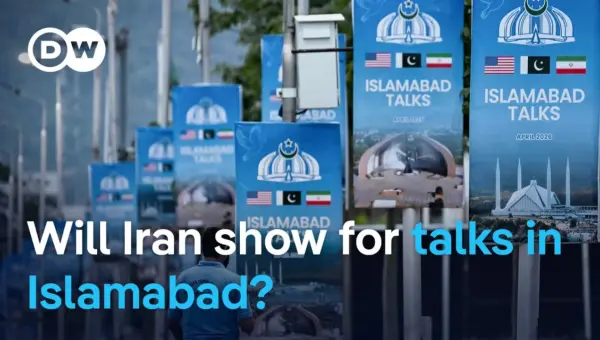
US, Iran Near Fragile Peace Talks Amid Tensions
The United States is sending a delegation to Islamabad for peace talks with Iran as a ceasefire nears expiration. While Iran demands trust and rejects U.S. negotiation tactics, experts remain skeptical about immediate progress. Key sticking points include Iran's enriched uranium stockpile and its missile capabilities, while both nations face significant economic pressures.

Russian CEOs Criticize Putin’s Grip on Power
Russian business leaders and youth are expressing growing discontent with President Putin's leadership, citing economic woes and a disconnect from reality. The head of a chemical plant, Cherepovets Azot, directly criticized the Kremlin following a Ukrainian drone strike on his facility. This sentiment of pessimism about Russia's future is reportedly widespread among younger generations, who feel stifled by internet restrictions and economic hardship.