Iran Strike Exposes China’s Deepest Fears: Regime Survival
The targeted strike in Iran has exposed deep-seated fears within China's leadership, triggering anxieties about regime survival, strategic miscalculations, and the precariousness of succession. Beijing is now grappling with the implications of a volatile geopolitical landscape and its potential impact on domestic stability.

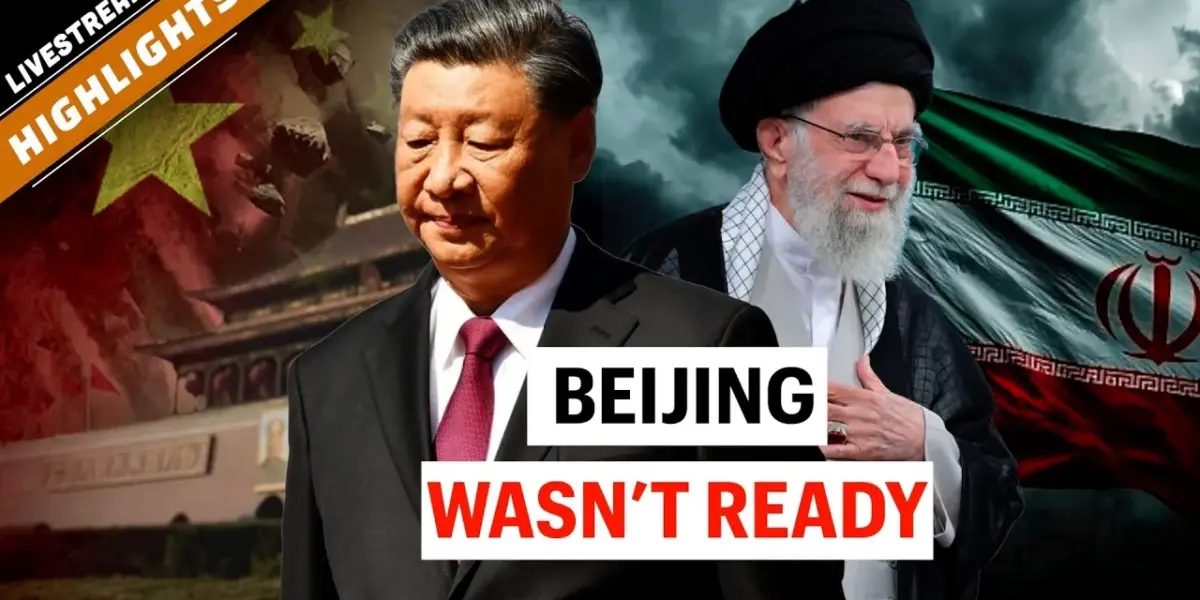
Iran Strike Exposes China’s Deepest Fears: Regime Survival
The recent targeted strike in Iran, which eliminated a key leader, has sent ripples far beyond the Middle East, exposing profound anxieties within China’s highest echelons of power. The incident, while seemingly distant, has triggered a complex internal reckoning for Beijing, forcing a re-evaluation of strategic assumptions, diplomatic protocols, and even the fundamental stability of its own political system.
A Symbolic Connection and a Strategic Miscalculation
The narrative surrounding Iran’s leadership and its connection to China is steeped in historical symbolism that now appears to carry a heavy, even ominous, weight. Ayatollah Khamenei, the deceased Iranian supreme leader, ascended to his position on June 4th, 1989.
This date is indelibly etched in the collective memory of China as the day the Chinese Communist Party (CCP) deployed military forces to Tiananmen Square, resulting in a violent crackdown on civilian protesters. For many in China, this temporal coincidence is more than mere happenstance; it feels deeply symbolic, linking Khamenei’s rise to power with one of the CCP’s most traumatic and controversial historical events.
Adding another layer to this complex relationship are unverified accounts suggesting that Khamenei, during a visit to China weeks before June 4th, 1989, warned then-paramount leader Deng Xiaoping about foreign interference, possibly American, in the pro-democracy movement. The story goes that he advocated for a firm crackdown. While the veracity of these claims is impossible to confirm due to the passage of time and the demise of those involved, the narrative persists, casting Khamenei as someone who understood and perhaps even endorsed Beijing’s hardline approach to internal dissent.
Regardless of the accuracy of these historical anecdotes, Khamenei’s ascent on June 4th, 1989, permanently intertwined his political destiny with a deeply embedded trauma in Chinese consciousness. His recent death has prompted soul-searching in China: does this connection now hold a new, perhaps more urgent, meaning?
Beijing’s Scramble and Xi Jinping’s Dilemma
The immediate aftermath of the strike saw a flurry of activity within Beijing. Reports emerged of the Chinese embassy in Tehran being ordered to destroy all contracts and documents related to supersonic weapons sales to Iran.
“Wolf warrior” diplomats were apparently instructed to deny any military cooperation plans with Iran. This suggests an effort to distance Beijing from any association that could be perceived as complicity or strategic alignment with a target of such a strike.
This situation presents President Xi Jinping with a significant dilemma, particularly with a scheduled visit from then-US President Trump looming. The potential visit, from March 31st to April 2nd, was a matter of intense diplomatic maneuvering. Xi Jinping reportedly desired the visit to project an image of internal stability and control over US-China relations.
However, the elimination of the leadership of a key strategic partner by the US created an awkward geopolitical calculus. Welcoming Trump could be seen as appearing weak, failing to stand up to perceived American aggression. Conversely, canceling the visit risked further deterioration of already strained US-China relations and potential internal criticism for mishandling the situation.
The situation was further complicated by reports that US operations in Iran could continue for several more weeks, potentially overlapping with Trump’s visit. This heightened the pressure on Xi Jinping, making his decision even more precarious.
Intelligence Failures and a Restrained Response
Sources indicate that Xi Jinping’s current predicament stems from a series of misjudgments and intelligence failures. Prior to the air strikes, the CCP leadership reportedly held an optimistic assessment, believing that the United States and Israel would refrain from executing a direct strike on Iran’s core power structure.
They anticipated the conflict would remain within the bounds of deterrence and pressure, not escalate to such a direct and decisive action. This assumption proved to be a critical miscalculation.
The confidence in this assessment had tangible consequences. Chinese diplomatic personnel in Iran reportedly did not complete their evacuation preparations in advance. Beijing only began to scramble and adjust after the missiles struck and Tehran was shaken.
Beijing’s initial response was notably restrained. The Chinese Foreign Ministry issued a statement of less than 80 words, expressing “high concern,” emphasizing respect for Iran’s sovereignty, and calling for an end to military operations. Crucially, the statement did not condemn the action, nor did it name the United States or Israel.
Insiders suggest this was a significantly downgraded version of the original draft, which reportedly contained stronger language directly assigning responsibility to the US and Israel. The final guiding principle, according to one source, was to avoid direct implication of the US and Israel.
Only after Khamenei’s death was confirmed did Beijing shift to stronger rhetoric, with Foreign Minister Wang Yi describing the killing of a sovereign leader and the incitement of regime change as “unacceptable” in a call with his Russian counterpart. However, by this point, the strategic miscalculation was already evident.
Shattered Confidence and Regime Risk
The deceased Iranian supreme leader, an 86-year-old figure who had maintained close ties with the CCP and ascended to power on the symbolic date of June 4th, 1989, had reportedly received technical support from China in security matters, particularly in safeguarding top leaders’ personal safety. Yet, none of this prevented the precision strike. This outcome reportedly shattered Beijing’s confidence in its own technological cooperation capabilities.
A source within the CCP system stated that while security assessments had been conducted, Chinese decision-makers relied on outdated assumptions and information from official Tehran sources, which proved to be a serious miscalculation. The number of Chinese diplomatic personnel evacuated from Iran prior to the bombing was reportedly lower than that evacuated from Venezuela, highlighting the perceived lack of imminent threat.
Internal Assessments and the Specter of Soviet Collapse
In the days following the strike and the intensification of the conflict in Iran, senior CCP officials have reportedly been engaged in frequent, high-level meetings. The pace of internal assessments has accelerated, with various departments entering “risk screening mode.” The focus, however, is not on battlefield minutiae but on a more fundamental question: Is Iran’s power structure loosening, and could something similar happen in China? Beijing is meticulously studying Iran, not to influence the war’s outcome, but to prevent a similar shock from befalling itself.
Insiders suggest that the leadership’s true fear is not the economic impact of the war, but the potential for a political chain reaction – essentially, regime risk. Frequent three-way contacts have reportedly occurred between China, Iran, and Russia, with Iran seeking stronger support. However, neither China nor Russia has signaled concrete action, leaving Iran dissatisfied but with limited options.
The internal discussions in Beijing have reportedly been stark. Members of the Politburo Standing Committee have met multiple times to discuss the Middle East situation.
A striking development has been the reminder to senior officials to draw lessons from the collapse of the Soviet Union. This historical comparison, rare in high-level discussions, highlights the gravity with which Beijing views the current geopolitical climate and its potential domestic implications.
The CCP is closely monitoring anti-government protests in Iran and the public’s reaction, recognizing that ordinary people’s sentiments are not a minor detail. The repeated invocation of the Soviet collapse as a risk benchmark highlights a deep-seated concern for regime survival, driven by the fear of political spillover and demonstration effects.
Balancing Act and Propaganda Shift
Beijing is currently attempting to balance three critical objectives: maintaining ties with Tehran, avoiding direct confrontation with Washington, and preventing domestic public opinion from becoming unstable. The current situation mirrors the conditions that led to the Soviet collapse: external pressure combined with internal fractures.
This heightened concern has coincided with a noticeable shift in propaganda tone. A major article published by Xinhua on March 1st, titled “All State Power Belongs to the People,” highlighted Xi Jinping’s concept of “whole-process people’s democracy.” The sudden emphasis on “people” and “democracy” is seen by observers as a reaction to the perceived fear within the CCP. Online reactions in China have been sharp, with some commenters noting the party’s sudden “obedience” and the speed with which the term “democracy” is being invoked, suggesting that the public senses the leadership’s anxiety.
The Succession Conundrum
Perhaps the most profound and deeply personal impact of the Iranian strike on Xi Jinping concerns succession. While the deceased Iranian leader reportedly had a four-layer succession plan in place, discussing succession within the CCP is a political taboo. A system lacking a clear succession mechanism is inherently vulnerable in a “decapitation scenario.” Iran’s situation provides Xi’s internal opposition with a powerful argument: he must name a successor and allow that person to operate with real authority, as titles alone do not guarantee control in the event of unforeseen circumstances.
However, Xi Jinping has shown no inclination to designate a successor, signaling a desire to rule indefinitely and potentially establish a family dynasty. Rumors, though unverified, suggest that Xi’s desire to pass power to his children was a major point of contention with former leader Jiang Zemin, making the succession issue exceptionally sensitive and a potential flashpoint within the party.
Why This Matters
The events in Iran have served as a stark wake-up call for Beijing, revealing potential vulnerabilities in its strategic assumptions and internal stability. The CCP’s deep-seated fear of regime risk, amplified by the Iranian incident and the specter of Soviet collapse, suggests a period of heightened internal caution and potentially more assertive, albeit calculated, foreign policy. The emphasis on “people’s democracy” in propaganda could be an attempt to preemptively address internal dissent and project an image of popular legitimacy.
The unresolved succession issue remains a critical vulnerability, potentially creating internal power struggles that could be exacerbated by external pressures. China’s response to future geopolitical crises will be heavily influenced by its current anxieties about regime survival and the lessons it draws from the “decapitation strike” in Iran.
Implications, Trends, and Future Outlook
The incident highlights a growing trend of targeted leadership elimination as a geopolitical tool, a tactic China may perceive as a direct threat to its own leadership structure. Beijing’s reaction suggests a strategic recalibration, prioritizing internal stability and regime security above all else. The emphasis on drawing lessons from the Soviet Union’s collapse indicates a fear of cascading internal dissent and external pressure leading to systemic failure.
We can expect China to continue to be extremely cautious in its foreign policy, seeking to avoid direct confrontation while simultaneously strengthening its internal resilience. The propaganda shift towards “people’s democracy” is likely to continue, aiming to reinforce the CCP’s legitimacy in the face of perceived external threats and internal vulnerabilities. The succession issue will remain a latent but potent source of internal tension, with Xi Jinping likely to continue to navigate it carefully to maintain his grip on power.
Historical Context and Background
The historical context of the June 4th, 1989, Tiananmen Square incident is crucial to understanding Beijing’s sensitivity. This event, a violent suppression of pro-democracy protests, remains a defining moment of the CCP’s authoritarian control. The symbolic linking of Ayatollah Khamenei’s rise to power on that same date adds a layer of perceived historical irony and potential foreboding for Chinese leadership.
China’s own history of political purges and succession struggles, particularly the trauma surrounding the Cultural Revolution and the eventual downfall of the Gang of Four, informs its deep-seated anxieties about leadership stability and the potential for internal dissent to destabilize the party. The memory of the Soviet Union’s collapse, often attributed by Chinese strategists to a combination of economic stagnation, political liberalization, and external pressure, is a potent cautionary tale for the current CCP leadership.
Source: Iran’s Decapitation Strike Just Shocked China’s Leadership (YouTube)

Related Articles

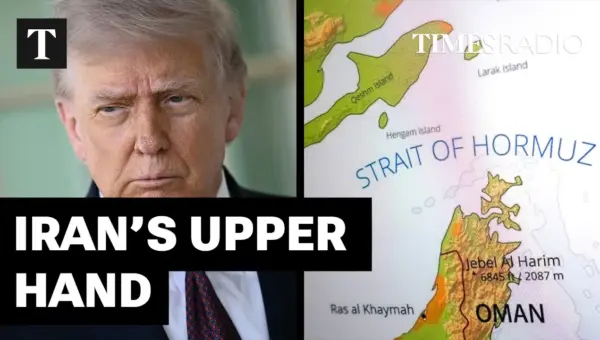
US Faces Limited Options Against Iran’s Strait Control
Iran's control over the Strait of Hormuz presents the U.S. with limited options beyond a massive ground invasion. Despite ongoing peace talks and a potential deal mirroring past agreements, Iran's demonstrated leverage over the vital economic chokepoint solidifies its strategic position. The conflict's economic fallout is impacting global markets, with the U.S. experiencing higher energy prices and slower economic growth, while other nations face more severe consequences.

Trump’s Health Fears Spark Global Unease
Concerns are growing over Donald Trump's cognitive and physical health, with erratic social media posts and public statements fueling speculation. These issues arise amidst rising global tensions, raising questions about his fitness for leadership. The transcript suggests a pattern of disinhibition and conspiracy-driven communication.
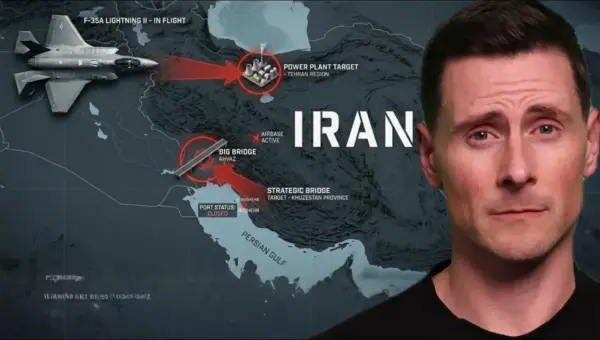
US Threatens Iran: “Knock Out Power Plants, Bridges”
The U.S. has threatened to strike Iran's power plants and bridges if diplomatic talks fail, following IRGC attacks on commercial shipping in the Strait of Hormuz. Iran remains defiant, asserting control over the vital waterway amidst an ongoing U.S. naval blockade.