Samsung S26 Ultra: Clever Features Come With Trade-offs
Samsung's latest Galaxy S26 Ultra introduces an innovative Privacy Display, but this clever feature comes with notable trade-offs in resolution and viewing angles. While performance and camera upgrades impress, the device grapples with compromises that challenge its 'Ultra' status.

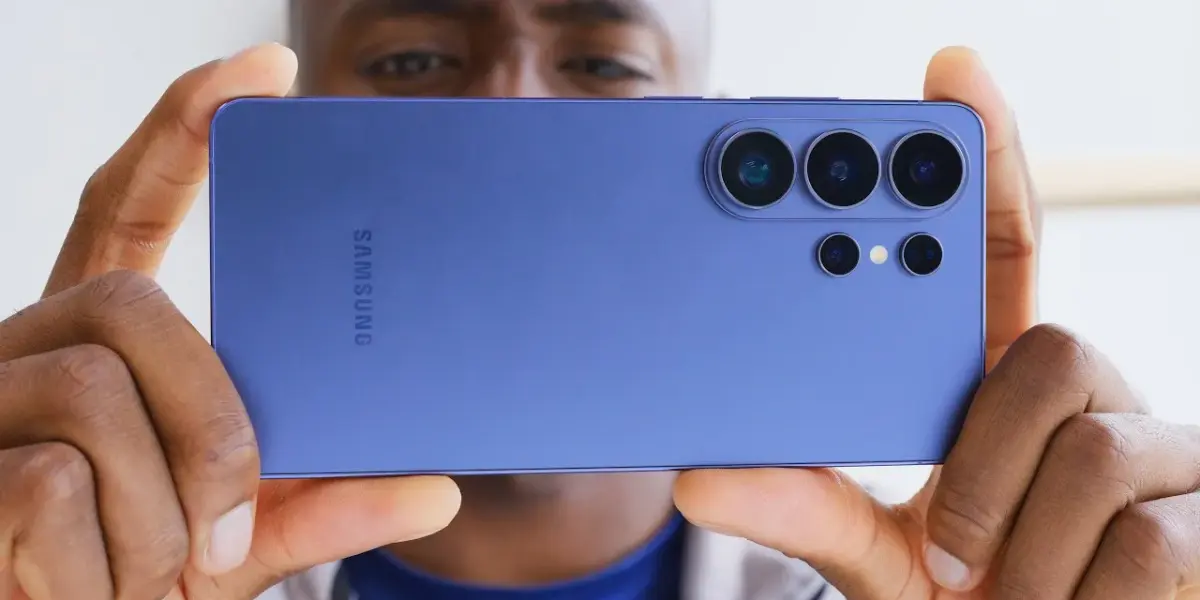
Samsung Galaxy S26 Ultra: Innovation with a Catch
The tech world is always buzzing with new releases, and the Samsung Galaxy S26 Ultra is no exception. While initial impressions were positive, a deeper dive reveals a device packed with intriguing new features, but also one that forces users to confront the age-old reality of trade-offs. After a week of extensive use, it’s clear that while Samsung has introduced some genuinely innovative hardware, these advancements come with compromises that prospective buyers need to understand.
The Privacy Display: A Double-Edged Sword
Perhaps the most talked-about new feature is the ‘Privacy Display’. On paper, it shares many specifications with its predecessor: a 6.9-inch OLED panel with a 1440p resolution and a 1-120Hz adaptive refresh rate. However, the addition of the Privacy Display is a genuine hardware innovation.
This feature, toggled on or off at will, dramatically limits viewing angles, effectively thwarting shoulder surfers and snoopers. Unlike third-party screen protectors that rely on polarization, Samsung’s solution offers comprehensive angle blocking and, crucially, allows users to selectively apply it to specific apps or even just incoming notifications, a level of granular control that is truly impressive.
The ingenuity, however, lies in its implementation, which also highlights its primary drawback. The display essentially utilizes two types of pixels: wide-angle and narrow-angle, the latter featuring a focusing lens. When the Privacy Display is active, the wide-angle pixels are deactivated, leaving only the narrow-angle ones visible.
This, unfortunately, means the effective resolution is halved, leading to more noticeable pixelation around text and finer details. Microscopic analysis confirms this, showing a clear reduction in sharpness when the privacy feature is engaged. Peak brightness is also slightly diminished, though Samsung attempts to compensate by adjusting the output of the remaining pixels.
Even in regular use, this underlying technology means the display’s viewing angles are inherently less robust than they could be, and its anti-reflective coating doesn’t quite match the S25 Ultra’s performance. Compounding this, it remains an 8-bit display simulating 10-bit color, a spec that many competitors have already surpassed with native 10-bit panels. Samsung’s decision to default the display to 1080p out of the box, prioritizing battery life over absolute screen fidelity for the average user, highlights their awareness of these compromises.
Design Tweaks and Ergonomic Quirks
The S26 Ultra sports a design that’s more evolution than revolution. It’s slightly thinner, lighter, and features more rounded corners, aligning it with Samsung’s other flagship offerings. However, these subtle changes introduce new quirks.
The more curved corners mean the S Pen silo is now capped with a slight curve, restricting the S Pen to a single insertion orientation, unlike the previous flat design. The camera plateau, now featuring raised rings, coupled with the thinner body, causes the phone to rock noticeably on a table when typing without a case. The switch back to aluminum sides from titanium, while making no discernible difference in daily use, does invite comparisons to Apple’s design choices.
Performance and Battery Life: Steady Progress
Under the hood, the S26 Ultra is powered by the new Snapdragon 8 Elite Gen 5 for Galaxy. Benchmarks show it performing on par with, and slightly exceeding, the standard Snapdragon 8 Elite Gen 5 found in competitors like the OnePlus 15, offering the expected 20-30% CPU improvement year-over-year. Samsung’s focus appears to be on the NPU for AI-driven features, which we’ll explore shortly.
Performance in daily tasks, multitasking, and gaming is, as expected, excellent. The redesigned vapor chamber handles heat effectively, and battery life sees a modest improvement over the previous generation, despite retaining the same 5,000 mAh battery, thanks to chip and software efficiencies. Standby time is good, though not class-leading, and charging tops out at a slightly faster 60 watts.
However, the omission of crucial features continues to be a point of contention. The lack of MagSafe-compatible magnets, a feature that would facilitate seamless accessory integration and case sales, is a baffling decision.
Equally frustrating is the absence of a silicon carbon battery, which could have offered greater capacity and potentially improved longevity, especially given Samsung’s past battery concerns. The inclusion of these would have pushed the ‘Ultra’ experience much further.
Camera Upgrades and Software Smarts
The camera system, while largely familiar, benefits from tangible improvements. The main camera and the 5x telephoto lens now feature larger apertures, allowing more light capture. This not only enhances low-light performance but also contributes to a more natural bokeh effect with close-up subjects.
Photographers will appreciate the faster lenses, though a slight degradation in the minimum focus distance on the main camera has been noted, even with macro mode available. The most significant camera advancements, however, are software-driven.
The addition of the APV log codec enhances video recording capabilities, and the new ‘Horizon Lock’ feature provides exceptionally stable quad-HD video at up to 60fps by aggressively cropping into the 200-megapixel sensor. Video footage, in general, looks impressive, with the review noting that all talking head segments for a recent episode were shot on the S26 Ultra.
Galaxy AI: Feature-Rich, But Is It Essential?
The S26 Ultra is heavily laden with new AI features, ranging from practical call screening and effective audio erasure for background noise removal in videos, to more speculative photo editing tools that can create entirely new scenes. While these features are accessible through a dedicated Galaxy AI tab, their necessity as a primary purchase driver is questionable. Users can choose their level of engagement, from fully embracing the AI suite to ignoring it entirely.
Some features, like ‘Now Nudge’, reportedly failed to work during testing, and the AI photo editor demonstrated a commendable refusal to perform certain unrealistic edits, suggesting some safeguards are in place. However, the concern remains that many of these AI capabilities could, and perhaps should, be extended to older Samsung devices via software updates, diminishing the exclusivity of these features for the S26 Ultra.
The Verdict: A Premium Device with Premium Compromises
The Samsung Galaxy S26 Ultra is undeniably a capable and feature-rich smartphone. Its new Privacy Display is a unique hardware innovation, the performance is top-tier, and the camera system offers solid improvements.
However, the persistent trade-offs, from the reduced resolution when the privacy screen is active to the lack of magnetic charging and silicon carbon batteries, prevent it from being a universally perfect device. At a starting price of $1,300, the ‘Ultra’ moniker feels more applicable to the price tag than to a significant leap in groundbreaking, uncompromised technology.
Who Should Buy It?
The Galaxy S26 Ultra is for the user who values cutting-edge, albeit sometimes compromised, features and is willing to pay a premium for them. Those who frequently find themselves in environments where screen privacy is paramount will appreciate the built-in solution.
Power users who demand top-tier performance and a versatile camera system will also find much to like. However, for the discerning user who prioritizes absolute display quality, battery technology, or seamless accessory integration without compromise, there might be better options available, potentially even from Samsung itself, that offer a more refined experience for less.
Specs & Key Features
- Display: 6.9-inch OLED, 1440p resolution, 1-120Hz adaptive refresh rate, Privacy Display feature
- Processor: Snapdragon 8 Elite Gen 5 for Galaxy
- Battery: 5,000 mAh, 60W wired charging
- Cameras: Upgraded main and 5x telephoto lenses with larger apertures, APV log codec, Horizon Lock stabilization
- AI Features: Call screening, audio eraser, photo assist, and more
- Build: Aluminum frame, rounded corners
- S Pen: Yes, with single orientation insertion
Pricing and Availability
The Samsung Galaxy S26 Ultra starts at $1,300. Availability details are consistent with typical flagship launches.
A Note on Other Samsung Models
The review also touches upon the base S26 and S26 Plus, suggesting they are becoming less compelling buys due to stagnant camera technology, removal of millimeter wave, and the use of Exynos chips in certain regions. The increased entry price for the base models is also highlighted as a concern.
Source: Samsung Galaxy S26 Ultra Review: There's a Catch (YouTube)

Related Articles
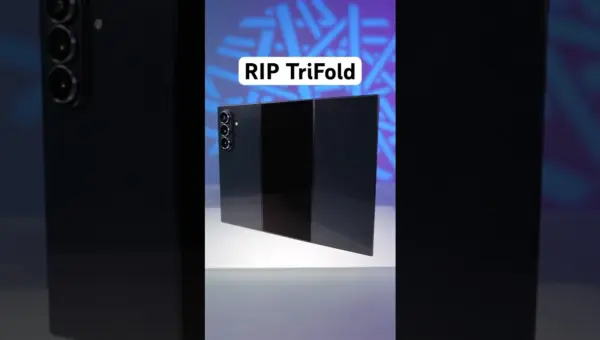
Samsung Scraps TriFold Phone After Just Months
Samsung has officially discontinued its experimental TriFold smartphone just months after its release. The high-priced, bulky device, while innovative, proved too impractical for mainstream adoption. Samsung's Z Fold 7 offers a more balanced foldable experience.
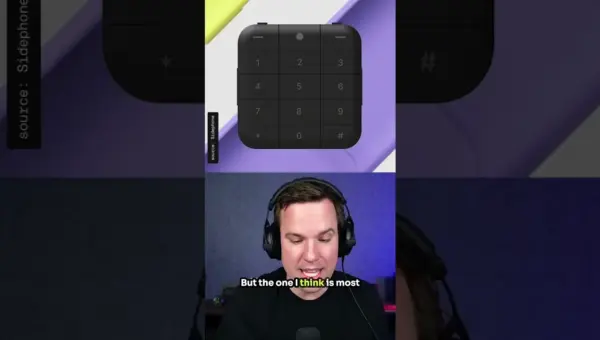
Sidephone: A Modular Phone That Mimics an iPod
The new Sidephone is shaking up the smartphone market with its innovative modular design. Users can swap out front panels, choosing between a full keyboard, a number pad, or a nostalgic iPod-style click wheel. This approach aims to offer a more minimalist and intentional phone experience.


Foldable Phones: Big Screen, Big Problems
Foldable phones promise more screen, but current models face significant hurdles. Book-style foldables are too big, while flip phones suffer from confusing software. Both are works in progress for early adopters.