UK F-35 Jets Could Strike Iran Amid Escalating Middle East Conflict
The UK is reportedly considering using its F-35 fighter jets for potential air strikes against Iran, a move that could be legally justified as defensive action. This consideration comes amid escalating tensions in the Middle East and renewed focus on the UK's defense spending and military readiness.

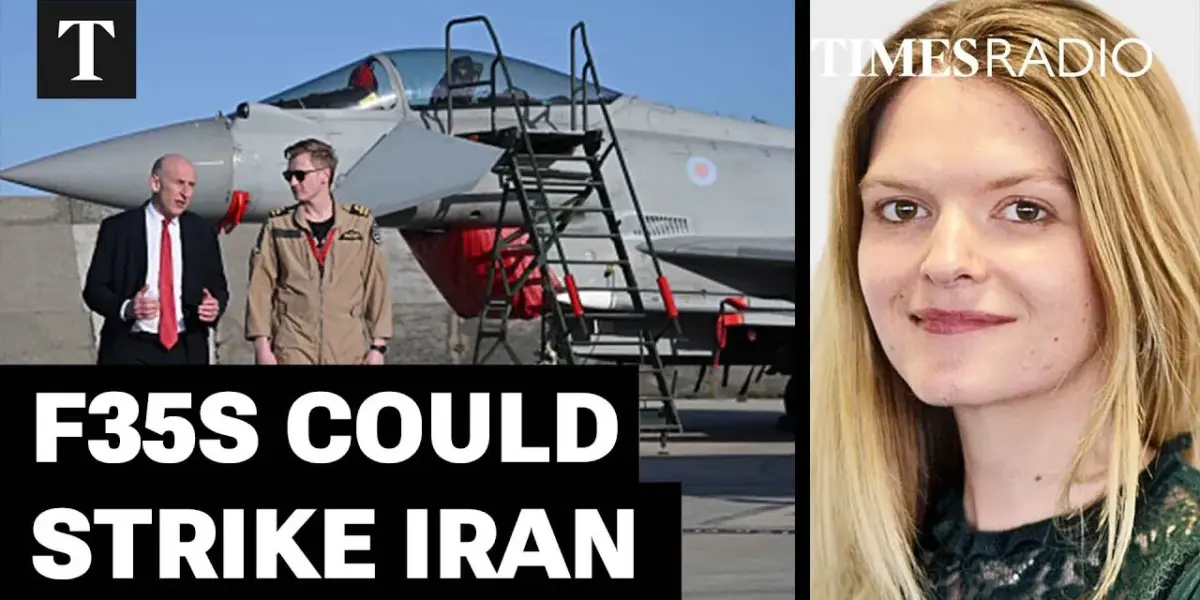
UK Considers Air Strikes Against Iran Amid Regional Escalation
In the face of a rapidly escalating conflict in the Middle East, the United Kingdom is reportedly considering the possibility of conducting air strikes against Iran. The potential for British military involvement, specifically the use of advanced F-35 fighter jets, is now the war, now in its seventh day, has expanded to affect 14 countries, with Azerbaijan and Turkey becoming the latest targets of Iranian aggression. The US has also reported sinking an Iranian ship in Sri Lankan waters.
Government Mulls Defensive Strikes on Iranian Missile Sites
Deputy Prime Minister David Lammy stated on BBC Radio that the UK could legally conduct air strikes if they were deemed to be defensive actions. “I’m not here to act as a lawyer, but I think your viewers will understand that in response to being attacked, yes, we can take down sites that are anticipating attacking our people. Uh it is my understanding that that would be legal,” Lammy explained.
While Prime Minister Rishi Sunak has remained non-committal on direct air strikes, he has granted the US permission to use joint bases for potential attacks on Iranian missile launch sites. This development follows an announcement from Israel that its fighter jets struck an underground bunker in Tehran, reportedly built for Iran’s Supreme Leader, located beneath the regime’s leadership compound.
Defense Editor: UK Preparing for Scenarios of Attack
Larisa Brown, Defense Editor for The Times, elaborated on the UK’s potential involvement, suggesting that discussions about defensive strikes have been ongoing since Wednesday. “The government doesn’t want to rule anything out at the moment,” Brown stated.
“It’s not necessarily that the UK is gearing up to this because they’ve had a change of heart or anything. It’s that they’re preparing for a situation in which either British troops or civilians are killed in an attack by the Iranians or the intelligence agencies get some information that might tell them that the Iranians are plotting something and they’re about to use a specific launch site to carry out that attack.” In such scenarios, Brown explained, the UK would consider striking Iranian missile systems or stockpiles.
F-35s and Typhoons: Potential for Ground Attack Missions
Currently, UK F-35 jets and Typhoons are stationed in Cyprus, primarily armed with air-to-air missile systems for defense against aerial threats. However, these aircraft could be re-armed with bombs, enabling them to target ground locations within Iran if deemed necessary.
Brown noted that military planners are assessing the best assets for such missions, including the possibility of deploying attack submarines equipped with Tomahawk missiles, though this would likely take several weeks. The use of surveillance planes for intelligence gathering and refueling aircraft to support US and Israeli operations are also being considered as forms of UK involvement.
Broader Implications: A “Real Prospect” of Further Entanglement
Brown described the prospect of further UK entanglement in the conflict as “a real prospect,” emphasizing the volatile situation in the region. The potential for a single Iranian missile strike on British troops stationed in various locations, including Iraq, Bahrain, and Qatar, could significantly alter the calculus in Whitehall.
Concerns have also been raised by a leaked National Security Council meeting, which Downing Street did not deny, suggesting internal divisions regarding the UK’s response to the escalating crisis. The government is treating the leak with extreme seriousness, particularly given the sensitive nature of the information discussed.
Defense Spending Under Scrutiny Amidst Global Instability
The unfolding events have intensified scrutiny on the UK’s defense spending and readiness. Critics, including Liberal Democrat MP Mike Tapp, have highlighted significant “black holes” in defense budgets and called for urgent rearmament.
While Labour leader Keir Starmer has committed to increasing defense spending to 3% of GDP in the next parliament, the current conflict in the Middle East is reportedly strengthening arguments to accelerate this target. The absence of Royal Navy warships in the region and the delayed arrival of a high-readiness vessel have exposed vulnerabilities, prompting questions about the UK’s preparedness for large-scale conflicts, especially when potentially stretched between the Middle East and the ongoing war in Ukraine.
“War Footing” and the Need for Rapid Modernization
Brown concluded that the UK armed forces are effectively on a “war footing,” with internal assessments suggesting a potential conflict with Russia could be only a couple of years away. The current Middle East crisis, coupled with existing commitments, necessitates a faster modernization of capabilities than previously anticipated. This rapidly evolving geopolitical landscape has rendered the strategic defense review published last June potentially outdated, highlighting the urgent need for the government to reassess spending priorities amidst global instability.
Source: How The UK’s F35s Could Be Used To Drop Bombs In Iran | Larisa Brown (YouTube)

Related Articles


Iran Conflict Looms: Congress Must Decide War’s Fate
The ongoing conflict in Iran raises questions about presidential authority and congressional duty. Experts express doubt about the current negotiations, while economic realities show a divide between Wall Street and Main Street. New political candidates are emerging with a focus on collaboration and service.


El-Sayed Blasts Trump’s Iran War: “How the Hell Did We Get Here?”
Progressive Senate candidate Abdul El-Sayed is challenging the status quo in Michigan with sharp critiques of U.S. foreign policy and the healthcare system. He questions the rationale behind the Iran conflict and advocates for Medicare for All, aiming to engage voters often left out of traditional politics.


NZ Spy Flights Near China Spark Beijing’s Outrage
New Zealand's recent surveillance flights near Chinese airspace have triggered a strong protest from Beijing. This incident highlights growing geopolitical tensions in the Indo-Pacific and New Zealand's efforts to bolster its defense capabilities.